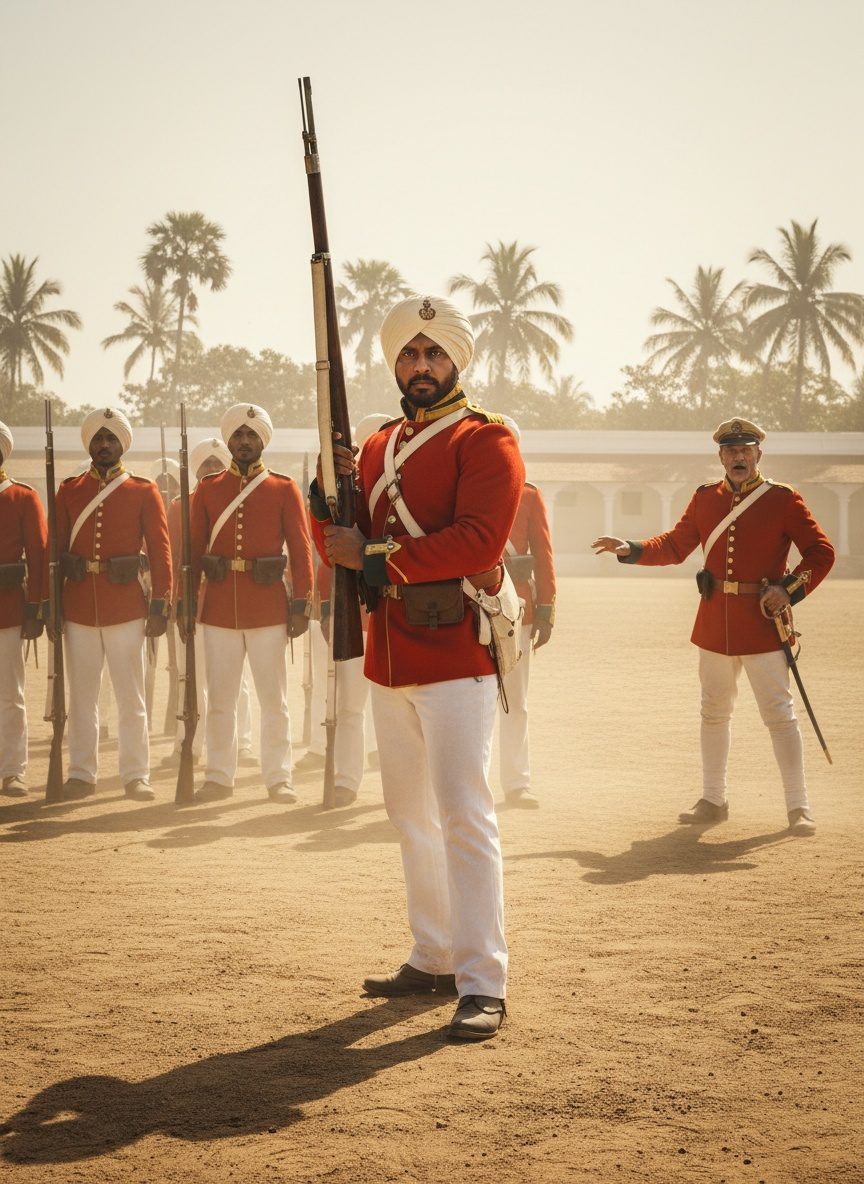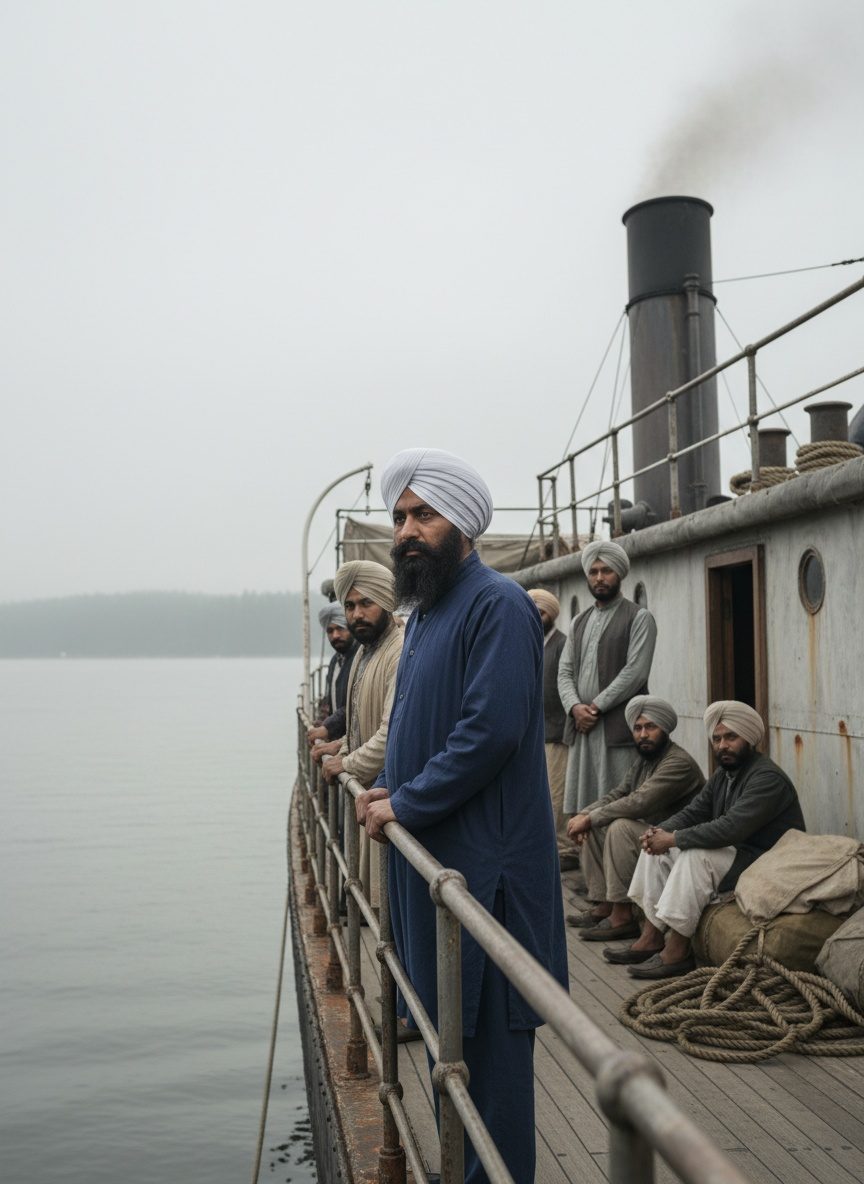
The rhythmic thrum of the Komagata Maru's engines vibrated beneath the weathered wooden deck as the ship sat immobile, tethered to a standstill in the chilly waters of Vancouver Harbour. A restive anticipation rippled through the crowd of men packed together beneath the sun’s growing warmth. For 376 Punjabi passengers whose eyes were fixed on the distant skyline of Vancouver, hope was a fragile commodity. British subjects by law, they were anchored in a limbo of bureaucratic obstinance, denied entry by the very empire they belonged to.
The Voyage of Dreams: Gurdit Singh's Quest
As the Japanese steamship left the distant horizon of Hong Kong behind, Gurdit Singh stood steadfast, weathering both doubts and the salty spray of a vast ocean. A prosperous businessman from India, Singh envisioned a future where borders dissolved for all subjects of the British Crown, regardless of where they hailed from. His dream was intertwined with the chartering of the Komagata Maru, setting sail in April 1914 to the awaiting opportunity promised by the sweeping landscapes of Canada.
Each man aboard was drawn by the magnetic pull of a new world, seeking better prospects in the fields and factories proliferating beyond the Pacific. Yet as the vessel neared Canadian shores, the stark reality of exclusion reared its head in the form of the Continuous Passage Act—a thinly veiled armor of racism used to deny entry to those arriving via indirect routes. Despite being subjects of the Empire, their entrance required navigating a labyrinth of legislative discrimination.
The Standoff: Confrontation in the Harbour
On the 23rd of May, 1914, the Komagata Maru came to rest in Vancouver Harbour, its passengers gripped by a simmering excitement tempered by anxiety. The promise of Canadian acceptance was quickly replaced by a chilling silence as the coast authorities encircled the vessel. Orders were concise and unyielding: these men were not welcome.
Denied the right to disembark, the passengers watched helplessly as days blended into weeks. With provisions dwindling, they pressed their voices into the monochrome spaces of legal petitions and public rallies. On land, the local Sikh community rallied, fighting tooth and nail for their compatriots, yet the scales of justice remained decidedly unbalanced.
Behind closed doors and ink-stained desks, the gears of power turned, eventually ordering the arrival of the HMCS Rainbow—a warship stationed ominously at the harbour, a symbol of imperial resolve. The men on board the Komagata Maru had become unwilling players in a geopolitical theater, the scene lit only by the light of resistance against racial bias deeply embedded within the furrows of Empire culture.
Maritime Hostility: Holding onto Dignity
The mounting frustration woven into the air around the ship was palatable. From their anchorage, the occupants of the Komagata Maru bore witness to the duplicity of colonial power structures, which intertwined with local hostility to starve out hope itself. Days turned into a grueling test of endurance under the stringent pressure of dwindling supplies and the scorching reality of their stifled destiny.
Yet amidst the shades of adversity, the passengers carried themselves with an extraordinary dignity. Within the confines of their maritime prison, they organized ad hoc community meetings, held onto their cultural rituals, and above all, maintained hope in the graveness of their circumstances. But, as horizons dimmed behind the setting sun, the weight of their struggle grew heavier.
Repercussions Echoing Across Time
On July 23, 1914, the Komagata Maru was forced from Canadian waters, a reluctant departure propelled by the piercing presence of naval authority. As the steamship altered its course back toward the open ocean, it left behind a trail of disillusionment, not just for those aboard but for an entire community that grappled with the fractured nature of identity under the Empire's banner.
The events aboard the Komagata Maru weaved into a larger narrative—a precursor to decades-long struggles against racial segregation and colonial prejudice. It signaled to the world a necessity to untangle the ropes binding human worth to the contingencies of geography and politics. To confront this silent chapter is to witness a fragment of resistance etched in the annals of time, serving as an evocative reminder of the ongoing journey toward justice and equality.