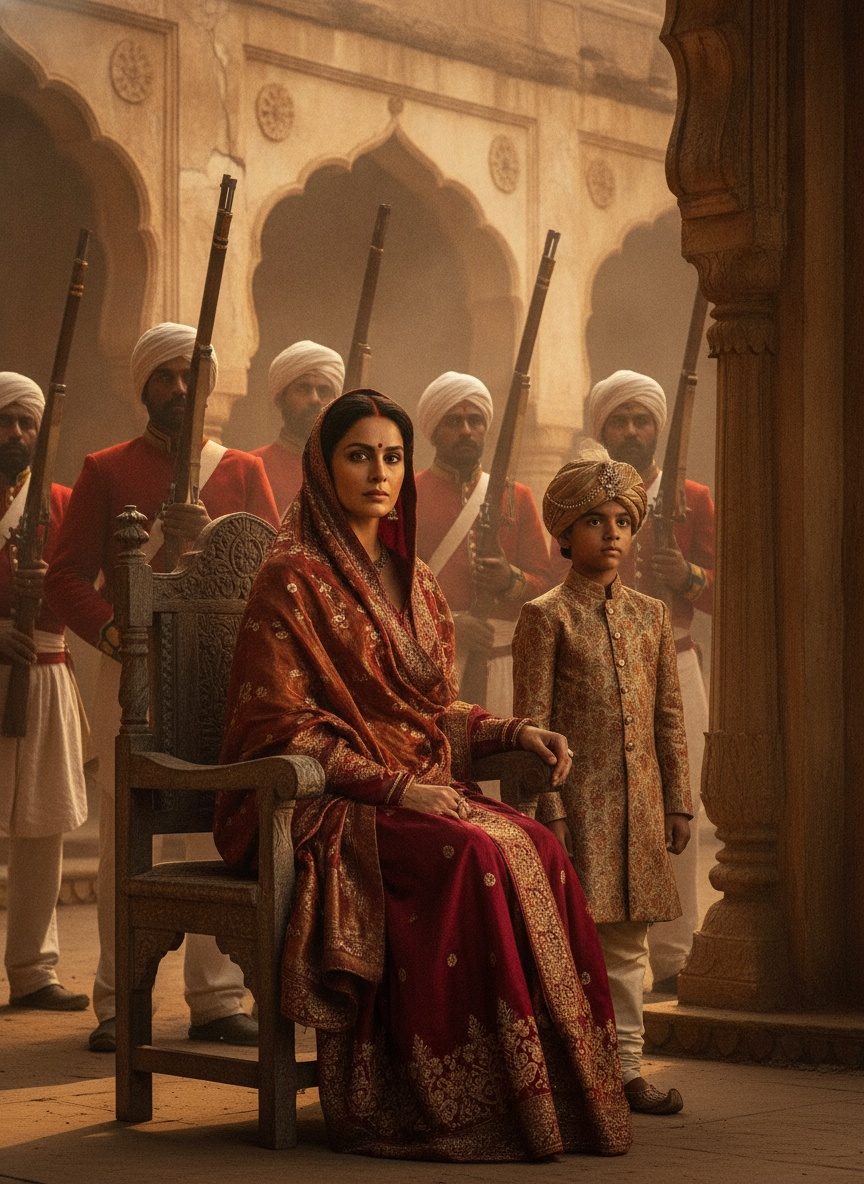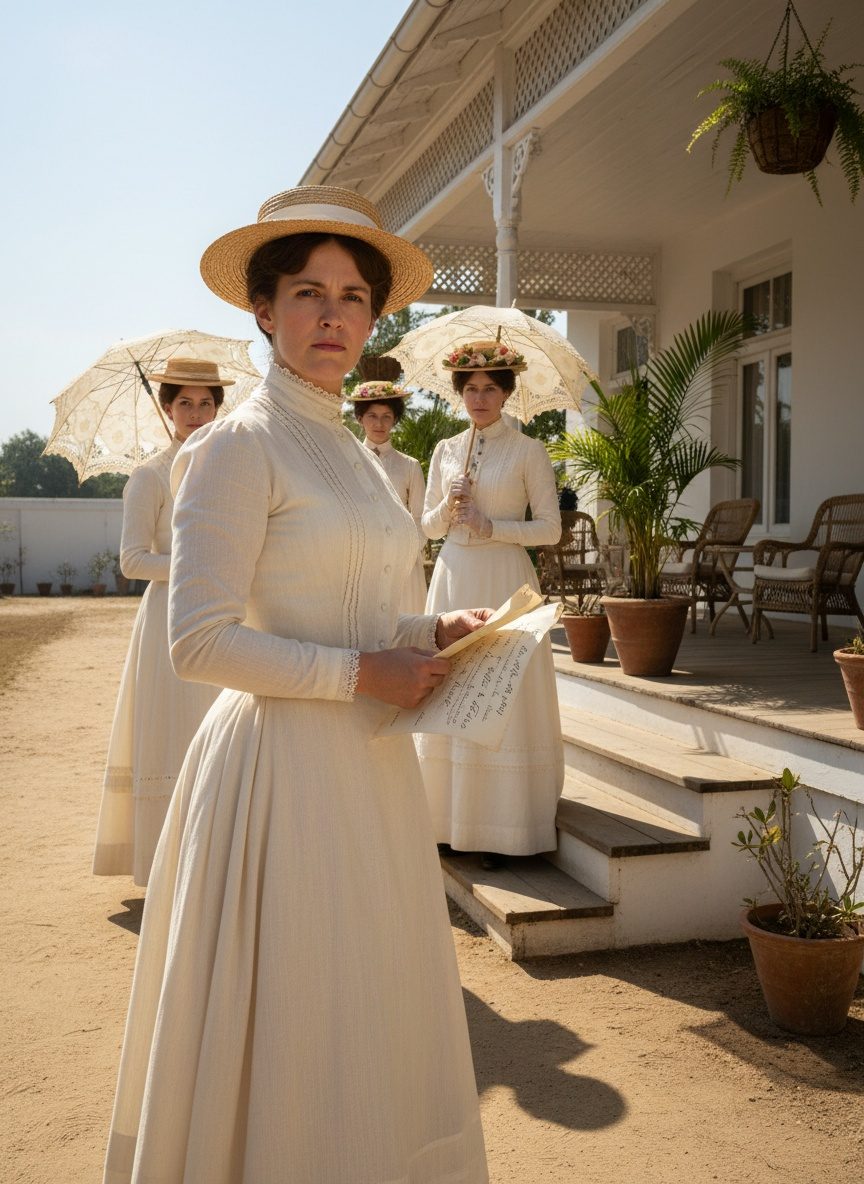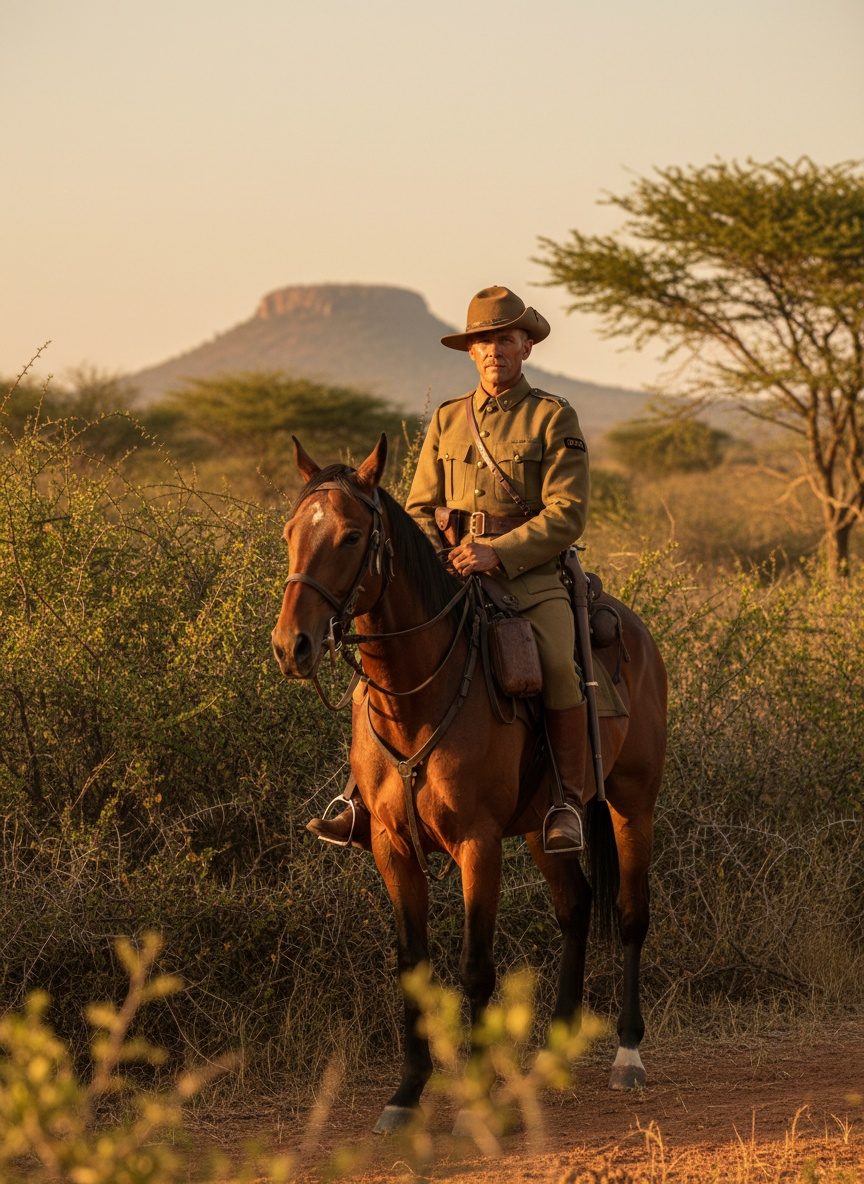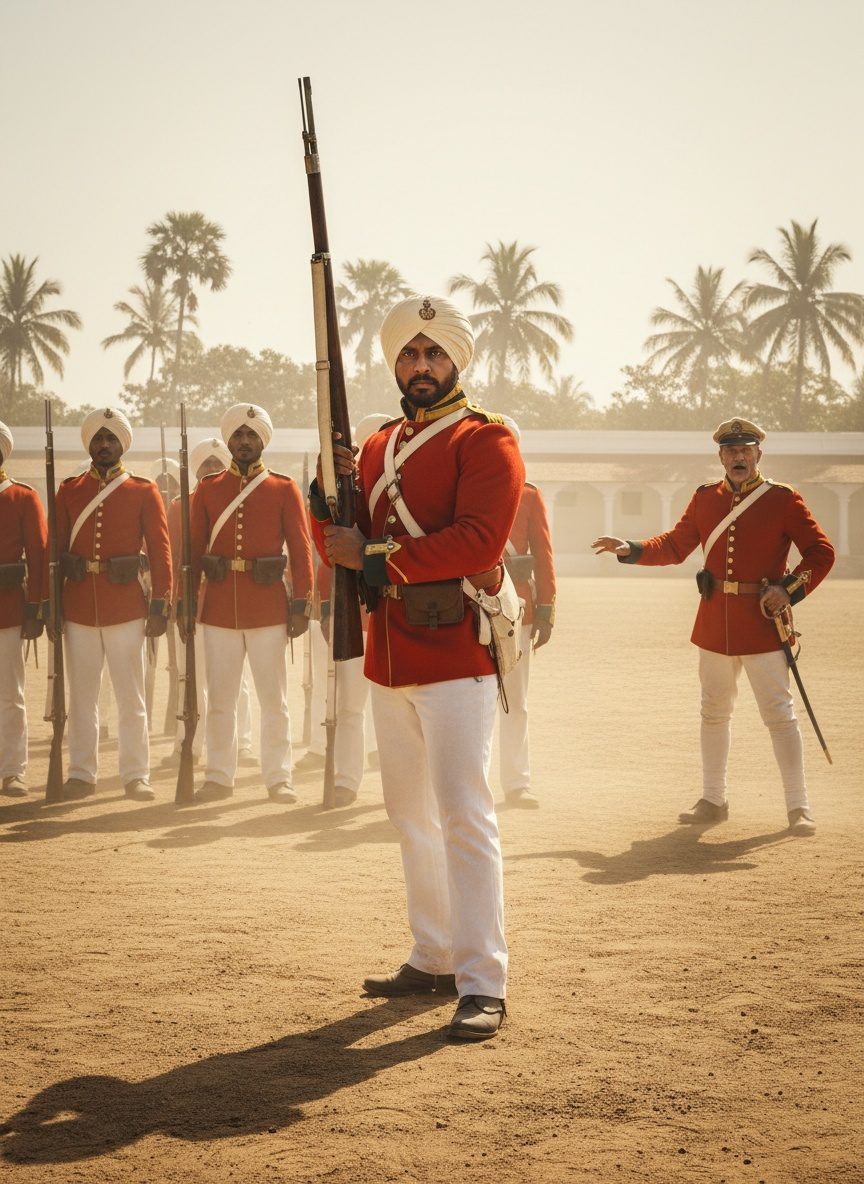
The sun beat down mercilessly on the parade ground at Barrackpore, casting harsh shadows on the assembled ranks. Mangal Pandey, his heart pounding like a war drum, stepped forward from his place in the 34th Bengal Native Infantry. The musket in his hands, heavy with centuries of oppression, was about to make history. Eyes wide with urgency, Pandey took aim at his British sergeant, his finger tightening on the trigger. In this moment, the spark of rebellion that would come to engulf an entire subcontinent was set alight.
This act was not born out of a simple grievance, but rather a complex web of simmering tensions that had stretched to their breaking point. For years, the sepoys—Indian soldiers in the employ of the British East India Company—had borne the yoke of colonial rule. They had fought in distant lands, bled for a foreign flag, and yet remained second-class within the very ranks they strengthened. It was not just the weight of musketry but one of dignity that Mangal Pandey bore that fateful day. His shot was a desperate cry for justice amid a backdrop of exploitation and cultural insensitivity.
The immediate spark for Pandey's drastic action was the introduction of the new Enfield rifle to the Company’s troops. Rumors had spread like wildfire that the cartridges, which had to be bitten before loading, were greased with the fat of cows and pigs—an unspeakable violation of Hindu and Muslim religious practices. This was not merely a betrayal of their beliefs but a calculated assault on their identity. The notion that their colonial masters could carelessly desecrate their gods and traditions inflamed a simmering resentment that had been building for years.
When the musket discharged, a profound silence descended over the parade ground. Mangal Pandey had not only taken aim at his sergeant but at the very heart of British dominion. This was a man who understood that he might not live to witness the consequences of his actions, yet he was propelled by a force stronger than fear. In choosing to act alone on that March day, Pandey became a catalyst in a rapidly unraveling tapestry of colonial unrest. His bold defiance was both a message and a signal—a call to arms that reverberated across the Indian landscape.
As the echoes of his gunfire faded, the British authorities at once grasped the severity of the situation. Mangal Pandey was quickly apprehended, and his execution followed with grim predictability. The British were keen to deliver their brand of swift and decisive justice. But for every action there is a reaction, and the British response did little to quell the storm brewing over India. Instead, Pandey’s sacrifice turned him into a martyr in the eyes of the Indian populace—a symbol of resistance against a regime that had tight-neatened its grip with an iron fist.
The fever of rebellion did not subside with Pandey’s death; indeed, it only grew more insidious. The seeds of discontent had been sown across various factions within the Indian society, primed for revolt by decades of economic exploitation, cultural disdain, and social engineering by the colonizers. If Pandey's musket was the initial flash, the remaining powder keg was a populace chafing under foreign oppression, eager to wrest back control of their destiny.
Quiet and unseen, these stirrings began to take root across regions. What started at Barrackpore soon spread to Meerut and then on to Delhi, Lucknow, Kanpur. Cities became stages where sepoys and civilians alike expressed their pent-up rage and aspirations. Ordinary Indians would abandon their plows and pick up arms, responding to an unarticulated but universally understood call for freedom. The rebellion swelled into what the British called the Sepoy Mutiny, but for Indians, it was the First War of Independence—a struggle for identity as much as for sovereignty.
In hindsight, the events of 1857 were not simply an isolated eruption of violence. Rather, they were a fundamental challenge to British imperial policy, exposing cracks in an empire that had seemed unassailable. While the rebellion ultimately did not succeed in its immediate aim of overthrowing British rule, it forever altered the paradigm of colonial control. The rebellion forced a reckoning that reshaped British policies and tightened their administrative grip, yet it also planted seeds of nationalist movement that would come to fruition in the next century.
Why does this moment matter? It is not just the story of one man’s defiance or even of a region’s rebellion; it is a moment that encapsulates the complexities of colonial interaction—a reminder of the potency of human spirit in the face of subjugation. Mangal Pandey’s decision to fire that shot is a profound reminder of the lengths to which people will go to refuse categorization under a foreign yoke. It is a testament to the fact that even in the heart of the empire, the resolve for freedom beats stronger than the chains of oppression. The canon of history does not forget such moments because they illuminate a path forward—a path marked by courage and an unyielding quest for self-determination.