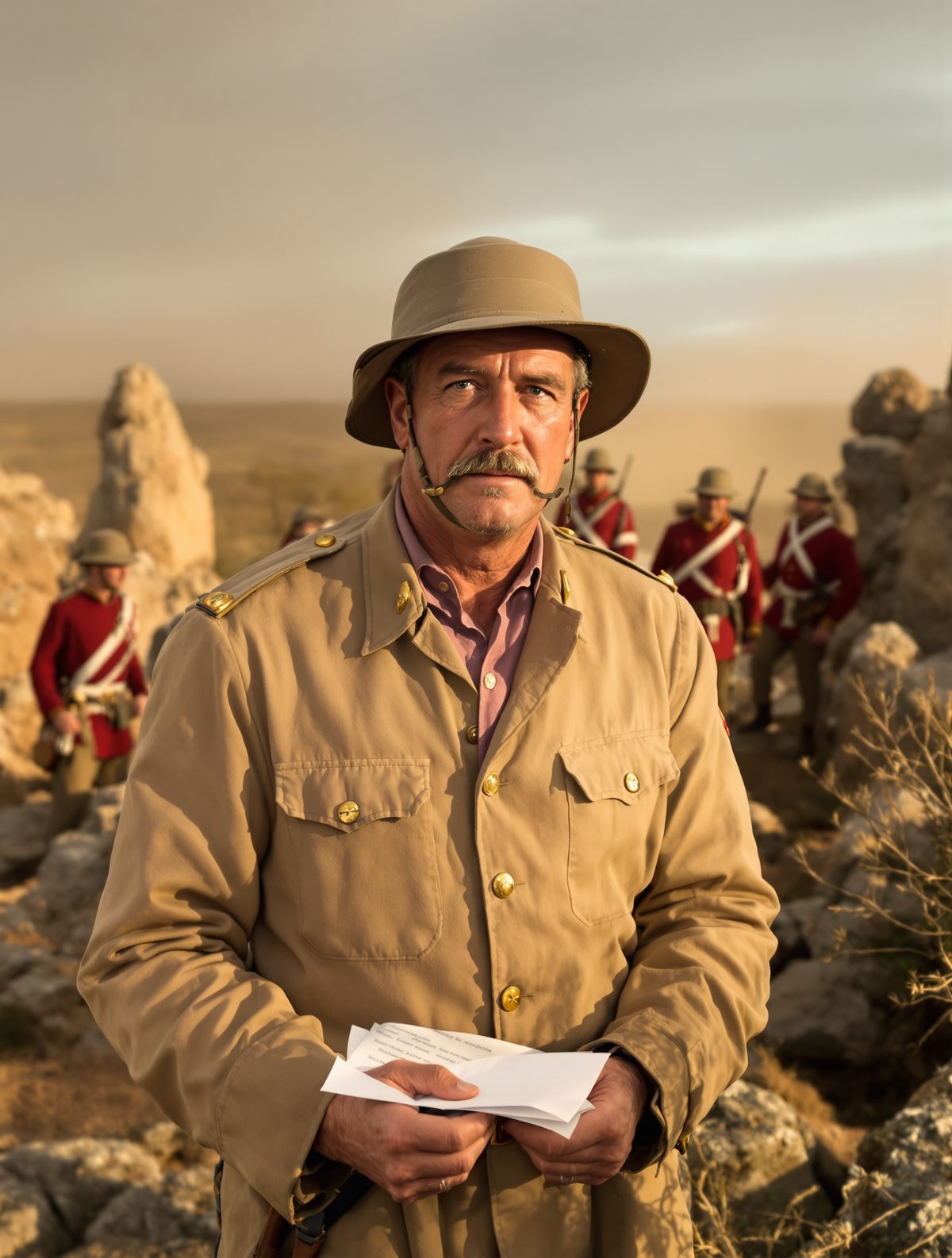
April 16th, 1945. Lieutenant Colonel Pat Reid stood at the imposing gates of Colditz Castle, watching American Sherman tanks rumble up the cobblestone approach. For the first time in three years, he wasn't planning his next escape attempt. There would be no rope fashioned from bedsheets, no forged papers, no tunnels carved with stolen spoons. After 36 months of the most elaborate cat-and-mouse game in military history, Reid was about to walk out the front door of Hitler's "escape-proof" prison as a free man.
The irony was delicious. The British officer who had become Colditz's unofficial "Escape Officer"—the man who had masterminded dozens of breakout attempts from what the Germans considered their most secure POW facility—would taste freedom not through cunning or courage, but through the simple act of liberation.
The Fortress That Defied Napoleon
Colditz Castle perched on its rocky outcrop like a medieval nightmare brought into the 20th century. Built in the 11th century, this Saxon stronghold had weathered wars, sieges, and centuries of political upheaval. Its 30-foot walls rose sheer from the cliff face, its windows were barred, and its single entrance was heavily fortified. When the Wehrmacht converted it into Oflag IV-C in 1940, they believed they had created the perfect prison for "difficult" Allied officers—those persistent escapers who had proven too troublesome for ordinary POW camps.
The Germans weren't wrong about Colditz being escape-proof, at least in theory. The castle sat 400 miles from the nearest friendly border, surrounded by Nazi-controlled territory. Its guards outnumbered prisoners, its searchlights swept every courtyard, and its commandants had studied every conceivable escape method. What they hadn't counted on was the sheer bloody-minded ingenuity of the men they locked inside.
Reid had arrived at Colditz in October 1940, one of the first British officers to be imprisoned there. A career army officer with a brilliant engineering mind, he quickly assessed his new home with the calculating eye of a man who had no intention of staying. The 30-year-old had already escaped twice from other German camps—hence his invitation to this "special" facility. The Germans thought Colditz would cure him of his escape ambitions. They were spectacularly wrong.
The Great Game Begins
What happened next transformed Colditz from a medieval castle into history's most famous prison break laboratory. Reid didn't just plan escapes—he systematized them. Working with fellow officers like Airey Neave (who would later become a prominent British politician), Reid turned escape planning into a precise science.
The prisoners established workshops in hidden rooms, complete with forges, sewing machines, and printing presses. They manufactured German uniforms so authentic that even Wehrmacht officers couldn't tell the difference. One prisoner, Flight Lieutenant Dominic Bruce, attempted to escape so many times that the Germans nicknamed him "the Medium" because he seemed to dematerialize from locked rooms.
The audacity of these attempts bordered on the theatrical. Officers disguised themselves as German guards, complete with homemade uniforms and weapons carved from wood. They built a glider in the castle's attic, planning to launch themselves from the roof when the wind was right. They dug tunnels through medieval stone walls using improvised tools. One officer even hid inside a mattress for hours while accomplices carried him toward the gate.
Reid's masterpiece was the establishment of an intelligence network that would have impressed MI6. Prisoners learned German military ranks, memorized train schedules, and created detailed maps of escape routes. They developed a communication system using coded letters that passed German censorship, allowing them to coordinate with resistance networks across occupied Europe.
The Price of Defiance
But Colditz extracted its toll. For every moment of triumph—when Airey Neave successfully escaped in January 1942, becoming the first Briton to reach home from the castle—there were months of crushing disappointment. Recaptured escapers faced solitary confinement in cells so small they could barely lie down. The psychological pressure of constant surveillance, failed attempts, and the weight of captivity broke some men entirely.
Reid himself never successfully escaped from Colditz, despite orchestrating the attempts that freed others. Time and again, his breakout attempts were thwarted by bad luck, betrayal, or the Germans' increasing sophistication in countering escape methods. Each failure meant weeks in solitary confinement, but Reid emerged from these punishments more determined than before.
The castle's German staff developed a grudging respect for their prisoners' ingenuity. Hauptmann Eggers, the security officer responsible for preventing escapes, later wrote that catching the Allied officers became an intellectual challenge that he found genuinely stimulating. It was warfare by other means—a battle of wits fought with blueprints and lockpicks instead of bullets and bombs.
What the Germans never fully understood was that the escape attempts served a purpose beyond simply freeing individual prisoners. Every breakout tied up German resources—guards, police, and administrative personnel who could have been deployed elsewhere. Every recapture investigation revealed intelligence about German security procedures. Most importantly, the constant escape activity maintained morale and military discipline among men who might otherwise have succumbed to despair.
The Unexpected Liberation
By April 1945, the war's end was rushing toward Colditz faster than anyone had anticipated. Soviet forces were approaching from the east, while American and British armies converged from the west. The castle's German garrison found themselves in an impossible position—too far from Berlin to retreat, too exposed to defend.
On April 14th, the last German guards began abandoning their posts. Some simply walked away into the countryside, hoping to avoid capture by stripping off their uniforms. Others attempted to negotiate with the senior Allied officers, recognizing that the tables had suddenly turned. The men who had been prisoners just days before were now effectively in control of one of Germany's most secure military installations.
Reid found himself in the surreal position of helping to maintain order in the castle as they waited for official liberation. The man who had spent three years plotting to escape was now ensuring that German guards who remained were treated correctly as prisoners of war. It was a final irony in a story full of them.
When Lieutenant Colonel William Schaefer's American forces finally reached Colditz on April 16th, they found the castle flying improvised Allied flags and Reid standing ready to formally hand over control. The American tank commanders were reportedly stunned to discover that this legendary fortress had been effectively self-liberated by its former prisoners.
Walking Into History
Reid's walk through Colditz's front gate was witnessed by cameramen who recognized they were documenting the end of an extraordinary chapter in military history. The footage shows a man walking with measured, almost casual steps—no running, no celebration, just the steady pace of someone who had always known this moment would come.
In his later writings, Reid described the sensation as almost anticlimactic. After years of planning elaborate escapes involving disguises, forged documents, and precise timing, freedom came as simply as putting one foot in front of the other. The gates that had symbolized captivity stood open. The walls that had confined him no longer mattered. He was free to walk wherever he chose.
That simple walk represented more than personal liberation. It marked the end of one of World War II's most remarkable examples of military resilience. Colditz had been designed to break the spirits of Allied officers, to convince them that escape was impossible and resistance futile. Instead, it became a symbol of the opposite—proof that human ingenuity and determination could transform even the most secure prison into a laboratory of defiance.
The Legacy of Locked Doors
Reid's peaceful exit from Colditz reminds us that history's most dramatic moments often end not with explosions, but with quiet dignity. The castle that had housed the Empire's most determined escapers became a metaphor for something larger—the idea that no prison, no matter how secure, can contain the human spirit indefinitely.
Today, as we grapple with our own forms of confinement and limitation, Reid's story offers a different kind of inspiration. Sometimes the greatest victory isn't the dramatic breakout, but the patient, methodical refusal to accept defeat. Sometimes freedom comes not from breaking down walls, but from outlasting those who built them.
The front gate of Colditz still stands, a portal that witnessed one of World War II's most quietly triumphant moments. Reid's walk through those gates marked not just the end of his captivity, but the victory of persistence over oppression, creativity over control, and hope over despair.