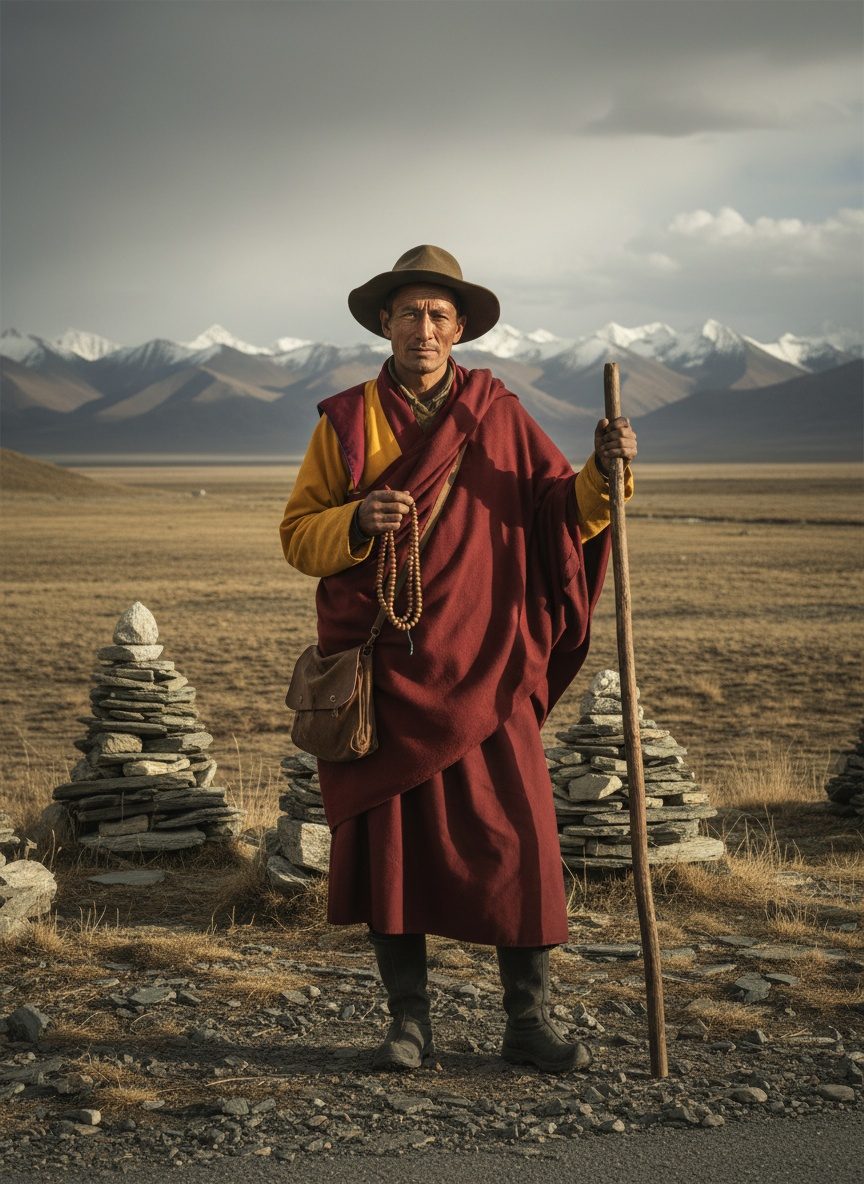
The frigid Himalayan wind bit at Nain Singh's face as he whispered his mantra under his breath, beads slipping one by one through his fingers. Each silent count marked a distance meticulously calculated as he traversed the forbidden Tibetan plains. Beneath his monk's robes, concealed within the prayer wheel he spun with devotion, a hidden compass helped guide him across the treacherous, sacred expanse that no British officer had seen, yet all desperately wished to understand.
Whispers Among the Mountains
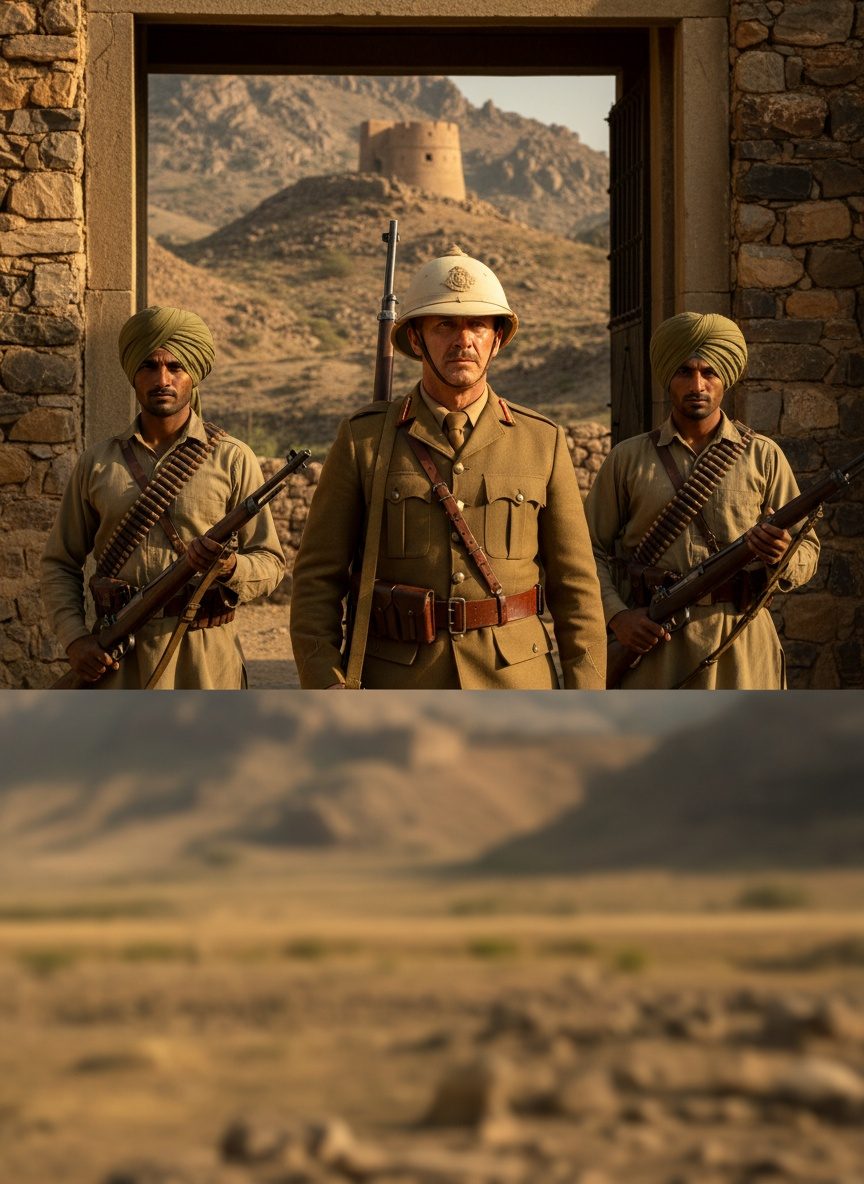
In 1865, when Nain Singh headed into the cloaked world of Tibet, every step was fraught with the kind of danger invisible on maps but palpable in every cautious glance he exchanged on the trail. The British Empire, at the height of its cartographic pursuits, desired to unlock the mysteries of Tibet—a land rich with geographical and political secrets, yet sealed off from foreign eyes. Soldiers were unwelcome and at risk; thus, the task fell upon a unique breed of intrepid surveyors: the Indian agents known as Pundits. They were teachers, traders, men of the land—and in disguise, gatherers of imperial intelligence.
Singh, a former schoolteacher from the town of Milam in Northern India, had been carefully trained for this surreptitious mission. His tools were unconventional, yet effective: a rosary, where every 100 paces shifted a bead; a prayer wheel hiding a compass; and a secret code recorded in what appeared to be religious texts. Each morning, he set his pace, the rhythm becoming a silent chant of exploration, syncing with every heartbeat. Singh's commitment to this mission transcended the diplomat's promise or adventurer's thrill; it bridged his deep cultural understanding with the empire's voracious geographical hunger.
The landscape rolled out before him with a vastness defying human control. Rivers that sliced through valleys as ancient as time hissed their secrets into the cold air, while the snow-capped peaks stood as silent sentinels, witnesses to Singh's clandestine journey. The whispered tales of Tibetan lamas and villages harmonized with his own murmured measurements, spinning a complex web where spirituality met espionage. From Leh to Lhasa, he pressed on, each passerby a potential ally or adversary, each step a relentless advance into the unknown.
Counting Each Sacred Step
The paths Singh trod were neither marked on traditional maps nor understood by those who sent him; they were paths of myth, belief, and isolation. As he wound his way through these trails, he became a phantom pilgrim, observing ceremonies, documenting customs, and recording the vivid tapestry of life that unfolded before him. Each experience coded into innocuous symbols, his journals a cryptic wealth of intelligence.
Yet the hazards Singh faced were as tangible as the chill blizzards and hostile territories he ventured into. Disguised as a monk, his movements required precision and subtle deflection of curiosity. Who was this man from India traversing the sacred landscapes? How did his prayer wheel, spun in apparent reverence, hide such a secular purpose? The Buddhist communities he visited were both spiritual refuges and potential sources of exposure, demanding that Singh balance truth and disguise artfully.
Hunger, illness, and the relentless weather were relentless companions. The geography itself, vast and varied, was an unforgiving master to serve. Singh's articulation of the terrain had to withstand the scrutiny of imperial cartographers who would translate his silent footprints into maps. His mission was one of delicate perseverance, an interplay of steps counted and routes remembered, stitched into the Secrecy of the Empire’s ambitions. Detailed notes etched into the margins of scriptures held more than prayers; they held ambitions and alliances, both sacred and profane.
The Legacy in Silence
When Singh trekked back across the Tibetan borders into British Indian territory, he carried with him not just the documented distances and coordinates but also an intangible ethos of endurance and subtle resistance. He stood as a figure at the intersection of colonial power and indigenous knowledge, a testament to the nuanced art of survival and strategic coexistence. The maps drawn from Singh’s remarkable journey illuminated the darkened spaces of the British Surveyor’s charts, filling gaps with precision that echoed with his daring legacy.
This story of clandestine cartography reflects more than mere territorial conquests; it illustrates a collision of worlds where empires clashed not so much in open warfare as in hidden maneuvers over sacred lands. Singh's walk of 1,200 miles was a silent feat against a noisy backdrop of imperial ambitions, a lesson in the value of resourceful diplomacy amid dominion-focused directives. He left no statues, no visible monuments, yet his steps shaped the contours of a geopolitical landscape, charted in obedience to empire yet robust with his personal resolve. In this dance of maps and mantras, Nain Singh etched an indelible mark on the fabric of history, a legend squeezed between pages, spoken of in hushed academic whispers, revered but seldom told.