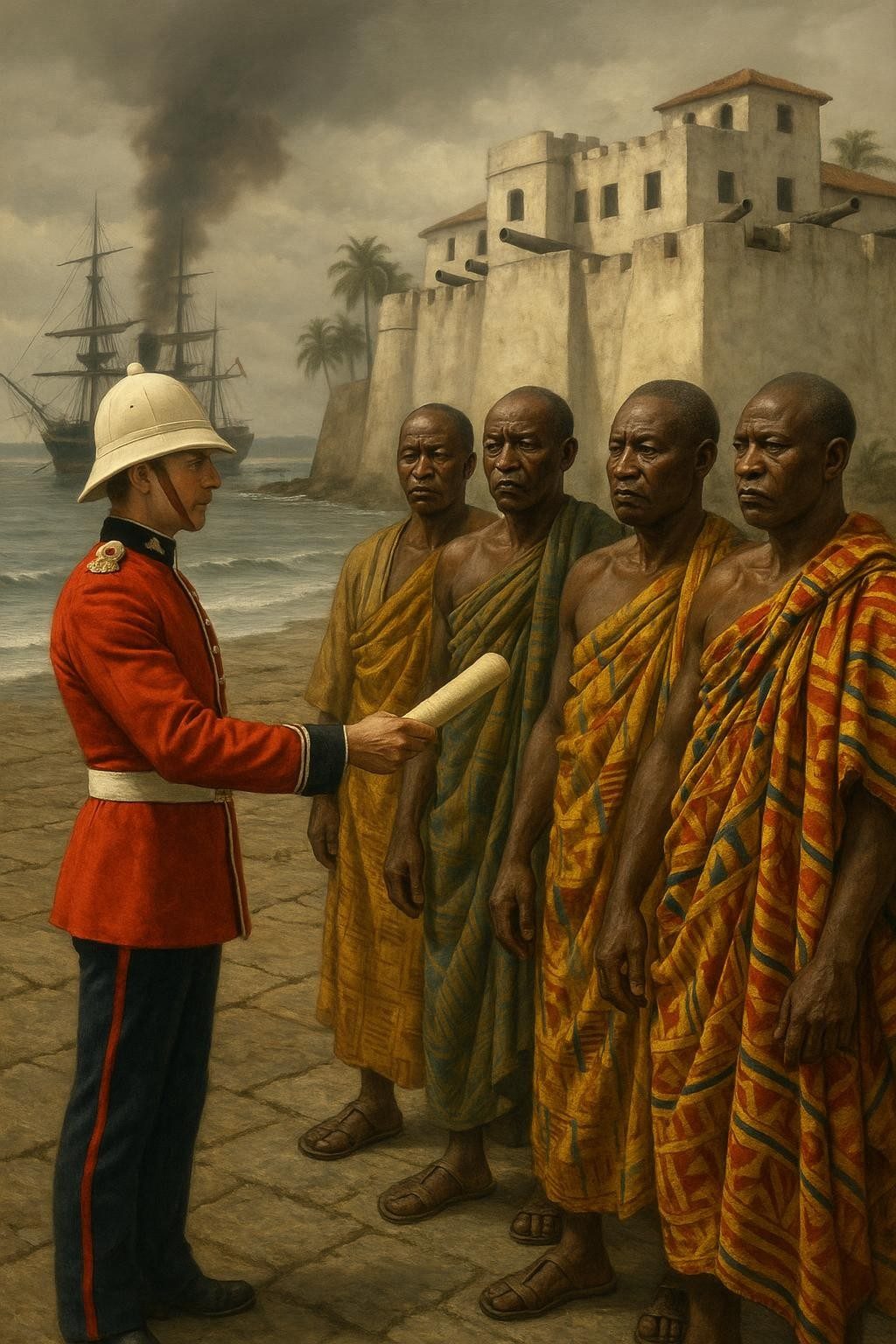
The air hung thick and heavy over the Gold Coast in 1873, a region defined by its luxuriant greenery and the restless churn of the Atlantic Ocean against its shores. In the coastal town of Elmina, the sun rose with a fierce intensity, casting long shadows from the walls of its famed castle—a titanic structure that stood like a haunted sentinel over the land. This fortified bastion, with its age-weathered stone walls, had been a silent witness to centuries of trade, conflict, and the complex tapestry of human ambition. Yet, as the British Crown's demands reverberated through its walls, the oppressive calm was about to erupt into a cacophony of rebellion and ruin.
The Stubborn Fortress
Elmina Castle, an imposing monolith of stone and history, had been at the center of power struggles for nearly four centuries. Originally erected by the Portuguese in 1482, the fortress was a revered prize, passed from one colonial power to another—Portuguese to Dutch to, ultimately, the British. Each empire left its mark, yet the castle’s purpose remained starkly singular: control and conquest of the rich African interior from this strategic coastal point.
By 1873, the British had long desired unfettered access to Elmina, a key coastal town and gateway to the prosperous African hinterlands. Control of Elmina meant much more than just a change of flags; it symbolized unmitigated dominance over trade and local politics. Enabled by the might of their naval forces, British diplomats presented an ultimatum to the ruling Fante and the people of Elmina: cede control of the castle or face the consequences. Little did they know, the response they received would be one of defiance, not submission.
As winds swept salty air against the castle’s battlements, the people of Elmina steadfastly refused to acquiesce. The Fantes and Elminians, unified by their desire for autonomy and ownership of their land, sent a message that echoed in the corridors of power: they would not simply surrender the stronghold nor the future of their community. This refusal was not solely about the physical structure; it was a declaration of resistance against the waves of colonial imperialism that threatened to wash away their way of life.
The Siege of the Unyielding
The British response was swift and formidable. The sound of warships gathering off the coast interrupted the morning serenity, their silhouetted forms cutting dark shapes against the horizon. A bombardment ensued, orchestrated with precision by the Royal Marines. The thunderous firing from the ships shattered the air, cascading over the town like an unrelenting storm that sought to break the spirit of its people. Even those sheltered behind the thick walls of Elmina Castle could feel the vibrations, each cannonball an insistence on domination.
Despite the relentless assault, the defenders of Elmina remained resolute, a testament to their indomitable spirit. Within the castle walls, the atmosphere was electric with resolve. Women and men, young and old, prepared for the inevitable as they watched the British forces inch closer under cover of night, their lanterns flickering like ghostly fireflies in the distance. The cost of resistance was evident in every decision—they knew that the coming conflict would write histories they might not live to see.
Yet, it was the disruptive dance of resistance and power that defined much of Africa's colonial past, and Elmina was no different. The British siege did not just aim to overcome a fortress; it endeavored to quash a spirit of self-determination that had flickered since the earliest days of European incursion. It was not long before the walls that had withstood time and tribulation were overrun, transformed into dark flames licking up towards a sky that absorbed the smoke of charred timber and hopes.
The Fall and the Fire
In the end, the impregnable fortress that had stood the test of centuries succumbed not merely to the British onslaught but to the inevitabilities of technological prowess and imperialist ambition. As the marines stormed the smoldering remnants of Elmina, the air filled with the acrid scent of gunpowder and the anguished cries of its inhabitants. The fall of Elmina was a stark reminder of the lengths to which empires would go to secure their narratives and manifest destinies, often at the cost of obliterating others.
With Elmina Castle secured, the Union Jack unfurled over its battered battlements, flapping defiantly in the ocean breeze. The British triumph, however, was pyrrhic, coming at the expense of an entire community's displacement. Houses were burnt, traditions threatened, and the indomitable spirit of the Elminians faced the harsh reality of colonial rule. Yet, in their struggle, a powerful message was immortalized: the assertion of one's identity and rights could test even the most formidable Empire.
In remembering the refusal of Elmina’s people, we peel back the layers of history that often obscure acts of resistance amidst grand narratives of empire building. This story of defiance not only underscores the human cost of empire but serves as a cautionary tale—a reminder that the price of imperial power is often extracted through burning towns and shattered lives. The events at Elmina reflect a past that continues to ripple through time, resonating against the walls of fortresses still standing majestic across our world, obstinate relics of defiance etched into an often forgotten side of history.