She was neither upper-class nor formally educated. Yet, the linguistic foundation of a Viceroy's children in British India rested upon her quiet diligence.
The Silent Pillar of the Raj
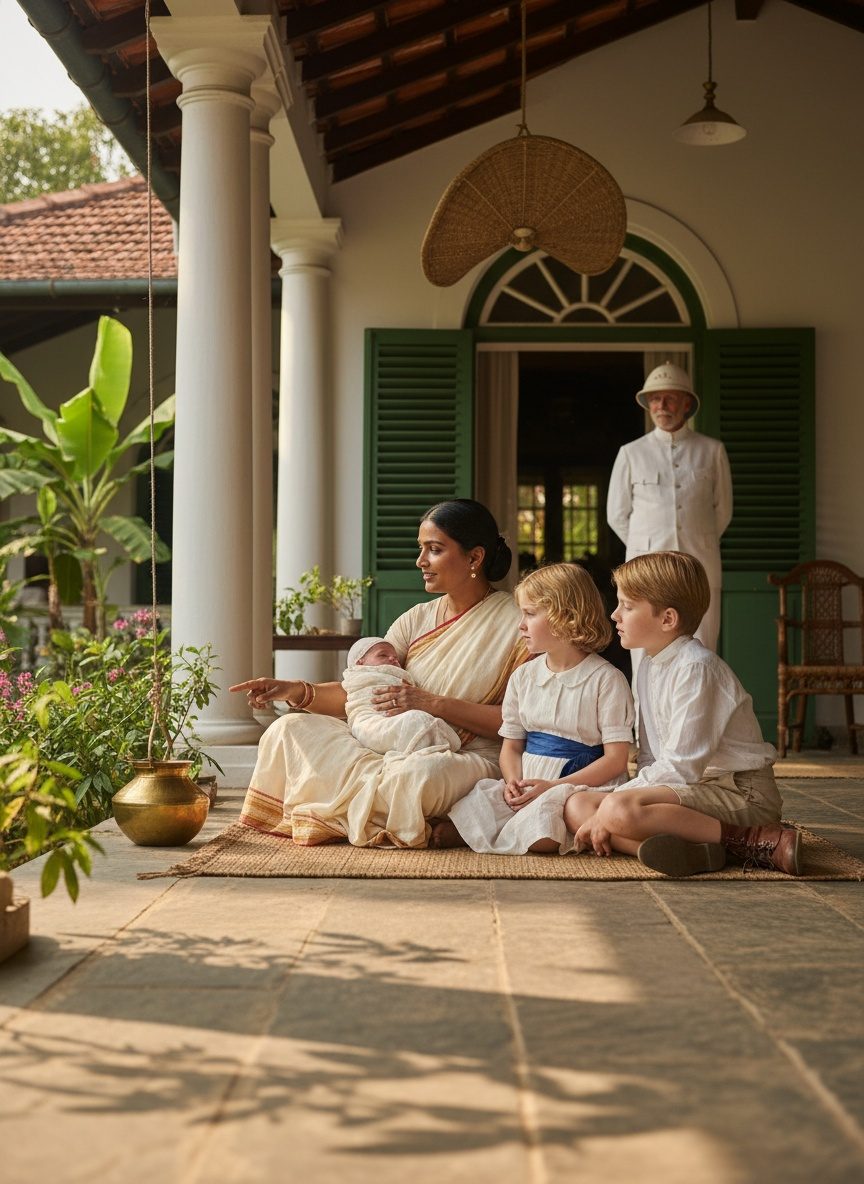
In the grand colonial bungalows of late 19th-century Calcutta, the presence of an ayah was as common as the lavish tapestries and teakwood furniture. These Indian women, often overlooked by the very society they held together, were the nannies and caretakers for generations of British families living in Victorian India. The ayah was the comforting constant in households perched precariously on the edge of two worlds. To the children, she was much more than a caretaker; she was the cornerstone of their early life experiences.
When the newest offspring of the high-ranking officials of the British Raj first opened their eyes to the large and unfamiliar terrains of India, it was not their mother they saw first but the nurturing gaze of an ayah. In those early, formative years, it was her influence that mingled with the new life of the bungalow, lending shape and sound to the unspoken dreams and identities of these children. She was the unsung protagonist of their days, the one who whispered the first lullabies in an unfamiliar yet enchanting language—Hindi.
The Language of the Land
For children born into the expatriate realms of the Empire, mastering English was an assumption, but the local language, Hindi, became the secret thread binding them to the land they inhabited. The ayah, often the first adult figure to communicate with them, introduced these children to the melodious syllables of Hindi. Each word they learned wasn't just a linguistic skill but a bridge between two vastly different worlds.
Without formal recognition or high stature, the ayah’s ability to impart a new language to the Viceroy's children offered them more than just another skill. It provided them access to a side of India that the formal English education system rarely welcomed in: themes of local stories, cultural nuances, and the warmth of shared humanity. These whispered lessons in Hindi turned a foreign landscape into a fondly remembered home, even long after these children would return to England.
An Unrecorded Legacy
Day after day, in sunlit nurseries, these women spun tales that sought no spotlight and sung songs that echoed only within the confines of the luxuriant walls. Clearly, the role of the ayah extended beyond caregiving; it was an unlicensed education in empathy and understanding between the rulers and the ruled. Yet, the history books never considered them significant enough to merit a mention.
The trust bestowed upon these ayahs was profound. They were left in charge of the delicate task of nurturing the minds and spirits of the Empire's future leaders, a role starkly incongruent with their societal standing. It was in these hands, roughened by work and unguarded in kindness, that the impressionable viceroys, and their siblings learned to hear, speak, and dream in Hindi.
Between Two Cultures
Raised in the liminal space between two cultures, the children straddled the compelling dichotomy of their existence. Exposed to the local traditions via their ayah’s stories and care, they inadvertently developed a nuanced view of India seldom perceived by the adults around them. Each interaction that passed between the ayah and the children, each cadence of Hindi that slipped into the hallways, subtly stirred the rigid fabric of the British Empire.
Though considered British by heritage, these children were tethered in sentiment and language to the Indian subcontinent. The bond formed under the maternal care of an ayah was hard to disengage from, even under the stern glares of the British social protocol once they returned to their homeland.
An Unseen Influence
The remarkable relationship between an ayah and the Viceroy's children matters deeply, not because it altered the course of monumental historical events, but because it softened the edges of empire. In the folds of these quiet interactions were small acts of rebellion against the stark divisions imposed by colonial rule—an intricate tapestry woven of shared stories, languages, and gentle reminders of common humanity.
In an era dominated by vast political changes, the stories unrecorded by history were those lived in intimate, everyday moments. The ayah could have been viewed as a metaphor for the greater connection between two cultures, an embodiment of empathy often left undocumented in the official chronicles of empires. Even today, her story reminds us that history isn't solely composed of battles and treaties, but of tender human threads that intertwined lives and cultures, even amidst the mightiest empires.