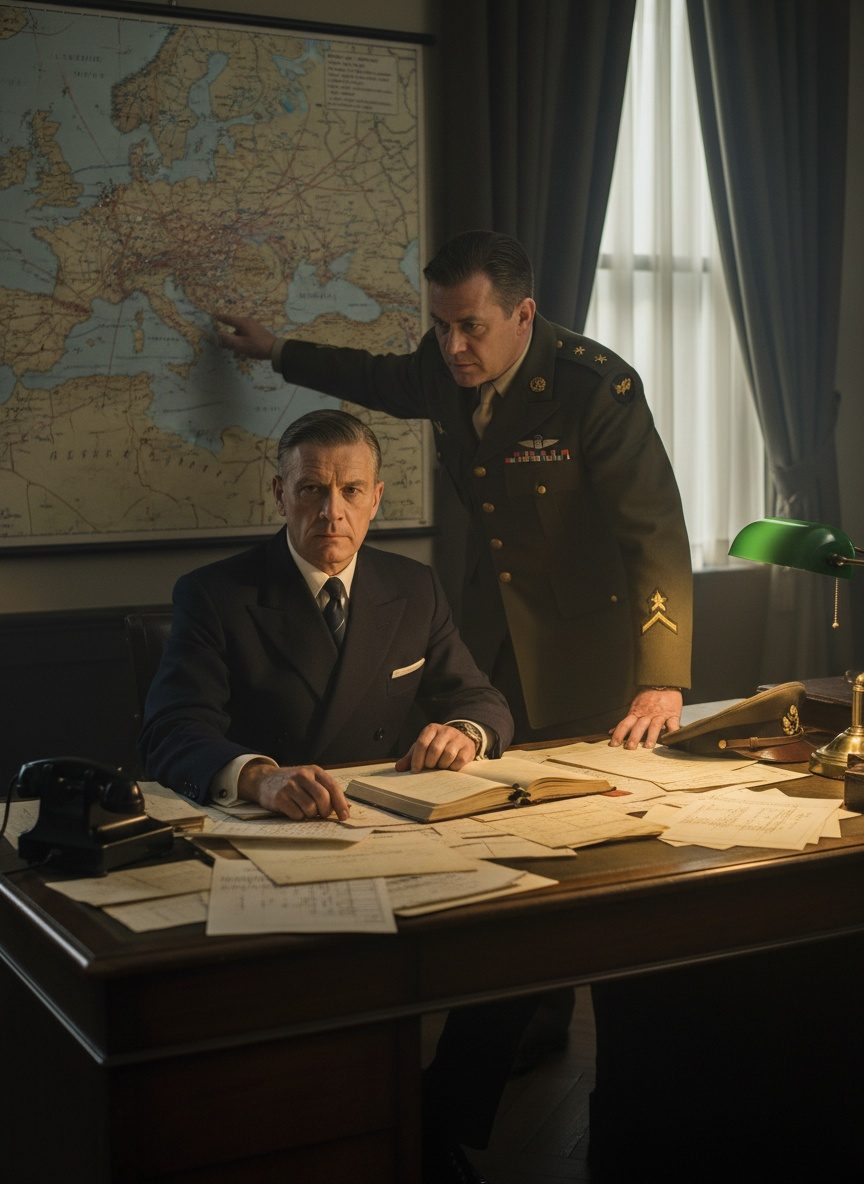
The dark wood-paneled room hums with the low murmur of clandestine activity. Desks are cluttered with papers stained with the ink of secrecy, and ashtrays overflow with the evidence of nerves soothed by cigarettes. The air is thick with tension and the click-clack of typewriters weaving a narrative of alliances. In the heart of wartime Washington, a handful of men map out a future unspoken and unwritten.
The Shadowy Genesis of an Alliance
Throughout the chaos of World War II, intelligence became the lifeblood of victory. In 1943, as the Axis forces threatened the very foundations of democracy, an unprecedented gesture unfolded. British and American codebreakers named the scarcely acknowledged yet increasingly vital BRUSA Agreement. Signing this secret signals deal in the middle of a ravaged globe, they utilized cryptographic prowess to weave strands of shared security and trust. Despite the crowded halls of formal treaties being debated openly, this particular agreement slipped under the radar, unseen and unchallenged.
Though historical record often dims in places shrouded by classified operations, the BRUSA Agreement represented a leap, not only in diplomatic friendship but in the evolutionary path of espionage itself. It wasn't long before this seed would germinate into what would be recognized as a garden of interconnected global intelligence — a tapestry surpassed by few initiatives prior. Behind every curtain of radio static lay a message waiting to be deciphered, and here lay the foundation to ensure it was.
A Pact Forged in Invisible Ink
By the time 1946 rolled around, the winds of war had shifted, but the embers of alliance needed fanning into a flame that could withstand the emerging Cold War climate. Enter the UKUSA pact, an intricate enhancement over its erstwhile cousin, BRUSA. The pact set the stage for what eventually became the most comprehensive intelligence network ever conceived. Yet, neither Parliament debated these fibers of agreement, nor did any newspaper capture its headlines or public interest.
The brilliance of minds from Bletchley Park combined with American counterparts had already shown the world that meticulous decryption yielded unimaginable power. The documents that followed in 1946 were not simply agreements; they were blueprints of a new geopolitical architecture, one fortified against any storm of secrecy. Those involved dared not speak its confines aloud, focusing instead on perfecting the tools needed to decode and defend.
Mapping a New World Order
In dusty government offices separated by thousands of miles of ocean, men and women worked tirelessly, shoulders hunched under the strain of secret-keeping. Each tick of the clock in this world saw information flow more seamlessly across borders than anyone could comprehend. Nodes in a network appeared wherever demands required — Sydney, Ottawa, Wellington; across the Atlantic and Pacific alike — all irrevocably connected by this invisible web.
Tasks varied from processing message traffic between allied nations to deciphering Soviet communications that spoke to a new order the world had yet to know. This rapidly expanding web of intelligence sharing allowed not just for the counteraction of threats but for predictive measures to ensure they rarely manifested. The ratification went unnoticed by outsiders, yet it was fortified by silent assurance, a bloodless weapon that undeniably altered the power hierarchy.
The Unseen Strings of Power
The very existence of such a detailed and reciprocal intelligence framework rested on what was never reiterated in public. Those who labored in obscurity did so with a stalwart sense of duty. Conversations encrypted in analog hues carried the weight of futures hinged precariously on knowledge gathering. Yet, as invisible as these proceedings were, the security they offered gripped tightly onto the freedoms cherished by those they protected.
The pact dug its roots not in soil visible by daylight but beneath the surface, where only shadows persisted. Its inviolability was never questioned nor tasked to the world's endless court of opinion. The vast intelligence network became a band of allies, spanning continents, cultures, and climates bound together by obligation rather than choice.
The Legacy of Silence
The strength of the UKUSA pact lies in its genesis as an unseen giant; influential not because of public acknowledgment, but because of its quiet endurance. Bound not by ink on paper but by coded trust, it serves as a reminder of the critical role of intelligence in safeguarding global peace. As the clandestine veils lifted ever so slightly over subsequent decades, the ripple of this secret remains a testament to how silence, if brandished wisely, can sculpt an undying legacy.
In a world crowding with noise and fleeting pronouncements, the pact provides perspective on the balance of power. It spurred a partnership whose resonance persists in the common corridors and covert passages of modern security apparatuses. History finds no ink for a treaty unsigned and no debates for alliances unwhispered, yet its invisible threads bind tighter than steel.