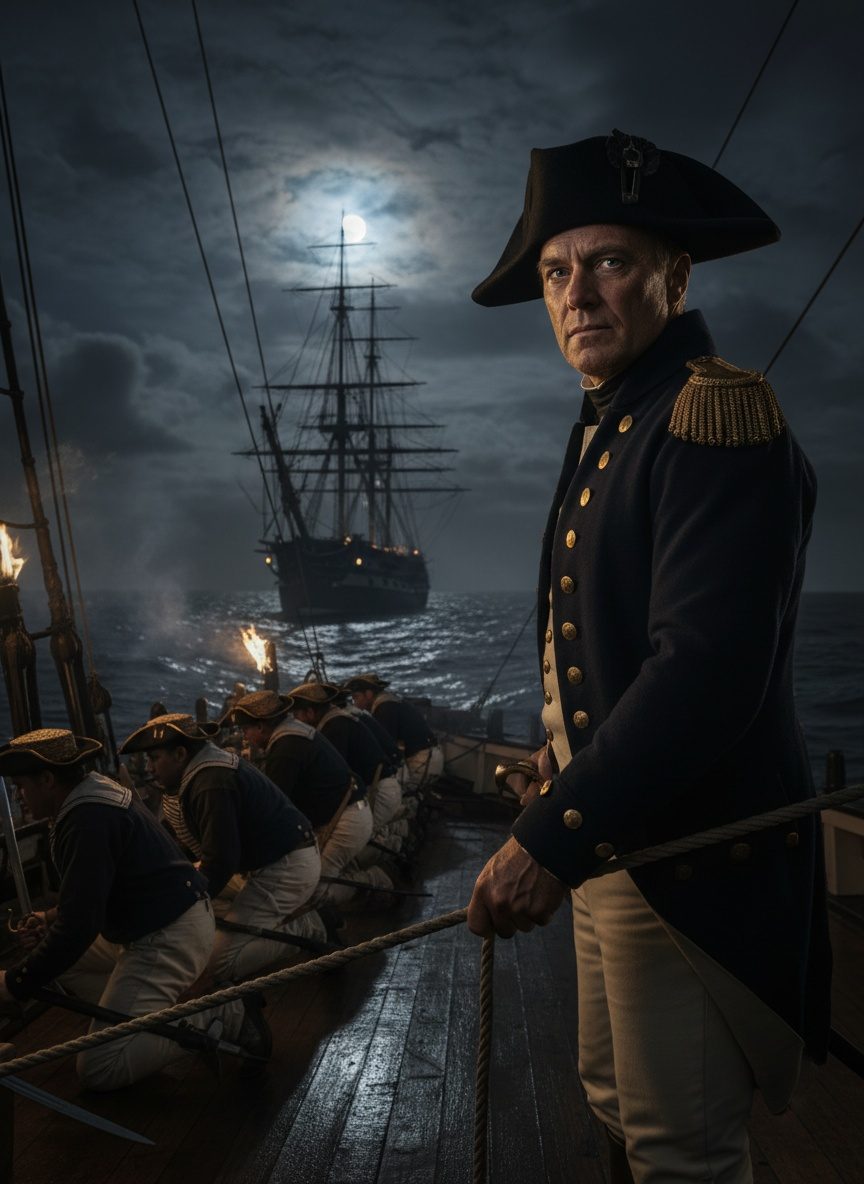
The deck pitched sideways under his feet as icy waves crashed against the hull, spraying a chill that cut deeper than a knife. Richard Chancellor, a navigator whose dogged determination drove him through the storm, clung to the ship's timber railings. The remnants of his fleet were somewhere in the tumultuous Arctic waters, lost in the storm's fury. Yet, Chancellor pressed onward, his eyes fixed on the horizon and the uncertain promise it held. The year was 1553, and only the foolhardy or the visionary dared tread where no Englishman had ever gone: the heart of Russia.
Chancellor's journey was born from a blend of daring ambition and necessity, at a time when England, under the Tudors, was eager to expand its mercantile horizons. The Muscovy Company, recently established, set its eyes on uncharted opportunities—beyond the known routes to spice-laden Asia and the wealthy courts of Europe. Chancellor, alongside two experienced navigators, plied the Arctic seas, drawn towards the untapped potential of Tsar Ivan IV's vast dominion. When the storm shattered the fleet, Chancellor's course could have ended there. But with the resolve of a true adventurer, he piloted the lone surviving ship, the Edward Bonaventure, into the unknown.
The sea journey was an unrelenting test. With his ship battered by the elements, Chancellor's determination was a beacon in the swirling gloom. As the icy Northern seas yielded to the grey waters of Russia's northern coast, he arrived at the port of Archangel. Here, for the first time, the English came face to face with Russia, a land wrapped in the legend of its vast, unyielding expanses and the fearsome Tsar who ruled it.
Stepping ashore, Chancellor found himself navigating the intricate labyrinth of Russian customs and language, armed only with his diplomatic instincts and a burning desire to forge connections. His mission: to reach Moscow and the court of Ivan IV, known ominously as Ivan the Terrible. Guided through the vast reaches of a landscape painted by the changing hues of autumn, Chancellor marveled at a realm both alien and hauntingly beautiful, deeply inscribed with the stories of forgotten tribes and powerful rulers.
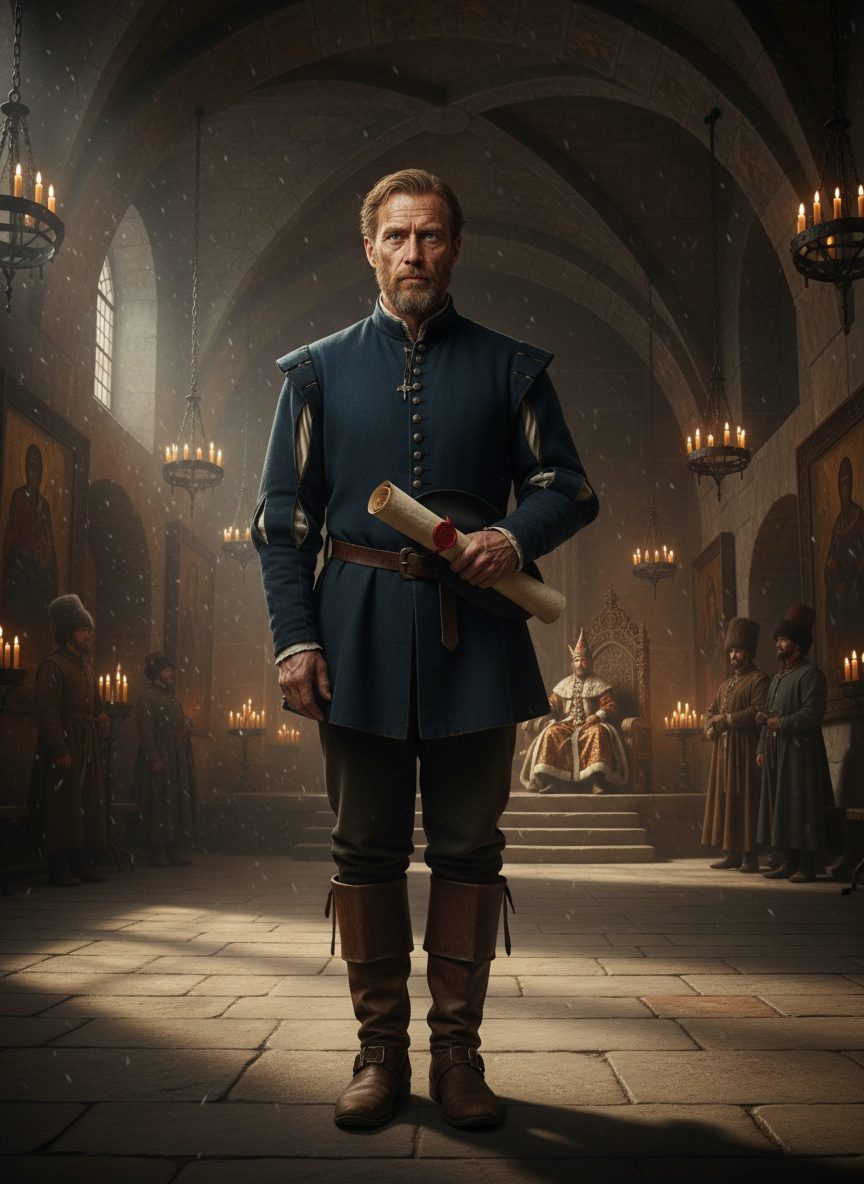
As he approached the towering walls of Moscow, an awe-inspiring tableau met Chancellor's eyes: the Kremlin. Its towering walls guarded the soul of Russia, a fortress of stone that signaled both sanctuary and power. No Englishman had ever stood where Chancellor now positioned himself, at the threshold of a new world. The resonant clatter of his boots on cobblestones echoed through the Kremlin's corridors. Here, in the heart of foreign splendor, Chancellor's journey culminated in an audience with Ivan IV himself.
In the midst of lavish adornment and the rich scent of incense, Chancellor found himself before the Tsar. With a bowed head, he presented the regal letter from Queen Mary I of England, a document laden with hopes of friendship and trade. For a son of England, the Tsar's court was a scene of almost mythical grandeur. Ivan was notorious, not only for his achievements—unifying Russia and establishing trade routes—but also for his ruthlessness, earning a sobriquet that colored Chancellor's every move with caution.
Through a cloud of interpretation and high diplomacy, Chancellor impressed the Tsar enough for Ivan to invite the possibility of England and Russia entwining their destinies. The prospect of a direct trade route with England was attractive to the Muscovy ruler, and Chancellor's calm demeanor and eloquent representation of English interests set the foundation for a dialogue that would transcend the cold winter they spent in Moscow.
Winter in Moscow was a spectacle like no other, as the city, bristling with ice, became a gem hard-set against a backdrop of snowfields, its fiery hearths aglow with the promise of warmth and life. Surrounded by the robust hospitality of Russian aristocracy and the stratagem of the Kremlin’s courts, Chancellor's skills were tested anew by cultural intricacies and political gamesmanship. Yet even in frostbitten uncertainty, he crafted alliances and nurtured mutual understanding, striking at the heart of what would become a significant relationship between two disparate realms.
Chancellor's eventual return to England carried more than the echoes of a promising alliance. Laden with gifts and letters that paved the way for profound economic and cultural exchange, his journey marked the first steps toward an expanding British Empire that would touch all corners of the Earth. The Muscovy Company flourished because of it, establishing England's first diplomatic mission in Russia and opening the door to a burgeoning trade in precious furs, grains, and other goods.
Beyond the raw materials and commerce, Chancellor's expedition ignited an era of exploration that inspired countless future endeavors, each charting new courses for English seafarers whose fleets would one day sail across every ocean. His meeting with Ivan the Terrible was no mere curiosity of history, but rather a pivotal juncture where two vastly different cultures recognized their power to influence, and be influenced by, the larger, interconnected world.
The fog of history often conceals the bold steps taken by figures like Chancellor, whose calculated risks opened pathways that others would long tread. In an era when crossing familiar boundaries required not just mastery of the seas, but also resilience, ingenuity, and charm, Chancellor’s bold navigation and daring diplomacy helped redraw the map of the known world. Each map bore his legacy, showing future generations that daring could indeed purchase prosperity, and that the breadth of one’s vision could extend beyond the cold grip of an Arctic storm into the welcoming hearths of a new ally. As much as Richard Chancellor’s journey was a testament to Tudor-era ambition, it stands as a reminder of the courage it takes to step alone into the vast unknown, and the profound connections one can forge through the will to confront and embrace difference.