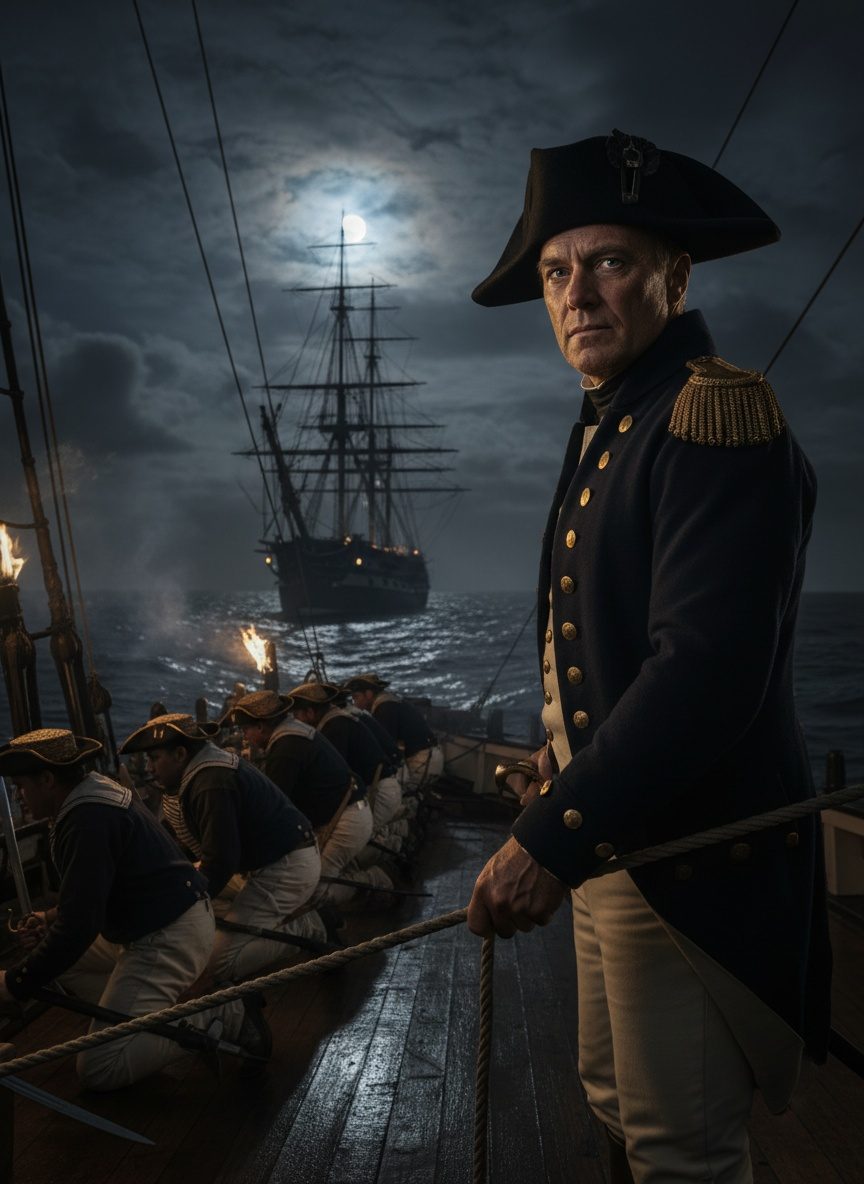
The deck shuddered violently as Thomas Cochrane's weather-beaten frigate cut through the dark Pacific waters, its worn timbers groaning under the strain of a bold maneuver that defied reason. With every roll of the ship, the smell of salt and gunpowder mingled in the air, while the midnight sky stretched endlessly above, a witness to the daring gamble unfolding below. This was the hour when legends were forged, as Cochrane and his crew braced themselves to face the formidable Spanish warship Esmeralda, just beyond the reach of Callao's protective guns.
The Outlaw Admiral
To grasp the audacity of what Lord Cochrane, the tenth Earl of Dundonald, was about to undertake, one must delve into the tumultuous path that led him there. Once a celebrated hero of the Napoleonic Wars, Cochrane's life in Britain unraveled in spectacular fashion. Stripped of his naval rank and cast out of Parliament after a scandalous trial, he had become a pariah in his homeland, branded a disgrace to the very fleet he had once served with distinction. But if Britain had turned her back on him, South America beckoned with the promise of redemption.
By 1820, the winds of independence were sweeping across the continent, with newly formed nations seeking sovereignty from Spanish rule. Chile, yearning for liberation, called upon Cochrane's naval genius to turn the tide against the colonial oppressor. Despite having little left to lose, Cochrane's strategic mind remained as sharp as ever, ready to achieve the impossible with a single aging frigate. Lord Cochrane had embarked on a quest not just to reclaim his honor, but to shape a new future across oceans he knew so well.
Against the Odds
The Spanish held the Esmeralda in high esteem, considering it the most powerful warship in the Pacific—a symbol of their dominance over the waters off South America's rugged coast. Defended within the heavily fortified harbor of Callao, the ship was surrounded by a formidable ring of harbor gun emplacements that could decimate any frontal assault. The tactical layout was designed to thwart exactly the kind of audacious move Cochrane was plotting.
Yet, Cochrane was anything but conventional. Understanding that boldness lay in unpredictability, he set course for the Esmeralda under the cloak of night. In this daring raid, surprise would be his greatest weapon. As his frigate ghosted into the harbor, lanterns on deck were hooded, and orders were whispered. The rushing of the sea along the hull became the drumbeat to a symphony of stealth and nerve.
Charting a course directly for the sleeping giant, Cochrane's vessel was but a sliver of wood against the darkness, invisible to the Spanish watchmen lulled by the calm night. The element of surprise hung heavy in the air. Within those precious moments before the assault, possible failure could not cloud the daring vision that had carried him so far.
The Lightning Strike
With the strike of midnight, the tranquility shattered as Cochrane unleashed a ferocious storm upon the port. His men, possessing nerves of steel and loyalty hard won by a leader who inspired the impossible, swung into action in a well-rehearsed ballet of combat. As grappling hooks bit into the Esmeralda's sides, the sleepy deck suddenly erupted with Cochrane's seemingly invisible crew.
Twenty minutes was all it took to seal the fate of the Spanish flagship. The fevered clash of steel on steel, the crack of musket fire, and the shouts of determined assailants echoed through the harbor, tossing sleep a million miles from the Spanish sailors awoken to the impossible horror of Cochrane's bold incursion. Spanish cannons, silent due to stupefied crews caught unprepared, stood impotent in the face of such a lightning-fast operation.
This wasn't just a victory of arms, but one of strategy and audacity. Cochrane's lightning-strike tactics reinvented the art of naval warfare, harnessing the power of surprise over brute force, as his daring maneuver became a nightmare engraved in the annals of Spanish colonial history.
The Echoes of Daring
As dawn broke over Callao, a new reality greeted the sleepy harbor. The Esmeralda, once the pride of the Spanish fleet, now flew the flag of Chile. A single frigate had turned the tide of naval power in the Pacific, with Cochrane's name whispered far beyond the shores of the continent. For Spain, the loss was not just of a ship, but a symbol, becoming a pivotal moment in their eventual retreat from the Americas.
In that fleeting midnight hour, Cochrane had penned a new chapter not just for Chile, but for himself. Freed from scandals, he recaptured his identity as a master strategist, a visionary who could still command oceans with his indomitable spirit. His actions echoed across time and tide, for they exemplified an unwavering belief that heroism resided in uncharted waters and in a soul willing to challenge the tides of convention.
Thomas Cochrane left an indelible mark, not only on naval history but also as a beacon for those who refuse to be crushed by circumstance. His audacious capture of the Esmeralda reminds us that history's compass is often guided by those who dare to sail against the winds of fate, redefining the boundaries of what is possible.