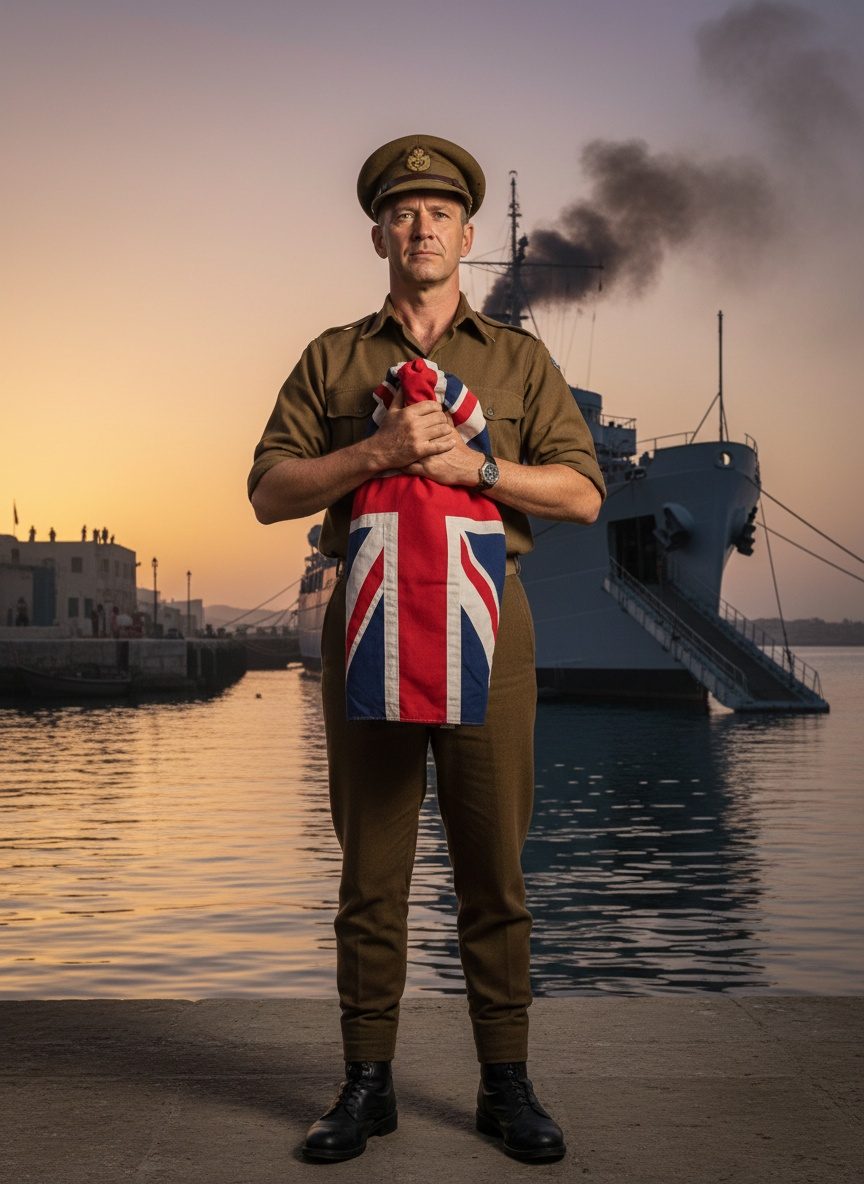
The Red Ensign unfurled proudly over Hong Kong's Government House for 156 years. All it took to end that era was one lowering ceremony in the rain.
On the Edge of the Empire
Hong Kong, a city renowned for its skyline and vibrant culture, bore the marks of its colonial history in every corner. Established as a crown colony in 1841, it burgeoned from a simple outpost into an indispensable node of British commerce, a brightly burning beacon of Western influence in the East. For the British, Hong Kong was a crowning jewel, a strategic and economic stronghold. The sun may have set on the British Empire long before 1997, but for Hong Kong, the imperial legacy was intact until its very last day.
On the cusp of this monumental day, June 30, 1997, the city hummed with anxious anticipation. The transition back to Chinese sovereignty had been the subject of intense negotiation, a dance of diplomacy that spanned decades. The Sino-British Joint Declaration, signed in 1984, outlined Hong Kong's return to China but promised a "one country, two systems" governance to preserve its unique economic and personal freedoms for fifty more years. Yet, as the hours waned into the final act of British rule, uncertainty clouded the air, blending with the tropical humidity.
The Ceremony in the Rain
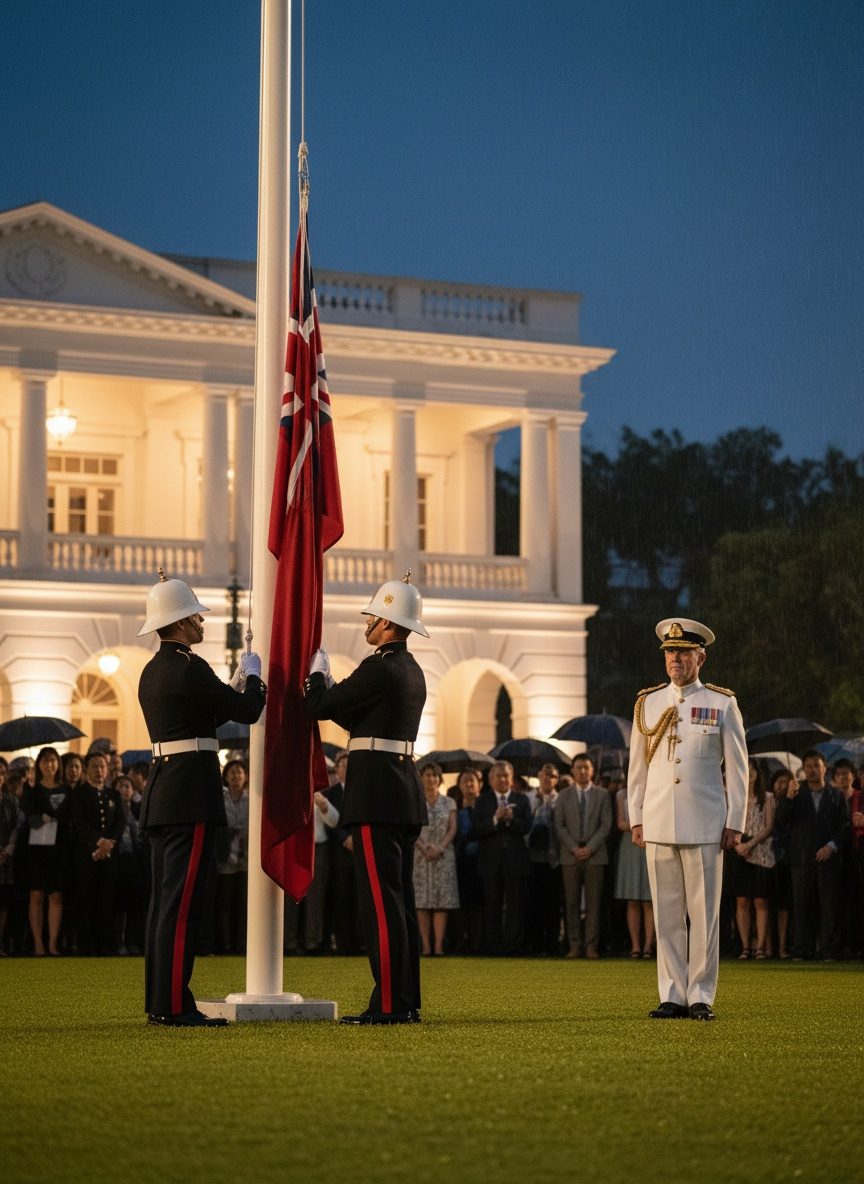
This was not a quiet, abandoned surrender but a highly orchestrated affair, meticulously planned and steeped in pageantry. As dusk descended, the guests gathered under a canopy of umbrellas, raindrops mingling with the somber mood. The Royal Marines, impeccable in their red jackets and white pith helmets, assembled in precise formation. Their mission: to lower the Red Ensign that signified the last vestiges of British authority in this corner of the world.
The ceremony unfolded with precision. Each movement of the colour party executed with ritualistic diligence, every fold of the flag handled with reverence. The lush gardens of Government House witnessed a tableau both poignant and profound. It was as if the mountains and harbors of Hong Kong watched in solemn silence, the shifting of power mirrored by the shifting clouds above.
As the clock inched toward midnight, the air thickened with the weight of history. When the Red Ensign descended for the final time, its absence left a space not just in the skies, but in the hearts of those who had known British Hong Kong as a home.
A Night to Remember
For those in attendance, it was a night indelibly etched in memory. From the last Governor, who stood—a solitary figure against the backdrop of history—to British dignitaries and Hong Kong citizens, each face reflected a kaleidoscope of emotions. Some experienced the moment as a cathartic closure, while others felt the pangs of an uncertain future.
Yet, it was not just the elite who marked this passage; the city itself bore witness. Across Hong Kong, people gathered by televisions and radios, both united and divided by the spectacle of transition. Fireworks lit the skies, their brilliance masking the palpable tension that weaved through the city's streets. From Kowloon to the bustling heart of Victoria Harbor, the night echoed with the mingled sounds of celebration, nostalgia, and uncertainty.
This transfer was no mere chapter closing, but an entire volume that had ended, one written in the language of imperialism, culture clash, and eventual handover. The poignant ceremony bespoke of an age where lines on a map dictated the fates of millions. The event crystallized the end of a saga, punctuated by flags and formalities, but filled with stories untold and lives interwoven.
The Day After
When dawn broke on July 1, 1997, Hong Kong awoke a Special Administrative Region of China. The sun rose anew, casting its glow over a city and people poised on the brink of change. The Union Jack, replaced by the Bauhinia, now fluttered atop Government edifices, a new era beginning where the old one had ended.
This transition was neither the first nor the last in the inexorable march of history, yet it underscores the enduring complexity of empires and their legacies. It served as a vivid reminder of how borders, allegiances, and governance are as fluid as the tides that surround an island.
In the end, the story of Hong Kong's handover is not just about flags and ceremonies, but about people, culture, and identity. It raises questions of sovereignty and self-determination, the balancing act between heritage and modernity. This intersection of past and future continues to reverberate, challenging us to consider how history is not just recorded in textbooks but lived in shared experiences and collective memory.