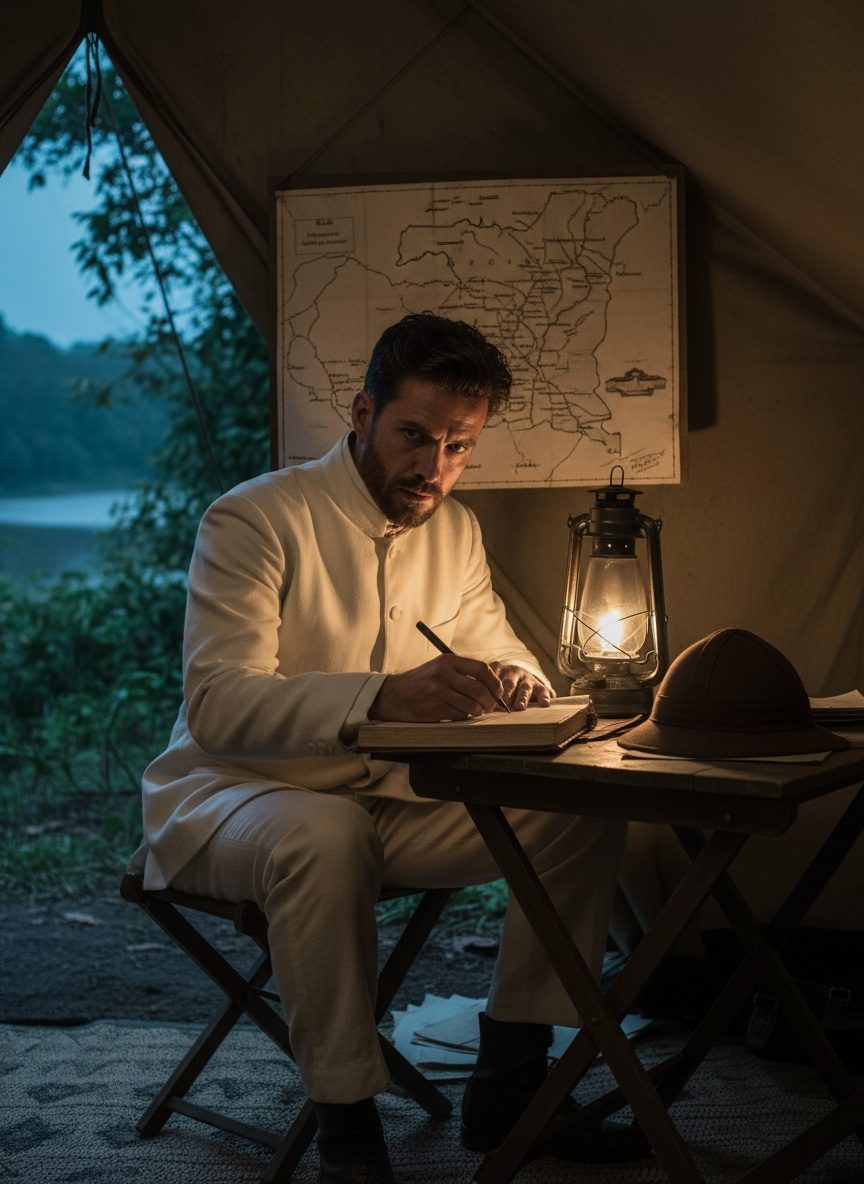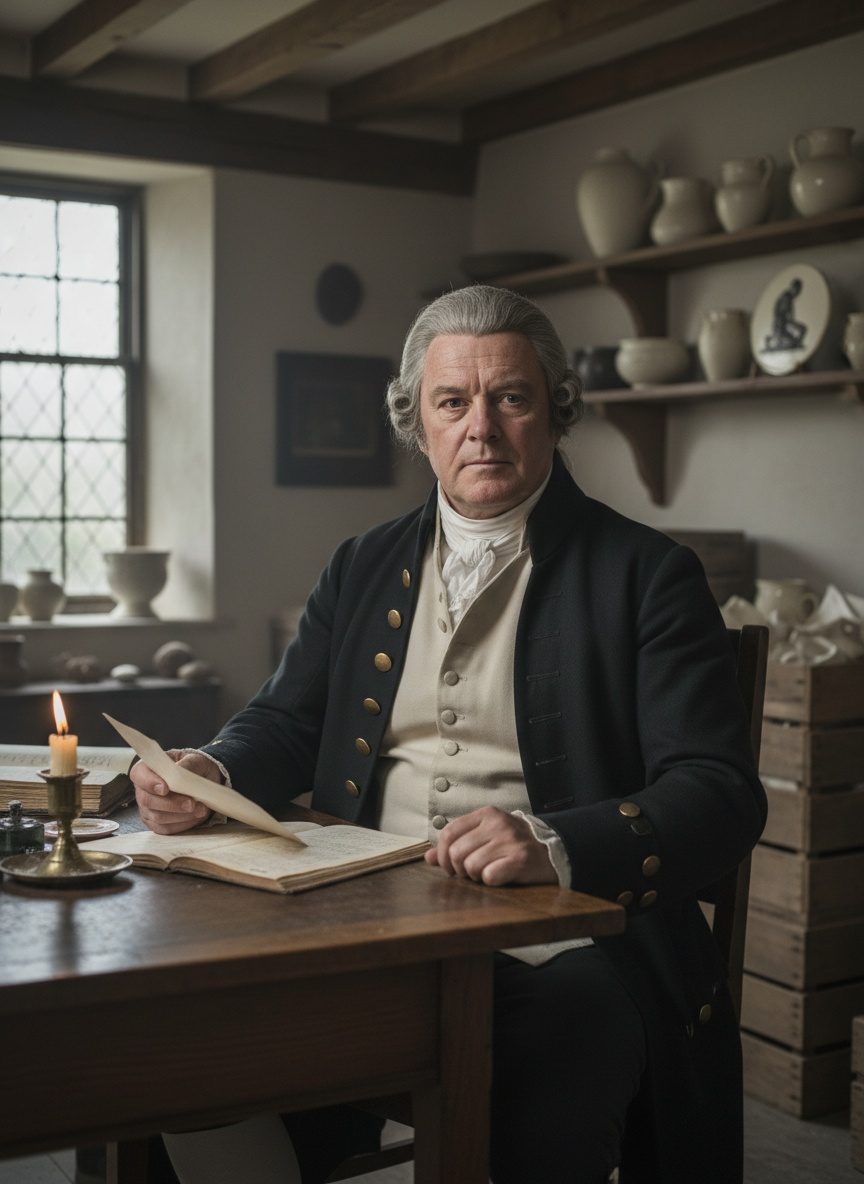
April 1788. The ink was still fresh on the parchment, but Josiah Wedgwood’s signature was glaringly absent.
Wedgwood's Workshop: A Master Craftsman at His Peak
In the heart of England, amidst the smoke and soot of the burgeoning industrial landscape, Josiah Wedgwood's workshop thrived. At the height of the Georgian era, Wedgwood was not just any potter; he was renowned throughout Europe, his craftsmanship gracing the dining tables of kings and nobles. His creations were more than mere tableware; they were a symbol of the new industrial age's possibilities, elegant yet accessible, durable yet ornate. With his innovative techniques and an insatiable curiosity, Wedgwood transformed the clay of Staffordshire into the world's most desired porcelain.
However, beyond the gleam and perfection of Wedgwood china, a moral dilemma simmered. Amidst the churning gears of commerce, Josiah Wedgwood was at a crossroads that would challenge not just his pocket but his principles. An enormous order from a Bristol merchant—a shipment demanding five hundred pieces of his finest china—landed on his desk. For many, this fresh offer would represent prosperity and new promise. But for Wedgwood, it bore the bitter taste of a deal tainted with ethical dissonance.
Slavery's Shadow on Bristol's Waters
During the late 18th century, the port city of Bristol burgeoned as a hub of trade, not only in goods like sugar and tobacco but also in the appalling human commerce of the transatlantic slave trade. Ships crested the waves, weighed down by cargoes of human beings torn from their lives and families on the African continent. It was through such merchants that wealth flowed into Britain's coffers, albeit tainted by the unconscionable exchange of human life for coin. The economy of cities like Bristol owed much of their prosperity to this inhumane enterprise.
Yet, in 1788, change was afoot. The year saw the House of Commons receiving a petition with over 100,000 signatures demanding the abolition of the slave trade, igniting both the conscience of a nation and the discussions within its grand chambers. Calls for reform resonated across England, fueled by growing awareness and indignation. Josiah Wedgwood, a man of the Enlightenment, found himself swept into this tide of moral questioning.
The Order That Required a Response
Wedgwood prided himself on his refinement and progressive thought. Among his close friends were the leading luminaries of the time—figures like his brother-in-law Thomas Bentley, a fellow abolitionist, and members of the Lunar Society, the intellectual hotbed that spawned ideas running currents through society. As Wedgwood skimmed the order form from the Bristol merchant, he could not divorce his craft from his convictions.
To many of his contemporaries, commerce was a pursuit detached from morality, a mere transaction across counters. Yet, the initials that marked the corner of the page linked the patron to the slave trade. It wasn't merely a purchase but a question summoning an answer: Was Wedgwood to profit from a system he believed inherently wicked?
Thus, with quiet determination, he chose to let the offer pass, undelivered, unsigned. It was a decision that echoed a growing movement within the nation—one that valued human life above riches, principles over profit. For Josiah Wedgwood, his china was for the tables of people who could appreciate their beauty unmarred by human cost.
A silent Stand Against Injustice
Josiah Wedgwood’s simple action—returning an unsigned order—signified an eloquent stance far beyond a business transaction. It was a ripple in a sea of moral awakening, a whisper of resistance among the tumult of commerce and conformity. His quiet rejection spoke to a broader narrative, that of resistance within a new order of trade where the moguls of industry wrestled with the pressing issues of human rights and ethical responsibility.
This gesture aligned him with the growing abolitionist movement, setting a precedent for other industrialists to follow. Indeed, Wedgwood's engagement went beyond mere rejection of business deals. In the same breath that he denied the Bristol merchant, he crafted a different artifact, a medallion inscribed with the words "Am I Not a Man and a Brother?". These small emblems became a powerful, visceral call to conscience, distributed widely to galvanize public sentiment against the brutality of slavery.
Legacy of a Potent Gesture
Josiah Wedgwood’s refusal of the order in 1788 was not merely a loss of potential profit; it was the assertion of a moral high ground. This seemingly small act of defiance contributed to a larger conversation about the intersection of commerce and morality, challenging the view that business should remain unscrutinized by ethical standards. His actions exemplified personal integrity—a declaration that progress should not inherit the debts of moral blindness.
The decades that followed would see the gradual dismantling of the transatlantic slave trade in Britain, as advocates tirelessly worked to change hearts, minds, and legislation. And while these efforts required the collective might of many, Wedgwood’s principled stand remains a vivid reminder of individual influence in shaping the course of history. At its heart, this episode prompts us to reflect on the enduring question faced by every generation: how to wield one's influence—no matter how seemingly small—in the advancement of justice.