June 1904. Under the oppressive heat of the central African sun, the lush canopy of the Congo rainforest concealed the scars of human suffering. It was into this heart of darkness that Roger Casement, a quiet yet resolute Irishman, ventured with a mission to shed light on an empire built on brutal exploitation.
The Path Less Trodden
As a British consul, Roger Casement had long been exposed to the complexities of imperial diplomacy. Yet, his conscience was awakened by the whispered tales of horror emerging from the Congo Free State, a vast enterprise secretly and ruthlessly governed by Belgium's King Leopold II. Established in 1885 as essentially the king’s private fiefdom, the Congo was a paradox—rich in resources yet impoverished in humanity.
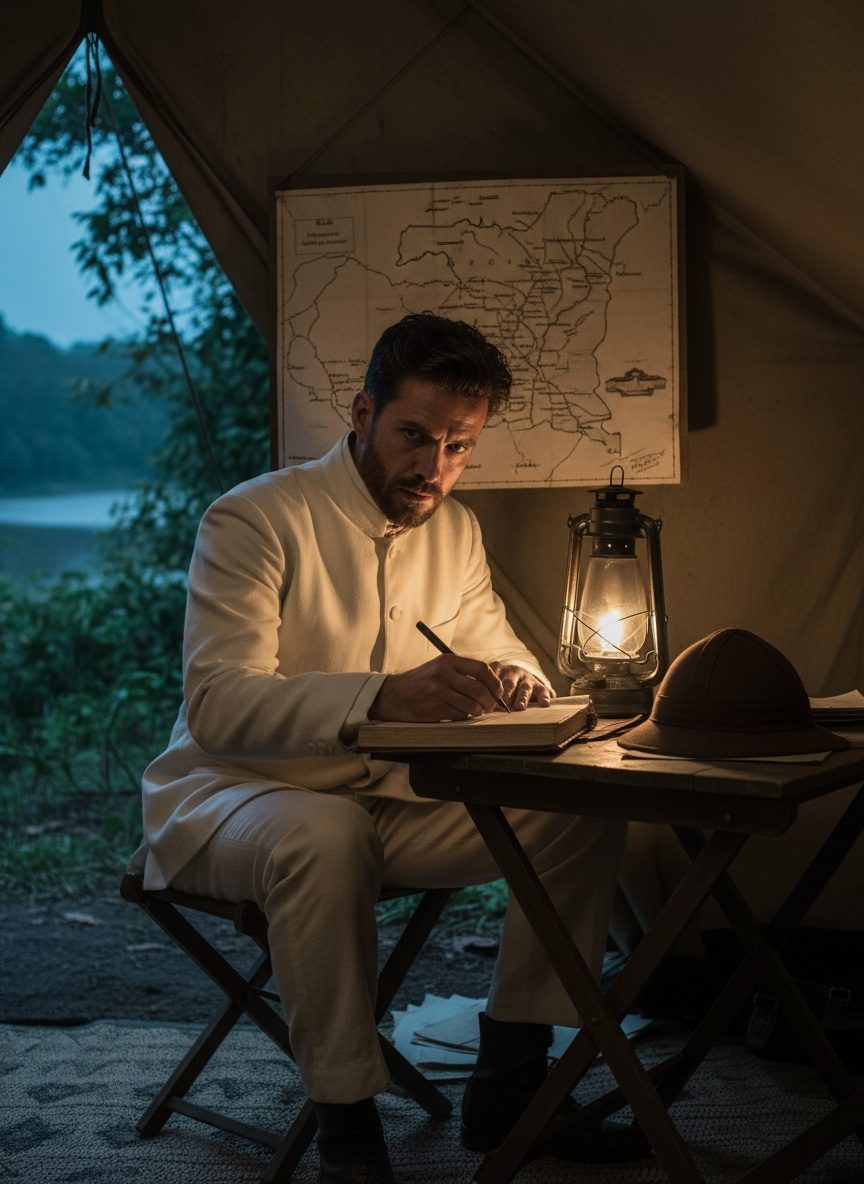
Determined to see with his own eyes, Casement embarked on a perilous journey down the Congo River, past the monolithic trees and the heavy air filled with the calls of unseen wildlife. He arrived not with the pomp of a colonial authority but with a battered notebook and a desire for the truth. What he discovered were the remnants of lives decimated by an insatiable quest for rubber, a commodity commanding high prices in the burgeoning automobile age of Europe and America.
This journey was treacherous not only due to the terrain but because of the clandestine nature of the atrocities at hand. Villages were ghostly quiet, the vitality sucked out by repeated forced labor and unspeakable violence. Casement knew he was witnessing not just abuse but a systemic annihilation of a people’s way of life—hidden beneath layers of bureaucracy and silence.
The Report That Echoed
Casement's return to the United Kingdom marked the beginning of an astonishing campaign. His report, a meticulously detailed account of the exploitation and brutality faced by the Congolese, was not merely a document to be filed away in the annals of colonial records. Instead, it roared with an intensity that demanded attention from governments, media, and the public alike. He documented villages decimated by disease and starvation, caused not by natural calamities but by human greed and cruelty. Testimonies from survivors painted vivid images of hands severed for failing to meet rubber quotas, children orphaned, and communities torn asunder.
The release of Casement’s report was akin to pulling back the shroud that had so long veiled the horrors of the Congo Free State. In an era where the written word was as powerful as any weapon, his findings ignited one of the earliest international human rights movements. Philanthropists, church groups, and horrified citizens quickly mobilized, their voices clamoring for justice echoing beyond Britain to Belgium and beyond.
No longer could King Leopold II maintain the facade of benevolent rule. Casement’s truth, inscribed in pages sullied with the sweat of his journey, had lit an unquenchable fire.
An Uncertain Response
The initial reluctance of Casement's own government to confront the Belgian sovereign offers a telling insight into the murky waters of imperial politics. While his report was received with public outrage, the corridors of power were slower to act. Diplomatic ties weighed heavily against moral imperative, illustrating the extent to which economic and political concerns could overshadow human decency.
Yet Casement found an ally in Edmund Dene Morel, a British journalist and reformer, whose own campaign against the Congo atrocities leveraged Casement’s findings. Morel, with the support of Casement, founded the Congo Reform Association, which tirelessly advocated for change through newsletters, public meetings, and insistent lobbying. Together, they forged a path through indifference and denial, placing headlines that could not be ignored before politicians, clergy, and citizens alike.
The international pressure mounted. King Leopold, once shielded by the distance of his African territory and the complexities of international diplomacy, found himself scrutinized by an increasingly informed world. The purity of Casement’s unwavering conscience, coupled with Morel's strategic campaigning, began to turn the tide.
The Fall of a King’s Empire
By 1908, the impact of the furor instigated by Casement's report was undeniable. The Belgian government, faced with international condemnation and internal pressure, forcibly annexed the Congo Free State from King Leopold. Thus, the region transitioned from being a sovereign’s personal possession to a Belgian colony, where albeit slow, reforms began to take shape.
The transfer was not an immediate panacea. However, it marked a significant step toward reducing the scale of abuses and offering a semblance of legal oversight where none had existed before. Leopold’s empire of terror had been dismantled by the simple yet profound act of truth-telling.
Casement’s enduring legacy was not just in the words he wrote but in the ripples they sent across the globe, inspiring a new standard for international human rights advocacy.
The Quiet Power of Truth
Roger Casement’s story is one that underscores the profound power of bearing witness. It reminds us that even in an age dominated by economic and political self-interest, the courage to speak out can incite change that resonates through history. His meticulous documentation was not merely an indictment of a single tyrant’s ambitions but a clarion call for humanity to hold itself accountable.
As we reflect on the ripples started by Casement’s report, we are reminded of the quiet strength of individuals who, driven by conscience, refuse to ignore the suffering of others. In today’s age where truth and justice continue to face challenges, Casement’s voyage into the Congo stands as an inspiration—a testament to the belief that light can pierce even the darkest enclaves of human despair.