At Albuera, it seemed the British were destined for defeat. Yet a single call from a bugle shifted the tide of battle.
The Onslaught of Albuera
The year was 1811, and the Peninsular War was raging across Spain. Albuera, a small town caught in the crosshairs of empires, became the stage for one of the conflict's most brutal encounters. The British and their allies took a stand against Colonel Philippe Laborde's seasoned French forces, anticipating a gruesome confrontation. By May, the hillsides were teeming with soldiers — a tense calm preceding the storm.
The battle exploded into chaos when the French cavalry, ferocious and unrelenting, broke through the British defenses. Two brigades crumbled under the sheer force of the assault, leaving behind a wake of chaos and confusion. The Fusilier Brigade, already bloodied and bruised, teetered on the brink of collapse as French forces bore down with merciless fury. Officers lay among the fallen, leaving the chain of command in disarray.
A Crucial Sound Pierces the Din
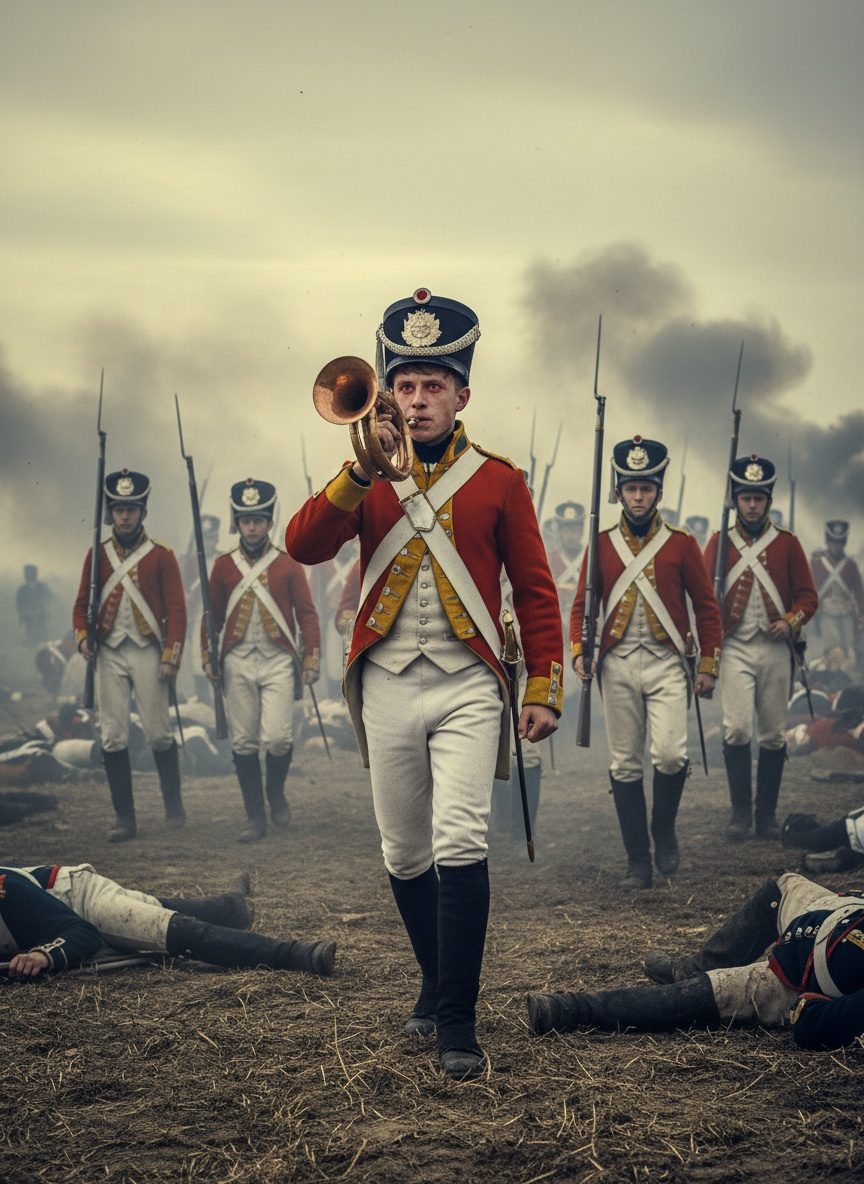
Amongst the cacophony of warfare—the mingled cries of the wounded, the crash of cannon fire—most might mistake the sound of a single bugle as one more note in a symphony of destruction. Yet in this turmoil, a solitary bugler's call cut through the despairing hum, its sound both a sharp imperative and a beacon of hope.
This moment showed the power music possesses in war; it was the one sound that communicated on a primal level, invigorating the spirits of those who were ready to relent. Those familiar notes of an advance, sharp and resounding, sliced through the fears that gripped the souls of soldiers. The British soldiers, embattled Fusiliers included, took a collective breath, sensed a shift, and prepared to face the storm once more.
The Unexpected Advance
What transpired next was nothing short of extraordinary. Wrested from the clutches of a bleak surrender, the foot soldiers, following the bugle's directive, reformed their ranks with a sense of renewed purpose. Like a phoenix rising, they surged forward against the ferocious cavalry, bracing themselves against the enveloping might of French martial prowess.
The charge was no ordinary rally. It was more akin to an act of defiant courage, soldier stepping forward after bloodied soldier, pushing towards unyielding adversaries. The bugler, who sparked this daring reversal, became a symbol of steadfast resolve, instilling confidence through urgency and clarity in a field strewn with the detritus of war.
The Battle Transforms
The French, caught unawares by the counterattack, struggled to maintain momentum. It was an unexpected response from men all but resigned to their fate, and the tide of battle began an unforeseen turn. Grapeshot thundered from both sides; metal shards whipped through the air, a deadly mist enveloping the battlefield. Yet, driven by that clarion call, the Fusilier Brigade pressed on.
This reversal marked more than a tactical shift. It was a testament to the indomitable spirit of the human heart—unwilling to sacrifice bravery amidst turmoil. Accounts describe this turning point at Albuera as electrifying; the palpable thrill as columns advanced, the air thick with determination and flaring tempers beneath the hot Spanish sun.
The Power of One Voice
The Battle of Albuera, bolstered by the resolve of a bugler's call, culminated in the British securing a narrow, hard-fought victory. What could have descended into calamity became a tale of resilience fed by the vitality of sound. This episode underscores the sometimes understated, yet profound impact a single decisive moment can bear.
In history's grand narrative, where wars are told through great generals and significant sieges, the story of a lone bugler at Albuera reminds us of the human element that underpins such tales. Warfare remains as much about spirit as it is about strategy, often determined by the intangible and unpredictable presence of courage in the hearts of the seemingly powerless. For those who prevailed that day, and for those who tell their story, Albuera stands as a poignant echo of how a single voice can defy the thunder of cannon and the tumult of war, altering the course of history with nothing more than breath and brass.