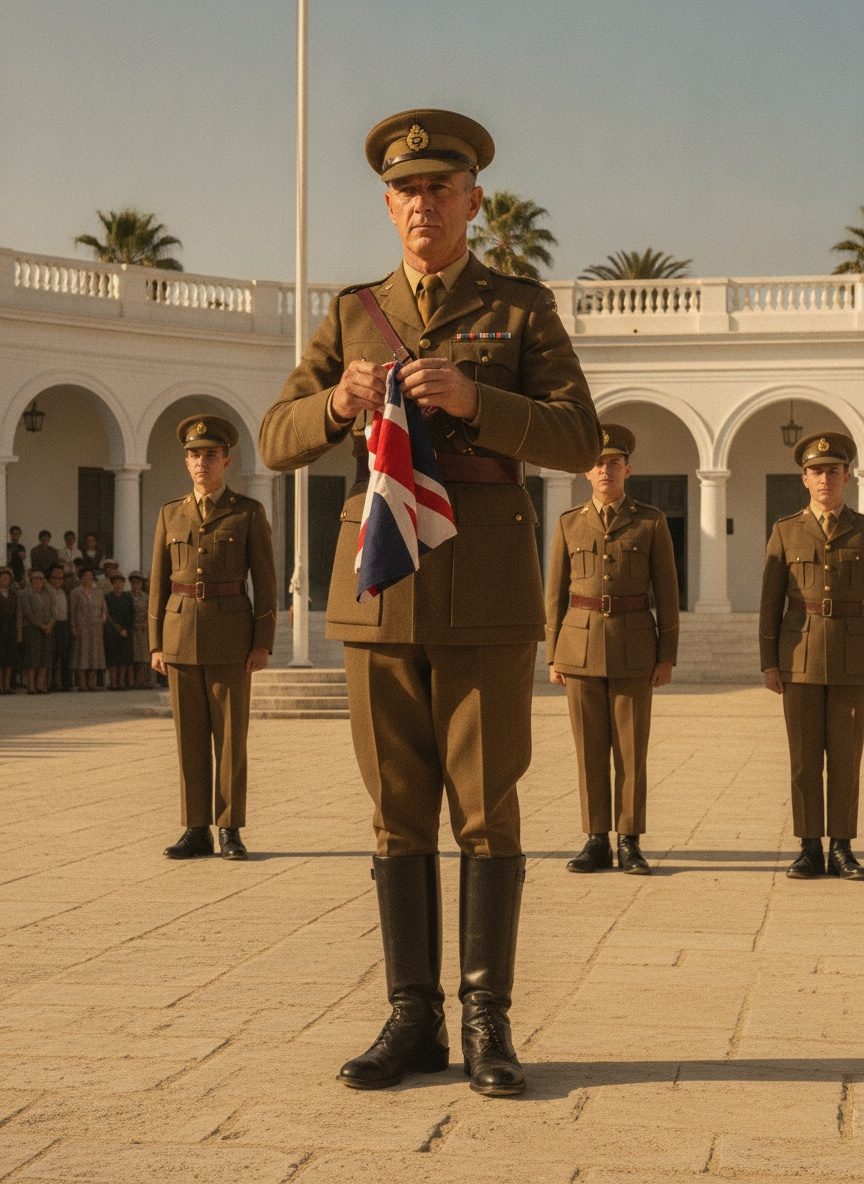
He was no soldier. William Hawkins was simply an English merchant.
The Merchant in the Emperor's Court
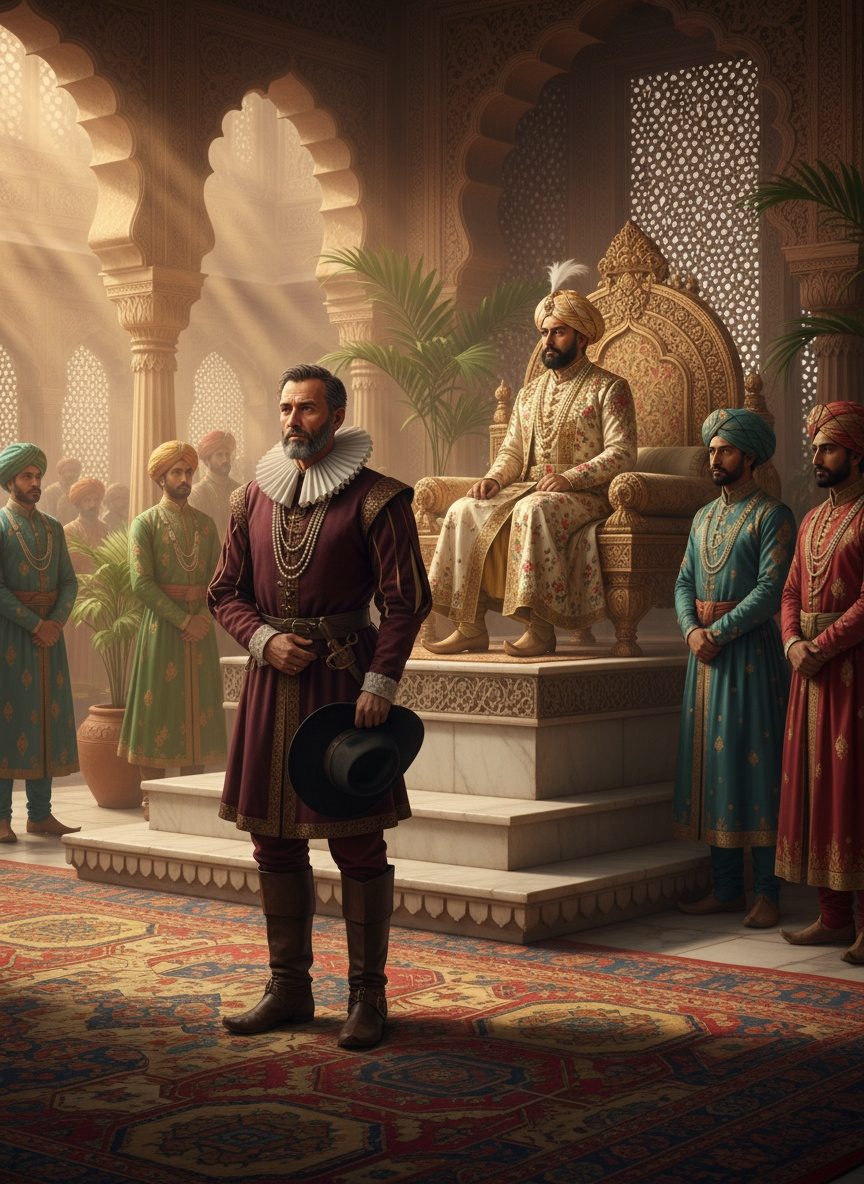
In 1608, William Hawkins embarked on a journey that many would deem audacious, perhaps bordering on folly. With neither an army nor a fleet by his side, this Englishman found himself standing before one of the most powerful rulers of the time: Emperor Jahangir of the Mughal Empire. In an era defined by empires built through force and military might, Hawkins carried nothing but a letter of credibility from King James I and an exceptional ability—the gift of eloquence in multiple tongues.
Hawkins' multilingual skill set was his most potent weapon. At first glance, an English sea captain conversant in Turkish may seem an oddity. However, this proficiency proved invaluable, for the court of Jahangir was rich with Persian influences, and Turkish was mutually intelligible to an extent with Persian, the Mughal court's lingua franca. It was an unexpected opening, a common ground that would enable Hawkins to bridge worlds. His ability to converse directly with the Emperor, bypassing potential fragmentation in translation, positioned him uniquely amongst the foreign visitors to the Indian subcontinent.
The Mughal court was unlike any other Hawkins had encountered. Resplendent with jewel-toned silks, intricate carvings lining the walls, and a mingling of exquisite perfumes drifting in the air, it was a world away from the austere, rain-swept courts of England. Nurseries of art and culture flourished under Jahangir's reign, a patron who not only strengthened his empire through alliances but also cherished the delicate strokes of miniature paintings and the intricate carvings of Mughal architecture. In this vibrant milieu stood Hawkins, presenting not weapons nor force, but opportunities for trade and alliance.
Words Over Weapons
The interaction was a dance of diplomacy. With words as his sole arsenal, Hawkins extended the hand of British trade and commerce, navigating the tides of diplomacy with deft precision. His engagement with Jahangir was discreet, reliant solely on the power of communication and mutual benefit. Hawkins understood that this was no simple barter in a bazaar, but a subtle negotiation that required not only a keen understanding of trade but also of respect and cultural appreciation.
Hawkins' mission, borne of the ambitions harbored by the newly formed English East India Company, was to establish a foothold in India—a task fraught with competitors from Portuguese, Dutch, and other European factions entrenched in the subcontinent. But, uniquely, Hawkins' approach was devoid of the aggression that characterized many of his contemporary western counterparts. His strategy relied on building personal rapport with Jahangir. Becoming a favoured guest at the court was no small feat, achieved not through wealth, but through sincerity and charm.
Records from the period suggest Hawkins’ fluency impressed Jahangir, sparking an inherent curiosity the Emperor held for the world beyond his borders. Through Hawkins, Jahangir received letters from King James I—enticingly sealed with symbols of royalty and laden with promises of beneficial exchange. It is said that Jahangir appreciated not only the goods but also the stories that the Englishman carried as he described the distant lands of Europe. This novel connection forged through dialogue, storytelling, and cultural curiosity laid the groundwork for an unprecedented relationship.
The Footprint of a Merchant
William Hawkins may not have realized the vast implications of that initial interaction. While his sojourn in the Mughal court was singular, it was a seed planted in fertile ground, foreshadowing an era of British involvement in Indian affairs that would eventually alter the course of history. This humble beginning was an initiative promising equitable trade; but it set in motion a series of events leading to the British Empire's eventual dominion over vast parts of the Indian subcontinent.
In essence, Hawkins’ success stemmed not from superiority, but from his understanding of nuance and empathy—allied with Britain's imperial aspirations. The alliance secured through dialogues nurtured over months at Jahangir’s court began a series of treaties and permissions that would embolden England's presence in India. It demonstrated that while military conquest was a dominant force in empire-building, strategic personal connections formed in courtrooms and salons could be as transformative.
For modern readers, this story isn't just a historical curiosity; it's a reminder of the power of diplomacy and cultural exchange over brute force. Hawkins' journey to the Mughal court suggests that humanity's greatest empires, and the most profound shifts in history, often hinge on unexpected meetings and the simple act of opening a dialogue. In a world constantly reshaped by power and politics, perhaps it is the quiet conversations, the intangible connections between cultures, that leave the deepest imprints on our shared past.