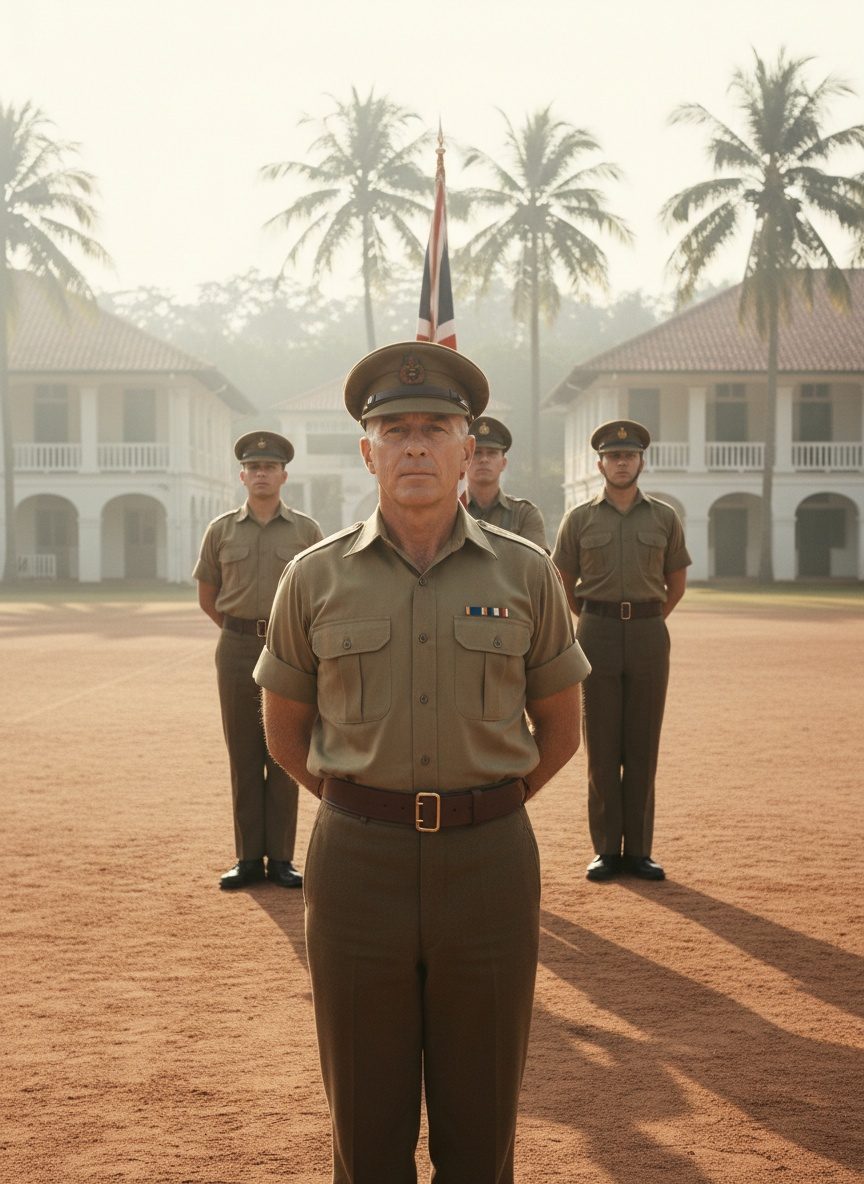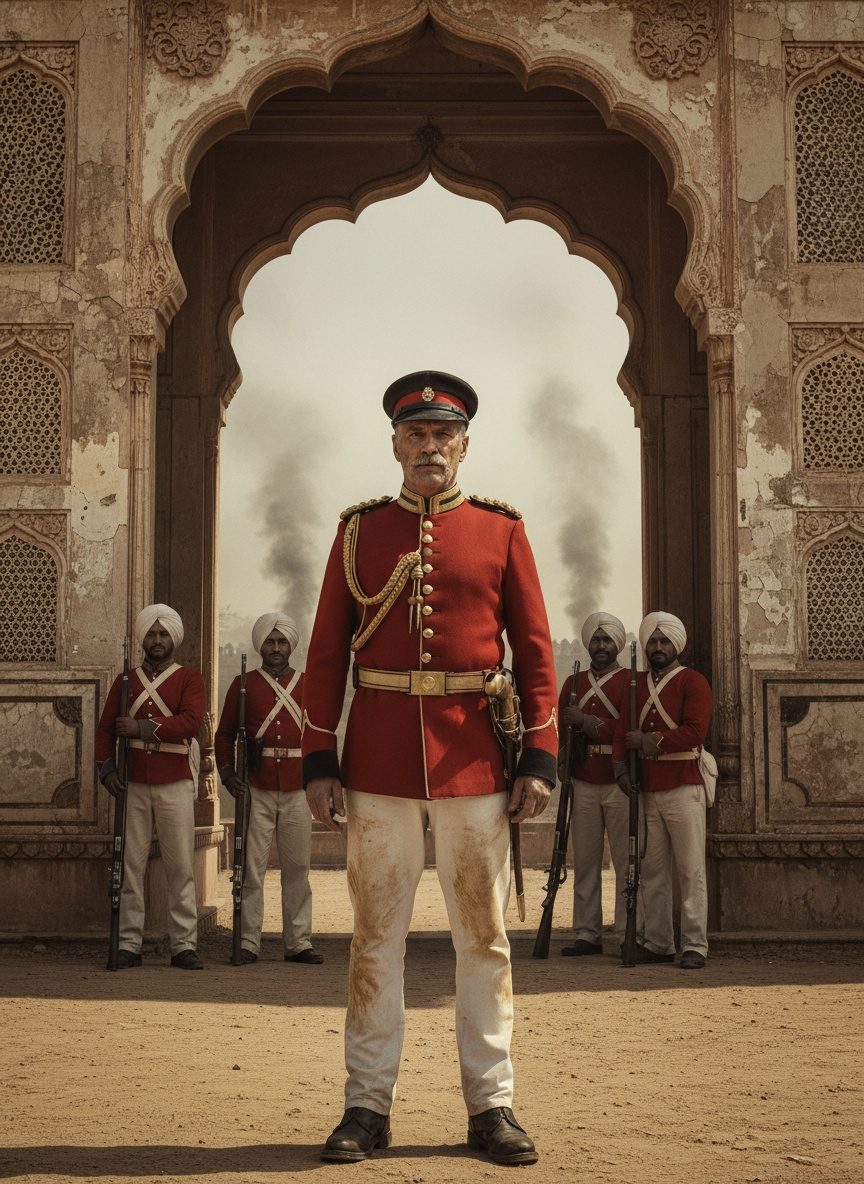
The night air was thick with smoke and gunpowder as the chaos of battle enveloped the British Residency in Lucknow. Cannon fire echoed through the compound, while the desperate cries of wounded soldiers mixed with the determined shouts of those still fighting. Inside the Residency, the situation was dire. The walls, once thought to be impenetrable, were crumbling, and supplies were dwindling. It was in this crucible of despair and determination that a singular act of courage unfolded, a story almost lost to history.
Amidst the cacophony, a lone officer stood with resolve that belied the desperation around him. He was surrounded by anxious faces, women and children seeking shelter from the relentless siege. The decision he was about to make could mean life or death—not just for himself, but for over a thousand souls huddled within the confines of the Residency. He made his way through the narrow, dimly lit corridors, each step drawing him closer to what many would consider an act of madness. But desperate times called for measures beyond the ordinary, and this officer was prepared to gamble everything.
His mission was personal yet selfless, and his only weapon was his sharp mind and an iron will. The Residency had been besieged for weeks, and relief seemed a distant mirage. As the officer slipped out under the cover of darkness, navigating past the sentries and the noise of combat, he knew that his plan was the thread on which countless lives now hung. His goal lay within the heart of the rebel territory, where the hopes of negotiation were as tenuous as the ebbing spirit of those he left behind.
The officer, whose identity has faded into the margins of history, ventured through the hostile cityscape of Lucknow, every shadow a potential adversary. The air was heavy with tension as he approached the court of the rebel leaders. This was no place for the faint of heart; each footstep echoed with the ghosts of those who had dared defy the odds. But he stepped into the torch-lit chamber, alone and unarmed, where the rebellion’s commanders awaited.
Imagine the scene—an ensemble of stern men, the flicker of lamps casting elongated shadows, and this uninvited British officer, standing before a gathering that held neither sympathy nor affection for him. Lucknow was a powder keg, its streets lined with a rebellion born out of festering resentment against foreign rule. The dissolution of trust, kindled by both recent and historical grievances, had ignited this violent struggle for autonomy.
The room fell silent as he proposed his bargain, a bold gamble given credence only by his resolute calm. His voice, steady against the tension, carried an offer: safe passage for the innocents trapped in the Residency in exchange for future negotiations. The rebels, cautious but intrigued by his audacity, listened. The officer's task was to convince them that it was in their best interest to showcase their humanity, to wield compassion as a strategic advantage on the world's stage.
Time seemed to stretch as he awaited their response, the weight of uncertainty pressing heavily upon him. The intensity of his bluff lay in his ability to appear as though the assurance of a thousand lives rested assuredly upon his words. The gamble was staggering, for he had no guarantee of success, and the consequences of failure were unimaginable.
In a move that defied expectations, the rebels agreed to his terms. Perhaps it was respect for his audacity, or perhaps the rebels saw an opportunity to gain favor in the eyes of their fellow countrymen and the world by acting with magnanimity. Either way, the officer emerged from the chamber, his task complete, his nerve unbroken, his life intact—and the lives of those he had pledged to save were now possible.
As he retraced his perilous path back to the Residency, relief mingled with disbelief. He had ventured into the storm and returned. His fellow officers and the civilians welcomed him as a harbinger of hope, a beacon in their darkest hour. With the promise of evacuation secured, spirits soared, and preparations for the long-awaited escape began under the first light of dawn.
Amid streets thick with the charged atmosphere of an uneasy truce, the refugees marched. The officer's success was evident in the faces of the people making their way through the precarious peace he had brokered. They wore the expressions of those who had been granted an unexpected gift—their lives—and the silent gratitude directed towards their savior spoke volumes of the risks he had taken.
In the annals of history, this act of bravery stands largely uncelebrated, overshadowed by grand narratives and well-documented campaigns. Yet, in the microcosm of Lucknow's siege, one man’s audacity became the fulcrum upon which the lives of many balanced. His blend of diplomacy, cunning, and sheer daring played no small part in this life-saving enterprise.
The story of the officer who bluffed an emperor serves as a powerful reminder of the complexities embedded within the colonial framework of the Victorian Era. It illustrates the potential for human courage and ingenuity to transcend the limitations of strategic warfare, epitomizing a chapter where intellect and nerve carved out a space for compassion amidst the horrors of conflict. What remains is not just a tale of conquests and defeats, but an enduring testament to the determination to uphold humanity in even the least forgiving of circumstances.