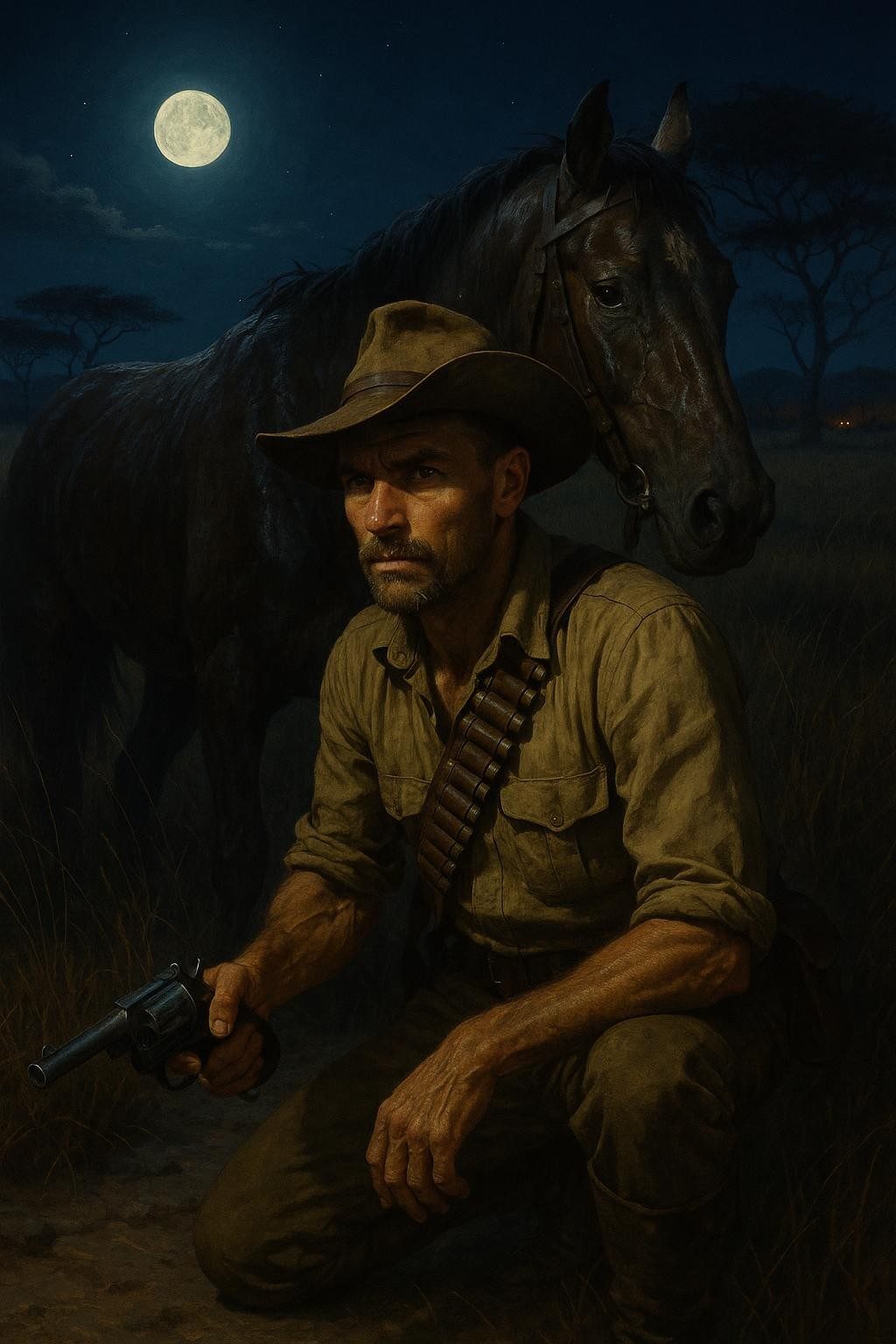
He had been in Africa for only three years. Yet, Trooper Frederick Burnham had already witnessed more than most men see in a lifetime.
The Chase Begins
In the chill of the African dawn, Major Allan Wilson’s patrol embarked on a perilous mission through the rugged trails of Matabeleland, hot on the heels of King Lobengula. The year was 1893, a turbulent time during the scramble for Africa. Empires were being forged and broken, and the British South Africa Company sought to solidify its grip over vast swathes of territory. Wilson and his men, aided by scouts like Frederick Burnham, were in fierce pursuit of the Matabele king, determined to end the war swiftly.
The Matabele people, renowned for their fierce warrior tradition, were no easy adversaries. Their tactics and tenacity were legendary, and for the men of Wilson’s patrol, this wasn’t just an expedition—it was a test of survival. The land around them was both enchanting and perilous, with wide savannahs giving way to dense thickets and flowing rivers that could turn treacherous in the blink of an eye. Rain clouds loomed ominously, promising turbulent days ahead.
It was during one of these days in November that the rising waters of the Shangani River would change the course of what seemed like an unwavering mission. As the patrol advanced deeper into enemy territory, nature conspired against them. The Shangani swelled with rain, transforming into a formidable barrier that severed Wilson’s command from safety and reinforcements. Retreat was no longer an option, only the fight remained.
A Last Stand by the River
Encircled by the darkness of African night, Major Wilson made a fateful decision. The river behind them, and the Matabele warriors closing in, left him and his men with no alternative but to make a stand. It was a stand that would transfigure them from mere soldiers into legends whispered through the ages.
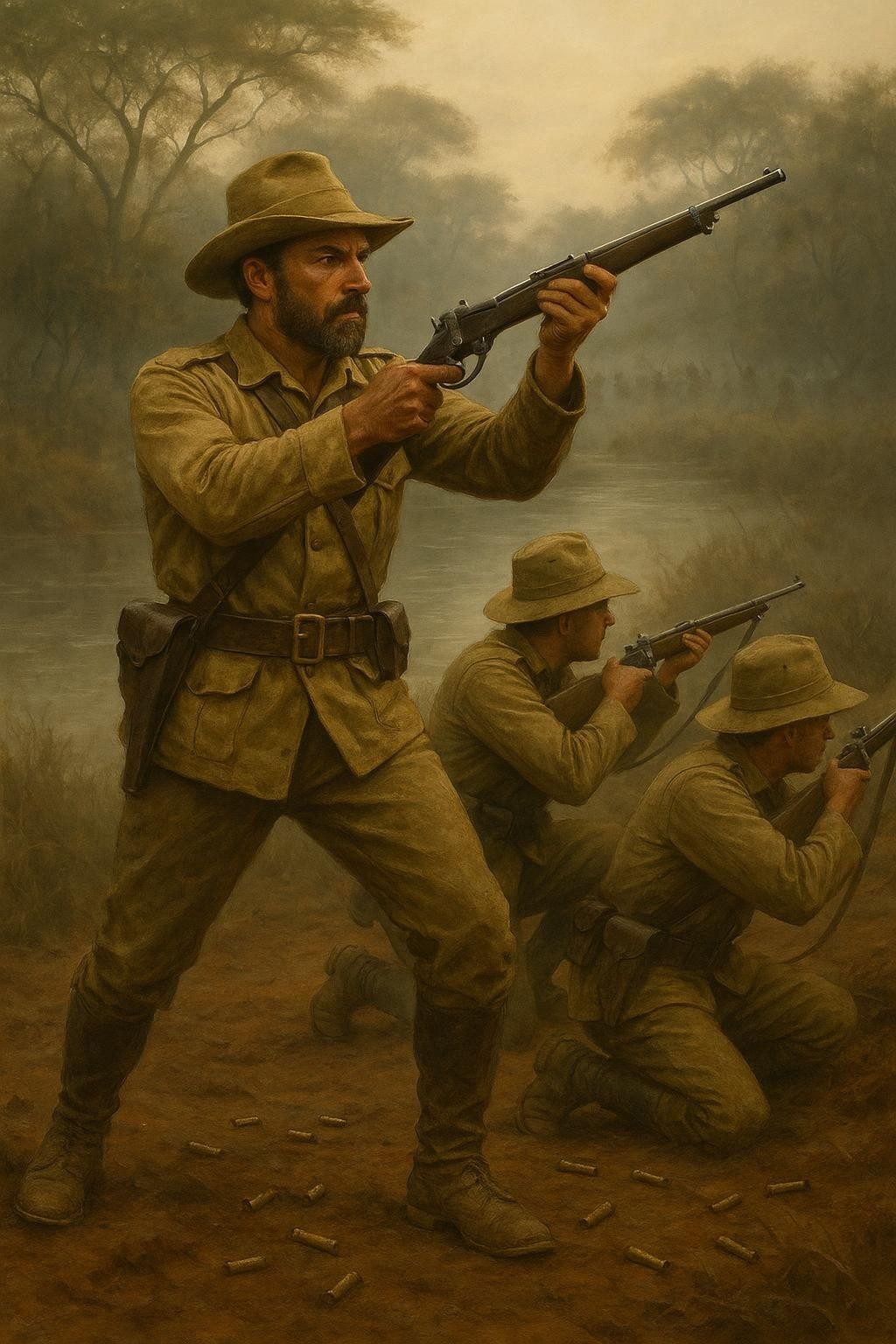
As dawn broke lighter shades across the sky, Wilson and his twelve brave souls formed their last circle. Shoulder to shoulder, eyes set toward the advancing shadows that danced on the horizon, they prepared to face death. To these men, defending their honor and empire outweighed their own mortality, a testament to the complex fabric of Victorian values and imperial ambition.
Firelight flickered over the ripple of the river and the men’s tense faces, as they sang God Save the Queen. It was a brief yet profoundly poignant moment where duty to crown and country met its inevitable twilight in the land they had sought to conquer. As the echo of their voices faded into the vast African wilderness, the Matabele war cries rose against the dawn's silence.
Historians and storytellers alike often depict the might of empires, but in these final moments, it is the individual acts of valor and resolve that capture the heart’s imagination. What became known as the Shangani Patrol wasn’t just a skirmish; it was a ballet of grit and bravado played out on the shores of colonial ambition.
The Legend's Legacy
Frederick Burnham was among the few who witnessed and lived to tell the tale of that tragic morning—a living thread from which the narrative of the Shangani would continue to unravel. As Burnham slipped away to alert reinforcements, he carried with him a story that would ignite the imaginations of those far removed from the African frontiers.
The drama that unfolded by the Shangani remains etched into history not just for its immediate participants, but for what it signifies about the human spirit under duress. Each life lost that day is a thread in a broader tapestry explicitly woven from Victorian ambition, yet implicitly shaped by the resilience of those who stood as witnesses to the twilight of their age.
While the Matabele War eventually fell beneath the tides of history, the tale of Major Wilson and his men stubbornly persists. It serves as a stark reminder of the cost of empire-building and the fragility of life in the theater of war. Their sacrifice would echo through time, serving as a poignant token that the divides of geography and peoples often converge in uncanny and unforgettable ways.
And so, by the banks of the Shangani, amid a silence more profound than any victory song, the story of those few last fighters continues to call out. It beckons each generation to ponder not just the past, but the collective acts of courage and folly that link all human endeavors.