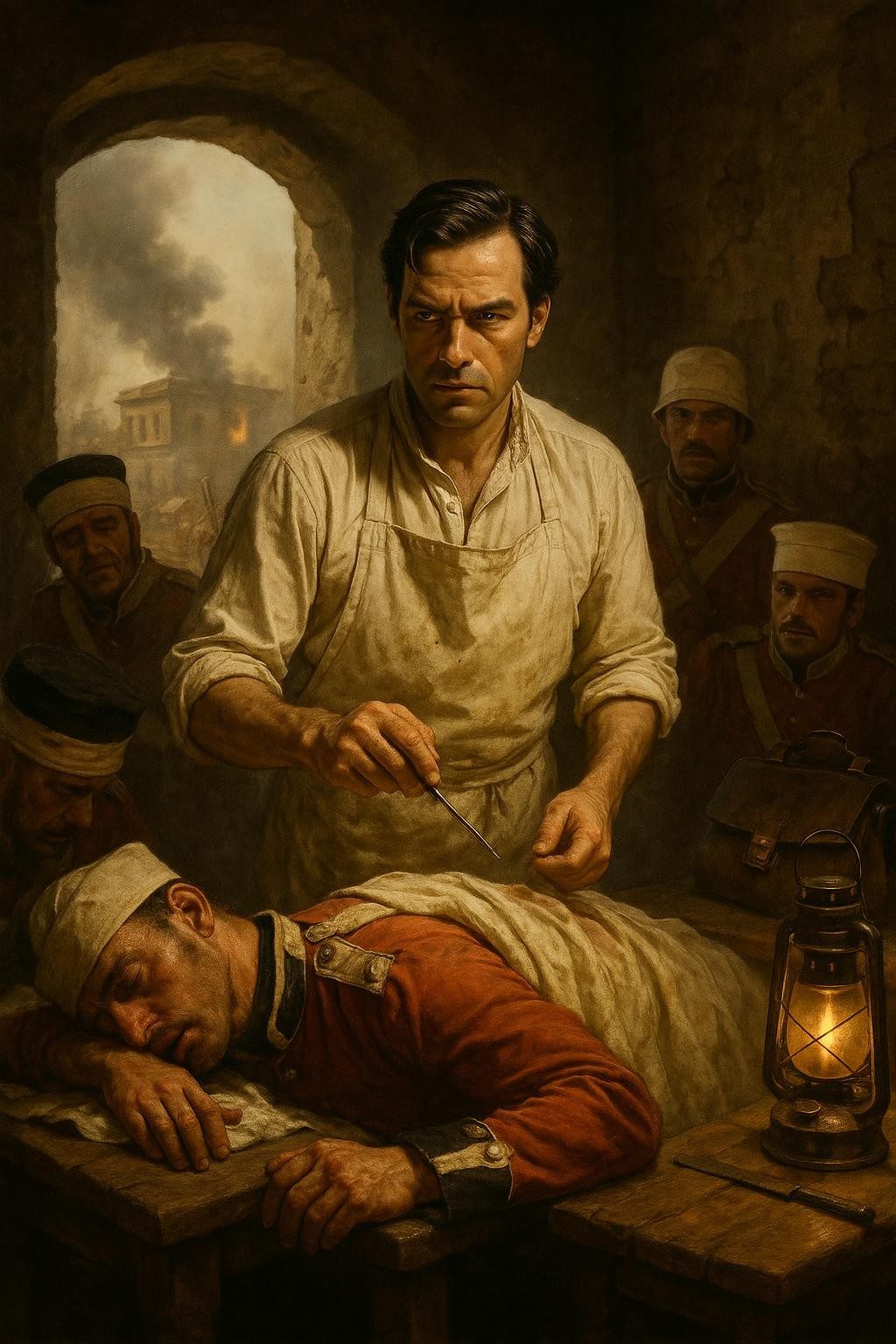
Joseph Fayrer had never wielded a rifle or commanded a battalion; he was a surgeon whose battlefield was a humble, crowded infirmary. Yet, it was his scalpel, not a sword, that became a beacon of hope amid the chaos of the Lucknow Residency siege.
The Siege Begins
In June 1857, the searing Indian summer heat was not the only force pounding on the walls of the Lucknow Residency. As Lucknow fell under the shadow of rebellion, the Residency and its British inhabitants found themselves besieged by sepoys who had cast off allegiances to the British crown. This was no ordinary mutiny; it was a storm that sought to dismantle an empire’s control over a distant land. Inside the Residency were civilians, soldiers, and one indispensable surgeon — Joseph Fayrer.
Amidst the constant thrum of musket fire and the distant echo of cannon shots, Fayrer wielded his scalpel under conditions that were a surgeon's worst nightmare. Space was insufficient, resources were scarce, and time was an enemy. The air was thick with despair, yet the surgeon's resolve sliced through it as sharply as any steel in his hands. His patients were the defenders of the fort, men struck down by bullet, blade, and sickness, each clinging to the slimmest thread of survival.
An Overwhelmed Operating Room
The Residency had been transformed into a fortress with all its trappings — barricades mounted at entrances, windows fortified against insurgent attacks. Yet within its walls lay a different front altogether. Fayrer's operating table never lacked occupancy. By day, the beleaguered surgeon treated wounds of unimaginable severity, men torn apart by the munitions of the time. By night, medical supplies dwindled, casting a shadow over the day's stitched hope.
Fayrer performed surgeries in stark contrast to the ordered surgical theatres he had known in England. Here, a small room repurposed for operations was the only barrier between life and the void. The stakes weighed heavily, for every life he saved kept a rifle on the frontlines, a crucial increment in holding the line. His work became his own personal war, measuring success not in land gained but in lives salvaged.
Against All Odds
Over the course of eighty-seven grueling days, Fayrer stood as a bulwark against overwhelming odds. Fever took its toll on the garrison’s strength, and the cramped conditions bred disease faster than they could be controlled. Yet under Fayrer's meticulous care, many soldiers found respite. His hands were steady, his mind filled with the knowledge acquired through years away from the battlefield, brought to bear in the most extreme circumstances.
The looming threat of failure was ever-present, but the surgeon's determination remained undaunted. As ammunition depleted and rations were rationed until none were left, Fayrer's commitment did not wane. Surprising many, he adapted each time an obstacle arose, using cartouches as makeshift bandages or fashioning splints from debris. His resourcefulness was a testament not just to his medical prowess but to his indomitable spirit.
Hope Amid Desperation
The residency walls were battered, and the soil soaked to mud with blood and loss, but hope held firm within those walls. By sustaining the fighting force, Surgeon Fayrer played a pivotal role in holding the Residency from falling into rebel hands. It is a legend untold in most textbooks, with his name sometimes overshadowed by those of military heroes. Yet, the quiet miracle of his daily grind, his steadfast refusal to surrender his patients to death, carried fortresses of hope that withstood physical siege.
As the guns finally fell silent and the siege lifted, the shattered remains of the Residency bore witness to Fayrer’s remarkable endurance. His story remains a powerful narrative of resilience and dedication amidst the often overlooked stories of war. His work underscores a profound truth that echoes across time — that victory is not always achieved with might, but sometimes through the hands that shoulder the wounded to stand once more.