The tropical night hung heavy over Accra, a velvet canopy encrusted with stars. As the air thickened with anticipation, the city’s streets—lined with eager faces illuminated by flickering lanterns—buzzed with electricity. The scent of the ocean mingled with the aroma of street vendors, and the relentless hum of cicadas provided the soundtrack. Deep in the heart of these streets, near the Old Polo Grounds, thousands gathered with eyes fixed on an empty flagpole. Here, past and present met, where the echoes of an empire would soon yield to the birth cry of a new nation. It was just before midnight on March 6, 1957, and history was coiling with unmistakable intensity, poised to strike.
The Last Hours of the Union Jack
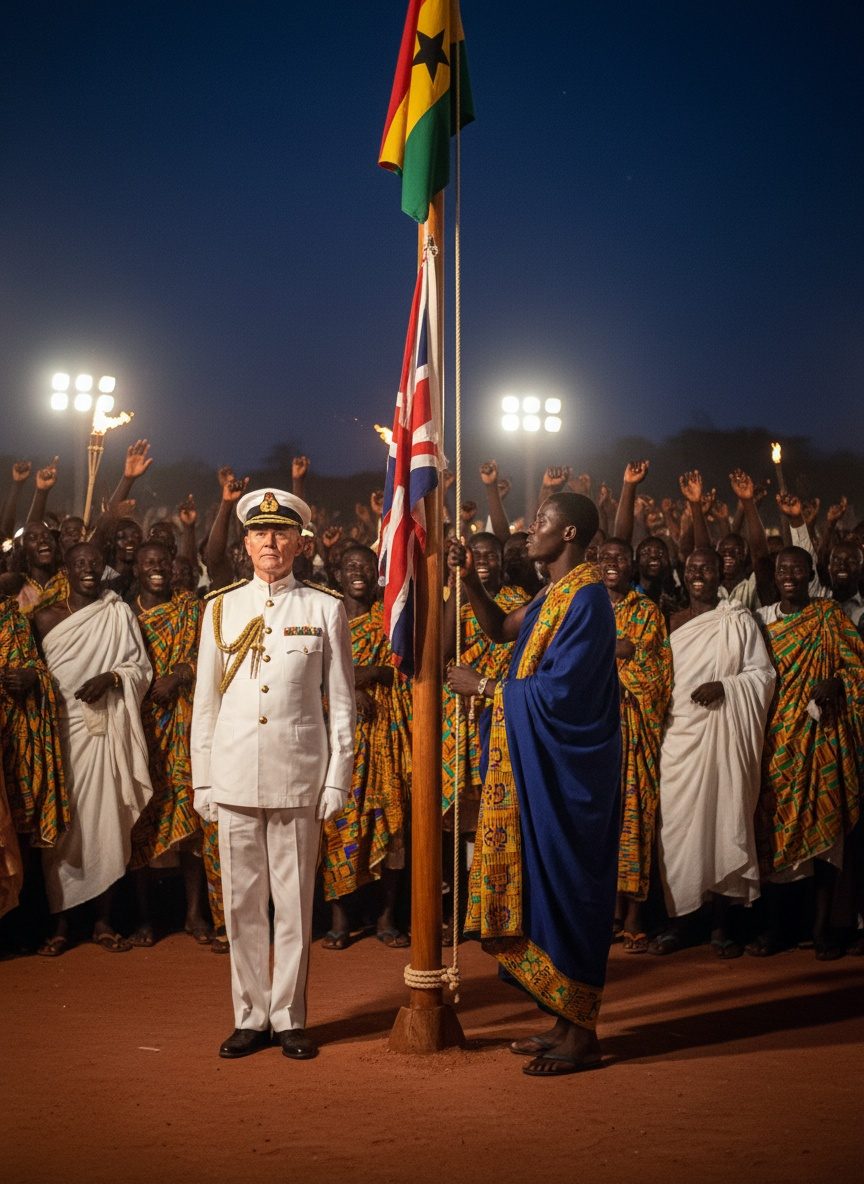
The sky was a deep indigo, a last vestige of the waning rule that had tinted the everyday lives of the Gold Coast's people. As the clock ticked toward midnight, the Union Jack fluttered lazily in the waning breeze over the Polo Grounds—a silent yet brazen statement of colonial presence. For generations, it had flown over this land, binding it to the distant crown; its fabric was tangled with over a century of narratives interwoven with threads of progress and oppression, ambition and resistance.
However, tonight was different. The crowd's murmuring ebbed and flowed as the final minutes of colonial rule drew near. Beside the flagpole stood Kwame Nkrumah, the man whose vision and tenacity had paved the way for this momentous occasion. With a strong gaze fixed on the flag, one could sense that his mind brimmed with memories of the struggles that led to this unprecedented event. His eyes lingered on the fabric of colonialism for the last time, taking in the intricate patterns that were about to unravel.
Beyond the Midnight Hour
As the last minute of the colonial era dissolved into history, the clasp on the Union Jack's rope was released. Down it slid, its passage marked by silent reflection. In its place rose a new symbol, vibrant in hues of red, gold, green, and black—a flag to reflect a nation's hopes and dreams. The entwined elements of the Ghanaian flag signaled a bold transition to self-determination, replacing the crimson and navy of imperialism with the warm colors of pan-Africanism.
The crowd erupted as the flag ascended, their voices carrying cries of jubilation far into the night. Nkrumah stood before them, overwhelmed by the immense significance of the moment. Tears rolled unbidden down his cheeks—a rare glimpse into the depths of emotion that the new era stirred within him. This was not merely a transition of power; it was a redefining of identity, a collective exhale from decades of subjugation.
Nkrumah, with his usually steady voice thickened by emotion and triumph, declared, "At long last, the battle has ended! And thus, Ghana, your beloved country, is free forever!" The spellbound crowd drank in his words, eyes glistening with pride and tears, their hearts echoing his sentiment.
A Nation Reimagined
Beyond the celebration lay the daunting task of nation-building. The spirit of unity that filled the air under the new flag was potent yet fragile. Ghana, like a butterfly newly emerged, was eager to stretch its wings and explore its newfound freedom, but the journey ahead was fraught with challenges. The joys of independence came with the formidable responsibility of defining government structures, education systems, and foreign policies that would shape its future.
The echoes of British rule that had so deeply influenced the territory's administrative and legal frameworks now needed reimagining. Institutions born of imperial design were hastily reshaped to reflect indigenous values and aspirations. The nation turned its eyes toward Nkrumah, who bore the weight of these expectations with unwavering resolve. Under his leadership, Ghana embarked on a path toward rapid industrialization and modernization, aspiring to become the beacon of a continent rippling with the potential for change.
A Legacy of Hope and Resilience
In the wake of that monumental midnight, the significance of Ghana's transition sent ripples across the African continent and beyond. The birth of independent Ghana, the first of its kind south of the Sahara, became a clarion call for other colonies. Inspired, countries across the continent began to dream of their own unions being lowered, of their flags soaring to the apex of their skies.
This pivotal moment in 1957 was not just a political triumph but a profound shift in the consciousness of African peoples. It awakened an awareness that echoed through every town and village, helping to foment waves of decolonization movements across the continent. Ghana's independence, celebrated by the ebullient cries under the watchful African night, stood as a testament to resilience and the enduring spirit of a people reclaimed.
As we reflect on that fateful night, it's imperative to consider its implications today—how the echoes of freedom and the banner of self-determination it unfurled continue to guide and inspire. The moment when the Gold Coast became Ghana is not just a narrative of independence but a powerful reminder of the ever-present capacity for change, proving that the most daunting dreams can, when pursued with indefatigable resolve, become reality.