April 1581. The salty tang of the River Thames carried on the brisk morning breeze.
The Golden Hind Awaits
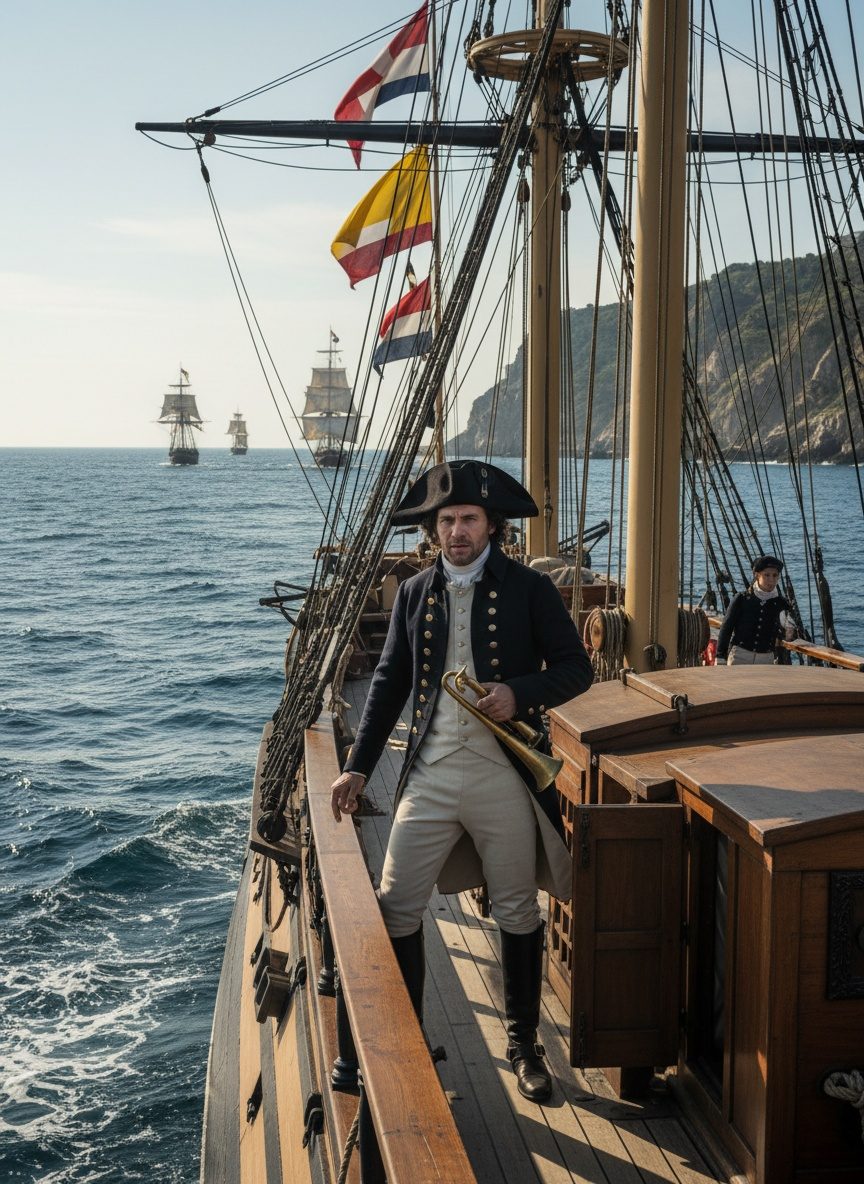
The riverbanks of Deptford buzzed with an air of festivity, drawing eyes to the stately ship that loomed large over the waters. This was no ordinary vessel. The Golden Hind, weather-worn and battle-scarred, represented so much more than her sturdy frame. Barely four years earlier, she had embarked on a perilous journey with Francis Drake and his crew, setting out to do what no Englishman had dared before, circumnavigate the globe and challenge the mighty Spanish Empire at sea.
This ship was a contradiction of her exterior—a vessel that had seen exotic shores and turbulent tides, housing legends of the high seas within her decks. Notably, she carried the weight of countless riches, appropriated from the treasure ships of Spain, turning threads of imperial ambition into tangible gold. Now she lay quietly, a galleon of stories anchored in the heart of England like a maritime shrine awaiting its celebrants.
That morning, as sunlight dappled the deck, the Queen herself was about to set foot upon this monument of infamy and triumph. Clad in resplendent attire befitting the sovereign of an emerging empire, Elizabeth I was not just here to witness; she was here to bestow honor. The occasion marked a turning point, not just for Drake, but for an England teetering on the brink of naval ascendancy.
The Queen's Gesture
Elizabeth stepped aboard, carrying the regal poise of a monarch who understood the profound symbolism of her actions. Around her, noblemen and courtiers accompanied with subdued awe. By her presence, she was acknowledging not just a sailor’s achievement but endorsing a new era of English nautical prowess. The deck beneath her was a living testament to a voyage few could imagine, let alone survive.
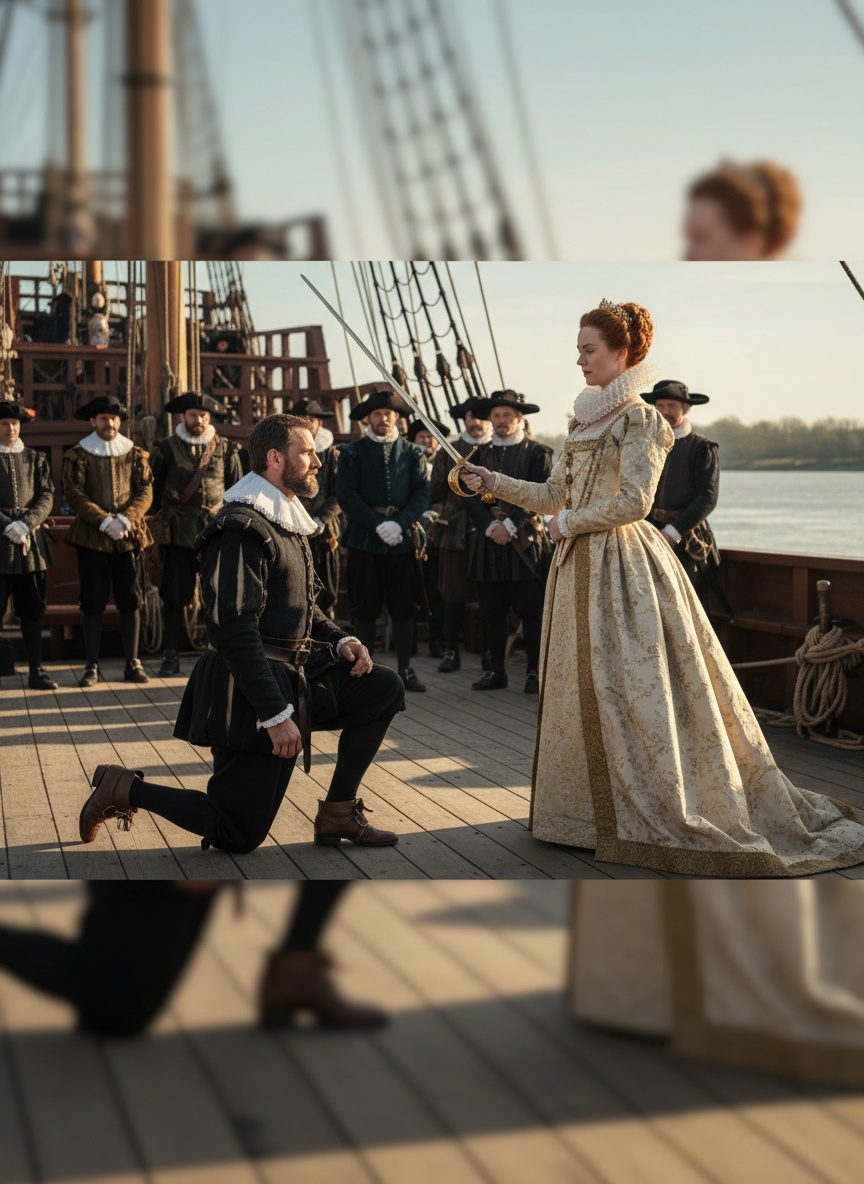
Drake knelt before his queen, his eyes catching a glimpse of the storied skies his ship had once traversed. He represented a new kind of hero—one who defied odds through cunning, courage, and a bit of fortune. To those in the know, his expeditions weren’t just about daring raids; they were complex games of cat and mouse with consequences that could tilt the balance of power in Europe. His strategic masterpieces involved outmaneuvering Spanish galleons, strategizing with unparalleled vision, and a readiness to push the limits of contemporary navigation.
As Elizabeth raised the gilded sword above his shoulder, it wasn’t just the christening of a knight. It was a bold declaration. A statement of sovereignty and defiance in a world dominated by Spanish and Portuguese naval maps. With the simple words of knighthood, she solidified a bond between crown and maritime innovation—a partnership that would chart England's future on the open seas.
Sir Drake and the Waves of Change
In Drake’s knighthood, England glimpsed the vast possibilities of the ocean. Just as he had transformed empty decks into treasure-laden troves, Britain anticipated turning its own ambitions into naval conquests. Drake's exploits had, in part, scripted the playbook for piracy disguised as patriotism—an audacious move in the theatre of world empires.
The English spirit swelled with endeavors of grandeur across expanding horizons. Merchants envisioned profitable routes undiscovered, and cartographers dreamt of lands yet unnamed on English charts. The remnants of the Golden Hind's journey were not just spoils of gold and silver; they were ideas laid bare to an island nation eager to explore its destiny.
The knighting of Drake on that April morning came to symbolize more than personal valor. It was the visible spark igniting England’s journey from a fledgling seafaring nation to an indomitable maritime empire. In Drake, Elizabeth found the embodiment of her enterprising vision—a wily tactician who had weathered and conquered the gateway of the Spanish Main.
History would memorize this scene at Deptford—a queen, a ship, a ceremony enshrining a moment in England’s making. This was the world on the cusp of evolution, where nationhood was wedded to the sea, and fortune and sovereignty were redefined in audacity. By honoring Drake, Elizabeth fortified the sea as England’s ally, a realm of promise and potential lying beyond every horizon.
Though Drake would sail once more and face adversity anew, the legacy of that April day would reverberate through centuries. England had signaled its commitment to naval prowess, a legacy born from the deck of a stolen Spanish ship, transcending the oceans and time itself. Such stories anchor us in history—as both a reminder of bounds broken and dreams pursued, in a time they left untold in the textbooks.