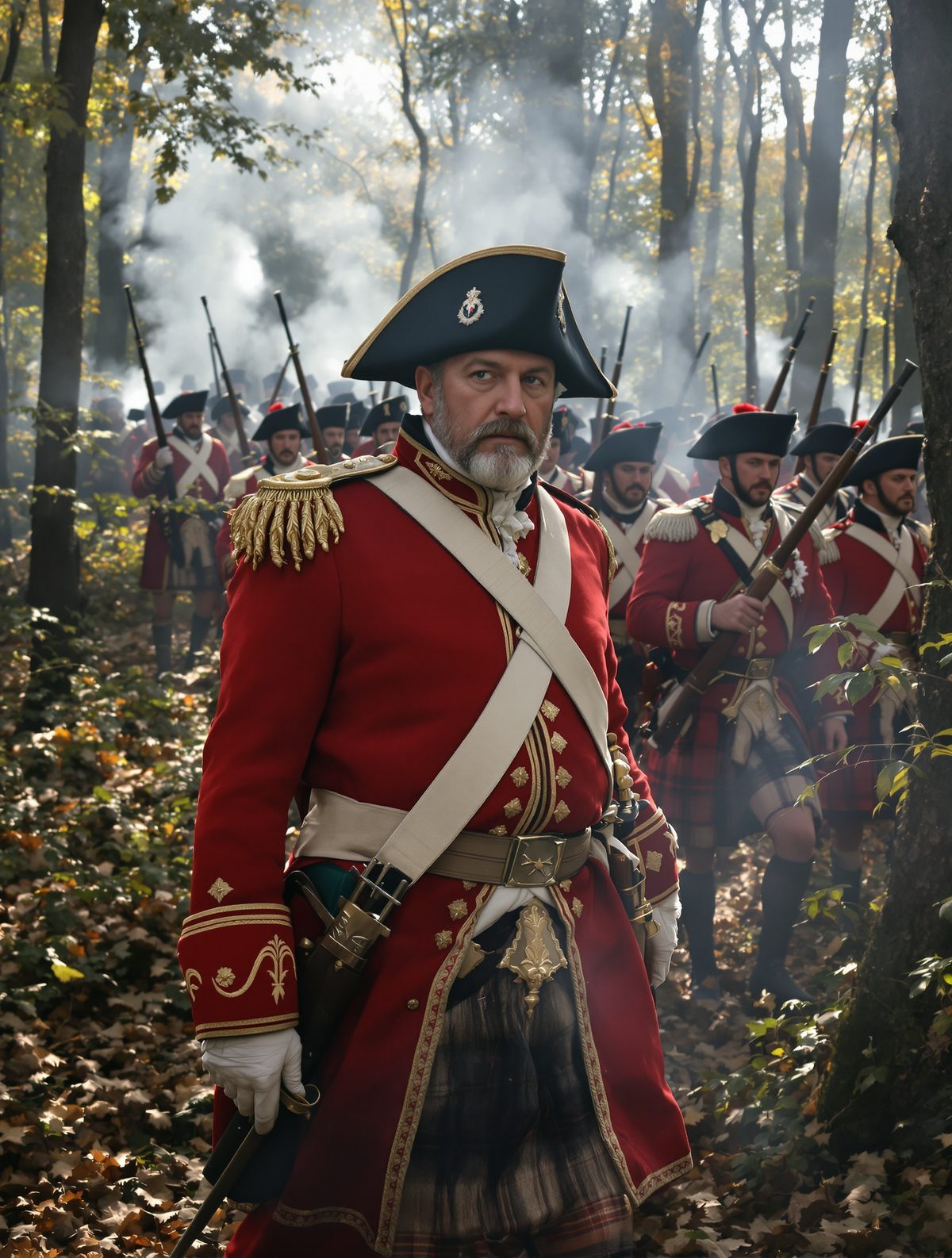
The morning mist clung to Edgehill on October 23, 1642, as two armies faced each other across the Warwickshire countryside. Parliamentary forces under the Earl of Essex had never seen anything like what was about to hit them. On the royalist right wing, a 23-year-old prince sat astride his warhorse, his long dark hair flowing beneath a plumed hat. Prince Rupert of the Rhine was about to unleash something that would terrorize battlefields across England for years to come—not just brave men on horses, but a precisely calculated instrument of destruction born from equal parts scientific genius and battlefield innovation.
What happened next would shatter centuries of military tradition. When Rupert's cavalry crashed into the Parliamentary lines, they didn't just charge—they exploded through enemy formations like a thunderbolt, moving faster, hitting harder, and striking with mathematical precision that left seasoned commanders stunned. The nephew of King Charles I wasn't just another royal dilettante playing at war. He was a military revolutionary whose scientific mind was quietly rewriting the rules of combat.
The Prince Who Studied War Like a Science
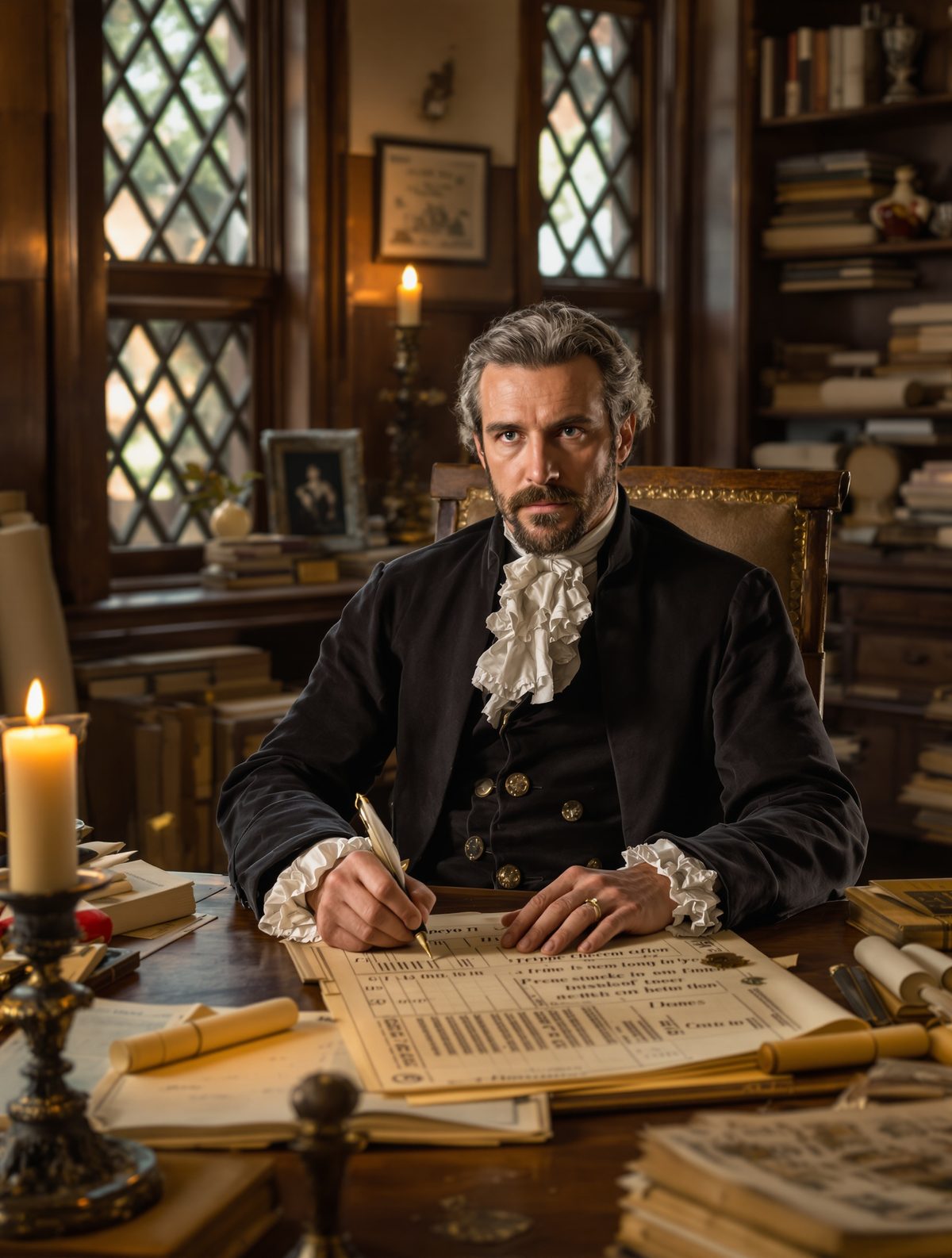
Prince Rupert of the Rhine arrived in England in 1642 carrying more than just his sword and royal pedigree. Born in Prague in 1619 to the "Winter Queen" Elizabeth Stuart and Frederick V of the Palatinate, Rupert had spent his youth not in comfortable palace chambers, but studying the brutal mathematics of European warfare. By age fourteen, he was already serving with Dutch forces against Spain. By twenty, he had been captured and spent three years in an Austrian prison, where—in a detail that reveals everything about his character—he used his time to study military engineering and mathematics rather than simply awaiting rescue.
When civil war erupted between his uncle King Charles I and Parliament, Rupert brought something unprecedented to the royalist cause: a mind that approached warfare like a natural philosopher approaches an experiment. While other cavalry commanders relied on tradition and courage, Rupert dissected every element of mounted combat—speed, formation, weaponry, timing—and rebuilt it from first principles.
His innovations began with something deceptively simple: he taught his cavalrymen to charge at full gallop without firing their pistols until the moment of impact. This flew in the face of established doctrine, where cavalry would typically fire their weapons at distance, then engage with swords. Rupert's mathematical mind had calculated that maximum momentum plus concentrated firepower at point-blank range would shatter any formation, no matter how disciplined.
The Geometry of Destruction
Rupert's scientific approach extended far beyond simple tactics. He revolutionized cavalry formations using principles that bordered on geometry. Traditional cavalry charged in loose, irregular groups that relied more on individual bravery than coordinated force. Rupert organized his men into tight, precisely spaced formations—what military historians now recognize as early applications of kinetic energy concentration.
At the Battle of Powick Bridge on September 23, 1642—his first engagement on English soil—Rupert demonstrated this new warfare against a Parliamentary cavalry force under Colonel John Brown. With just 1,000 horsemen against 1,500 enemy troops, mathematical logic suggested defeat. Instead, Rupert's precisely coordinated charge smashed through the Parliamentary lines so completely that Brown's entire force scattered in minutes. The Prince had achieved something military theorists thought impossible: a smaller force decisively defeating a larger one through pure tactical superiority.
But perhaps Rupert's most ingenious innovation was his use of what he called "reserves in motion." While traditional cavalry commanders committed their entire force to a single charge, Rupert held back carefully calculated portions of his men, positioned at precise angles and distances. As his main force struck, these reserves would wheel in from predetermined positions, creating what amounted to a cavalry pincer movement that trapped enemy forces in a mathematical web of destruction.
The Laboratory of War
Between battles, Rupert's quarters resembled less a military camp than a proto-scientific laboratory. Contemporary accounts describe him constantly experimenting—testing different bits and bridles to improve horse control, calculating optimal spacing between riders, even developing new techniques for horse breeding to produce mounts with specific characteristics for different tactical roles.
His scientific curiosity extended to weaponry with similarly revolutionary results. Rupert pioneered the use of what he called "cavalry carbines"—shorter, lighter firearms specifically designed for mounted combat. He calculated the precise barrel length that would provide maximum accuracy while remaining manageable on horseback, then worked with gunsmiths to produce weapons built to his exact specifications.
Most remarkably, Rupert began keeping detailed records of every engagement—distances, times, casualty ratios, terrain conditions, weather factors. He was essentially creating the first systematic database of cavalry effectiveness, analyzing patterns that allowed him to predict with startling accuracy how different tactical approaches would perform under specific conditions.
This methodical approach produced results that seemed almost supernatural to contemporary observers. At Chalgrove Field on June 18, 1643, Rupert's force of 1,800 cavalry defeated a Parliamentary army of 3,500 in what witnesses described as barely twenty minutes of fighting. The Prince had calculated that a specific formation attacking at a precise angle would create maximum psychological as well as physical impact—and his mathematical prediction proved devastatingly accurate.
The Terror and the Triumph
By 1643, "Rupert's Horse" had become a phrase that could scatter Parliamentary forces before they even saw the Prince's distinctive banner. His cavalry had won decisive victories at Edgehill, Chalgrove, Adwalton Moor, and Roundway Down, each battle demonstrating new refinements to his scientific approach to warfare. Parliamentary commanders began positioning their armies specifically to avoid cavalry terrain, fundamentally altering English military strategy around one man's innovations.
The psychological warfare was as calculated as the physical tactics. Rupert cultivated an almost mystical reputation, allowing rumors to spread about his supernatural abilities and his giant white poodle, Boy, who supposedly possessed magical powers. But beneath the legend was pure strategic thinking—Rupert understood that fear could achieve what force alone could not, and he carefully managed his reputation as another weapon in his arsenal.
His most spectacular triumph came at the Battle of Newark on March 21, 1644, where his cavalry charge broke a Parliamentary siege that had lasted months. Attacking at dawn across marshy ground that military convention deemed impassable for cavalry, Rupert had secretly spent weeks calculating water levels and soil conditions to identify a narrow corridor where his horses could maintain full speed. The charge seemed to come from nowhere, shattering the siege lines and lifting one of the war's most critical threats to royalist territory.
When Genius Meets Reality
But Rupert's scientific mind, for all its tactical brilliance, operated within a larger strategic context he couldn't control. His cavalry innovations were revolutionary, but they couldn't overcome the fundamental resource imbalances between King and Parliament. At the Battle of Marston Moor on July 2, 1644, Rupert faced Oliver Cromwell's Ironsides—Parliamentary cavalry trained specifically to counter his tactics.
The defeat at Marston Moor revealed both the power and limitations of Rupert's approach. His initial charge broke through Parliamentary lines exactly as calculated, but Cromwell had studied Rupert's methods and developed countermeasures. When Rupert's cavalry pursued routed enemies off the battlefield—standard procedure that had worked perfectly in earlier engagements—Cromwell's disciplined reserves struck the exposed royalist infantry. Mathematical precision had met strategic patience, and patience won.
Even in defeat, however, Rupert's innovations had permanently changed English warfare. The Parliamentary army that defeated him at Marston Moor was itself organized along principles that Rupert had pioneered—tight formations, coordinated charges, scientific approach to cavalry training. His enemies had defeated him by adopting his own methods.
The Legacy of Scientific Warfare
Prince Rupert's true revolution wasn't just in how cavalry fought, but in how military leaders thought about war itself. He had demonstrated that systematic observation, mathematical calculation, and scientific experimentation could provide decisive advantages over traditional courage and noble birth. Within a generation, European armies were employing staff officers trained in mathematics, maintaining detailed records of tactical effectiveness, and approaching military problems as engineering challenges rather than tests of individual valor.
In our own era of precision-guided warfare and algorithmic battle management, Prince Rupert appears remarkably modern—a 17th-century figure who understood that future conflicts would belong to those who could most effectively combine human courage with scientific method. His cavalry charges at Edgehill and Chalgrove were early examples of what we now recognize as force multiplication through technological and tactical innovation.
Perhaps most importantly, Rupert proved that scientific thinking could flourish even in the chaos of civil war, that intellectual curiosity and systematic experimentation could provide practical advantages in the most desperate circumstances. In an age when data-driven decision making determines everything from business strategy to medical treatment, the young prince who turned medieval horsemen into precision instruments of war seems less like a historical curiosity and more like a prophet of the world we now inhabit.