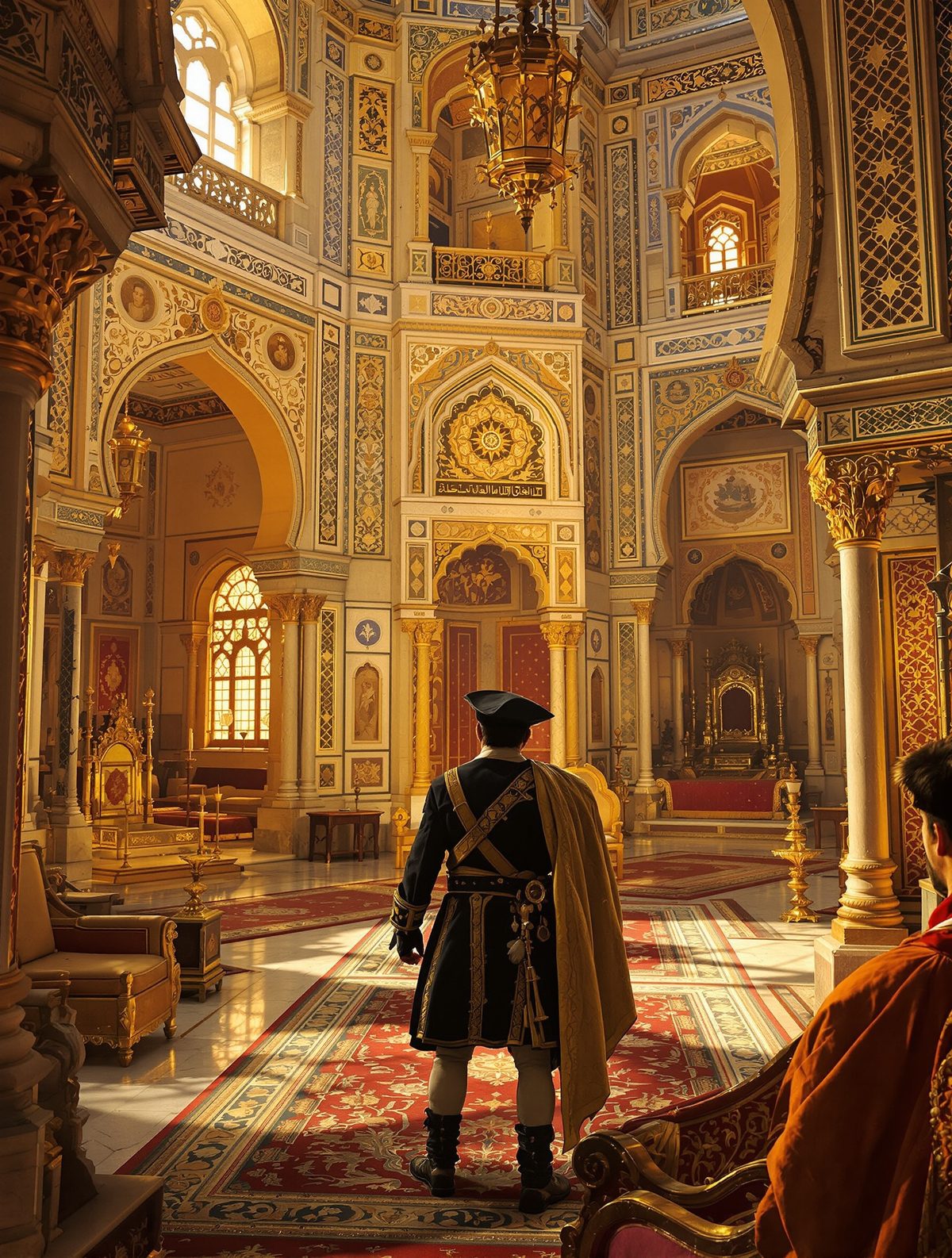
The coffers of England were bleeding gold. In the narrow, fog-shrouded streets of London, merchants watched helplessly as Spanish silver and English coin flowed out of the realm like water through a broken dam. It was 1621, and King James I's treasury echoed with emptiness while foreign traders grew fat on English wealth. The nation that would one day command the seas was being financially conquered without a single shot fired.
In a modest office overlooking the Thames, a quietly brilliant man named Thomas Mun dipped his quill in ink and began to write what would become the most influential economic treatise in English history. His revolutionary idea was deceptively simple: sell more than you buy. But this wasn't just accounting advice—it was the blueprint for empire.
The Merchant Who Saw the Future
Thomas Mun didn't look like a revolutionary. The son of a London mercer, he had climbed the ranks of the East India Company through shrewd observation and careful calculation rather than noble birth or political connections. By 1615, he sat on the company's Court of Directors, watching England's wealth hemorrhage to Dutch spice traders and Italian silk merchants with growing alarm.
The problem was starkly visible in London's bustling markets. English wool went out, but back came luxury goods worth far more—French wines, Flemish tapestries, Oriental spices, and Italian silks. The math was brutal: England exported roughly £2 million worth of goods annually but imported nearly £3 million. The difference vanished from English vaults, enriching foreign kingdoms while leaving England's merchants scrambling for capital.
What made this crisis particularly galling was that England possessed everything needed for prosperity. The country's wool was the finest in Europe. English craftsmen were skilled. The navy, while not yet supreme, was formidable. Yet somehow, foreign merchants were winning a war that England's leaders barely recognized was being fought.
A Revolutionary Idea Born from Ancient Wisdom
Mun's breakthrough came from studying the merchants he most admired and feared: the Dutch. Despite having fewer natural resources than England, the Dutch Republic had become Europe's financial powerhouse. Their secret wasn't military conquest or colonial plunder—it was systematic commercial strategy.
In 1621, Mun published his first work, "A Discourse of Trade from England unto the East Indies," but it was his later masterpiece, "England's Treasure by Forraign Trade" (written around 1630 but published posthumously in 1664), that would reshape economic thinking. His core principle was elegantly simple: "The ordinary means therefore to increase our wealth and treasure is by Forraign Trade, wherein wee must ever observe this rule; to sell more to strangers yearly than wee consume of theirs in value."
This wasn't just bookkeeping—it was a declaration of economic war. Mun argued that nations, like individuals, grew wealthy by earning more than they spent. But he took this logic further, envisioning trade as a zero-sum game where one nation's gain necessarily meant another's loss.
The Mechanics of Commercial Empire
Mun's theory contained startling insights that challenged conventional wisdom. While most economists of his era obsessed over accumulating precious metals, Mun understood that gold and silver were merely tools, not treasures. "We must not therefore esteem our treasure to consist in the abundance of money, but in the proportion and readiness of our wares and other necessaries."
He envisioned England as a vast commercial machine with three essential components: First, maximize exports by improving quality and reducing prices. English wool, for instance, shouldn't just leave as raw material but as finished cloth commanding premium prices. Second, minimize imports by producing domestically what could be made at home. Why import French wines when English soil could yield grapes? Third, dominate the "carrying trade"—using English ships to transport goods between foreign nations, earning profit from other people's commerce.
The East India Company became Mun's laboratory for testing these theories. Under his influence, the company shifted from simply buying Asian spices for European markets to establishing permanent trading posts, negotiating exclusive contracts, and eventually controlling entire trade routes. By 1650, English merchants weren't just participants in Asian commerce—they were beginning to control it.
From Theory to Empire: The Transformation
The results were spectacular and swift. Within a generation of Mun's writings gaining influence, England's trade balance began shifting dramatically. English cloth exports to Europe increased by over 40% between 1640 and 1660. More importantly, English merchants began applying Mun's principles globally.
In the Caribbean, this meant establishing sugar plantations that turned raw materials into finished products before export. In North America, it led to policies requiring colonists to ship raw materials to England and buy finished goods only from English manufacturers. In Asia, it meant the East India Company's transformation from a trading corporation into a territorial power controlling taxation and production.
The Navigation Acts of 1651, which required English colonies to trade only with English ships and merchants, were pure Munian logic translated into law. Foreign merchants who had once profited from English commerce found themselves systematically excluded from an increasingly integrated imperial trading system.
Perhaps most remarkably, Mun's disciples learned to weaponize trade itself. By 1700, England could strangle enemy economies simply by cutting off commercial relationships. The Dutch, who had once dominated global trade, found themselves increasingly marginalized as English merchants offered better terms, more reliable shipping, and access to a growing colonial market.
The Man Behind the Revolution
What makes Mun's story even more fascinating is how a relatively obscure company director managed to influence policy at the highest levels. His writings reached King Charles II, who reportedly kept a copy of "England's Treasure by Forraign Trade" in his personal library. Chancellor Edward Hyde consulted Mun's theories when designing trade policy. Even Oliver Cromwell's Commonwealth government implemented Munian principles despite their political differences with the monarchy.
Mun died in 1641, before seeing his theories' full implementation, but his intellectual descendants included some of history's most influential economists. Adam Smith, writing 150 years later, would critique Mun's mercantilism while acknowledging its effectiveness in building English commercial power. David Ricardo's theory of comparative advantage was essentially a sophisticated response to Mun's zero-sum worldview.
The Empire That Trade Built
By 1750, Mun's vision had become reality. Britain controlled roughly 25% of global trade despite containing less than 2% of world population. London had replaced Amsterdam as Europe's financial capital. The pound sterling became the world's preferred currency for international transactions. British merchants operated permanent trading posts from Bombay to Boston, from Jamaica to Java.
The empire that emerged wasn't primarily built through military conquest—it was constructed through systematic application of Mun's commercial principles. The British didn't just defeat their enemies; they made it unprofitable to oppose them and profitable to collaborate.
Yet Mun's legacy carries troubling shadows. The same commercial logic that enriched Britain devastated traditional economies worldwide. The triangular trade that shipped manufactured goods to Africa, slaves to America, and raw materials to Britain generated enormous profits while destroying millions of lives. Colonial policies designed to maximize trade surpluses often created artificial famines and economic dependency that persisted long after empire's end.
Today, as nations again compete for commercial advantage through trade wars and economic sanctions, Thomas Mun's insights remain disturbingly relevant. His recognition that economic policy is ultimately about power—not just prosperity—echoes in modern debates over supply chains, trade deficits, and economic nationalism. The quiet merchant who revolutionized how empires think about wealth created a template for economic dominance that ambitious nations still study and emulate, more than four centuries after he first put quill to paper in that fog-bound London office.