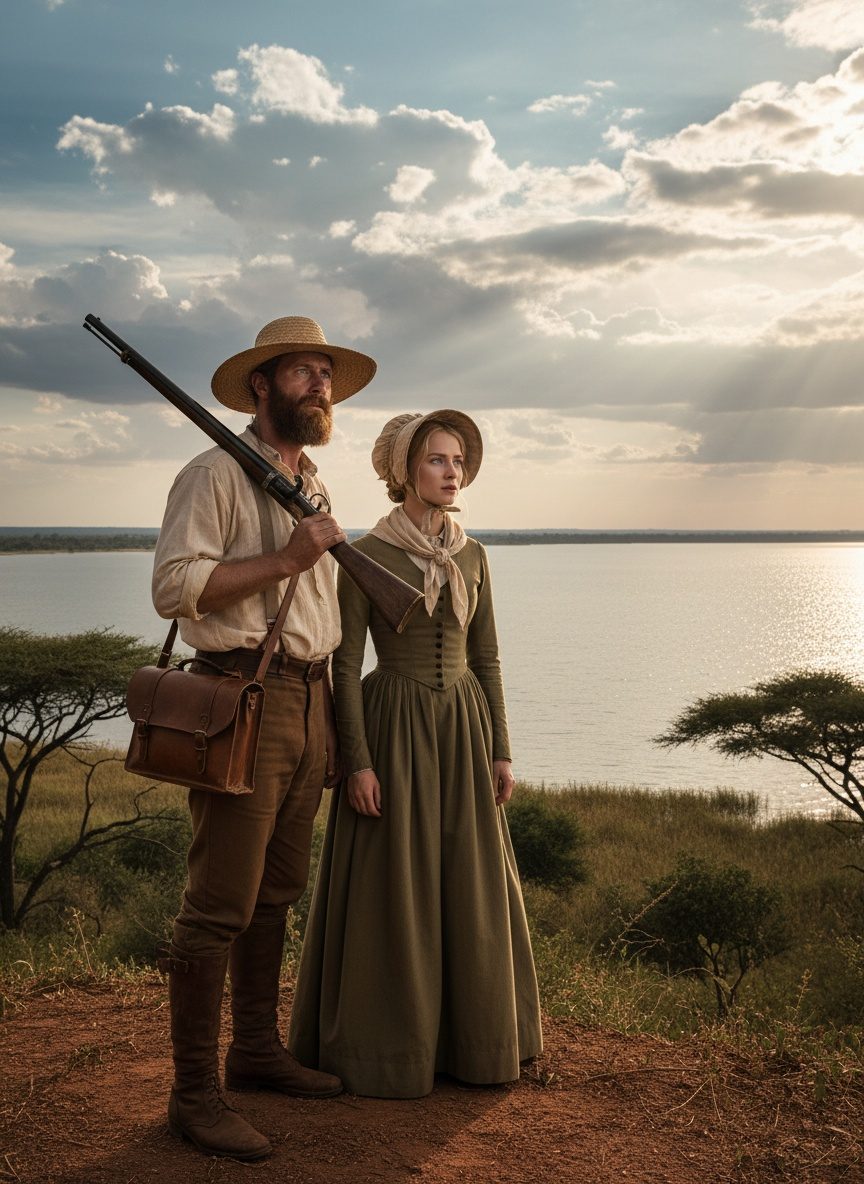
The sun's relentless heat seared their skin as Samuel Baker and his wife, Florence, shielded their eyes, peering down at the vast expanse of water below them. The cliff edge was a precipice both physical and metaphorical—a gateway to the unknown. Here, in the heart of Africa, lay Lake Albert, a lake no European had set eyes on before, a mirror stark in a world of dusty green and brown. In this moment of triumph, after months of brutal travel, Baker knew he stood before the second great source of the Nile.
Paths of Fever and Fortitude
Before reaching this monumental vista, the Bakers' journey had been anything but serene. Their expedition, teetering on the brink of survival, was a testament to the harsh realities of Victorian-era exploration. Fever wracked their bodies, a common ailment that haunted Europeans in these unforgiving climates. Yet, illness was but one menace lurking in their path—every step deeper into the African interior brought fresh challenges.
Trekking through dense jungles and inhospitable terrain, the fluid line between life and death was stark. The oppressive humidity made every breath seem heavier, every step laborious. Food was often scarce, and the couple had to rely on what little wildlife could be hunted, a task that demanded time and energy they could ill afford. Yet, side by side, they pressed on, driven by an insatiable curiosity and the promise of glory.
Encounters with Hostility
The human element posed an even graver threat than nature's barriers. As Baker and Florence navigated this region under the shadow of the Scramble for Africa, they faced hostility not only from the environment but from those who had long called this land home. Armed traders, suspicious of European intentions, regarded them with thinly-veiled hostility. Samuel Baker's survival often depended on the same weaponry that had opened the continent for exploitation and change.
One such encounter saw them surrounded, tension simmering in the African heat as Baker, unwavering, held his ground at gunpoint. Diplomacy, he knew, would be of little use here. The metallic taste of fear mingled with sweat, yet his determination remained unshaken. For Florence, an extraordinary woman in her own right, every day demanded courage beyond her years. Together, they navigated these hostile standoffs, a delicate dance between survival and scientific pursuit.
The Glittering Revelation
Standing now on the heights overlooking Lake Albert, the culmination of their hardship unfolded beneath them like an unfurling map. The shimmer of this vast lake, teeming with potential yet unknown to the outside world, was a sight to stir the soul. Samuel Baker understood its significance immediately—rumors and fragmented knowledge, whispers among the educated back home, swirled around the sources of the Nile.
In that instance, he wept. These tears, reflective of more than just exhaustion relieved, were his tribute to the intoxicating power of discovery. For while his contemporaries fought over Africa’s boundaries with ink and paper, Baker’s contribution was of a different nature—one of discovery and exploration. Yet, the shadows of imperialism loomed large; even in his discovery, the gears of colonial agendas turned, contemplating the wealth such a place could bring.
Legacy on the Edge
The adventure of Samuel and Florence Baker was a microcosm of the age—an era where the urge to chart the unknown clashed violently with the colonial appetite. Their discovery of Lake Albert beneath the scorching central African sun was not merely a triumph of endurance and spirit; it was a pivotal chapter in humanity’s endless quest to unveil the hidden face of our world.
Baker's journey remains an indelible record not just of what was found, but at what cost exploration and discovery come. In tracing the intricate rivers of our world, explorers like Baker and pioneers like Florence set into motion narratives far larger than themselves. Their footsteps etched pathways across cultures and peoples, narratives that would ripple outwards for generations.
While Samuel stood there, tears blurring his sight of Lake Albert, he knew he had answered one of civilization's ancient riddles. But standing against that brilliant body of water, perhaps he also sensed the burden of the old paths converging with new destinies. Africa, he knew, was on the brink of being carved up, mapped out, and forever changed—Lake Albert, with its shimmering promise, was but one part of the continent’s unraveling story.