The morning air was thick with tension at Smithfield, the heat of June rising off the packed earth beneath a pale and indifferent sky. The clamor of thousands of voices and the distant toll of church bells wove through the atmosphere like a tightly wound tapestry of discontent. Here, in this open field just outside the heart of London, the kingdom's social fabric quivered on the razor’s edge of change. The energy crackled through crowds of common folk—yeomen, craftsmen, and serfs—who found themselves inexplicably holding the possibilities of tomorrow within their calloused hands. It was here that Wat Tyler, the rebel leader, would meet the young King of England and, in that fleeting moment, hold the future of a nation in precarious balance.
The March of the Dispossessed
These weren’t ordinary times; England in the 14th century was no stranger to turmoil. The oppressive weight of the feudal order bore heavily upon the peasantry, while the ravages of the Black Death had left half the population buried and the survivors burdened by escalating demands for labor and taxes. Fresh wounds from the Hundred Years' War strained the kingdom’s purse. An unjust poll tax—demanding the same payment from the poorest serf to the wealthiest noble—was the final straw. From the weary fields of Kent and Essex, a murmur swelled into a roar as villages galvanized in rebellion. Under the banner of red and white, they marched with Wat Tyler, a common man from humble beginnings, now an unexpected leader commanding the attention of kings.
Tyler, a blacksmith's son, had risen through the ranks not by noble blood or divine right, but through the strength of his conviction and the clarity of his cause. His charisma fused with the populace’s desperate desires, igniting their march towards London like a bellows-blown forge harboring weapons of change. Along the way, they gained followers by the thousands, their numbers swelling until they were impossible to ignore. The path burned brightly behind them—palaces razed, gaols emptied, symbols of authority reduced to ashes. In their wake, they left a stream of parochial titles and dismissive doctrines, redefining the dream of equity, if only for a short while.
The Meeting at Smithfield
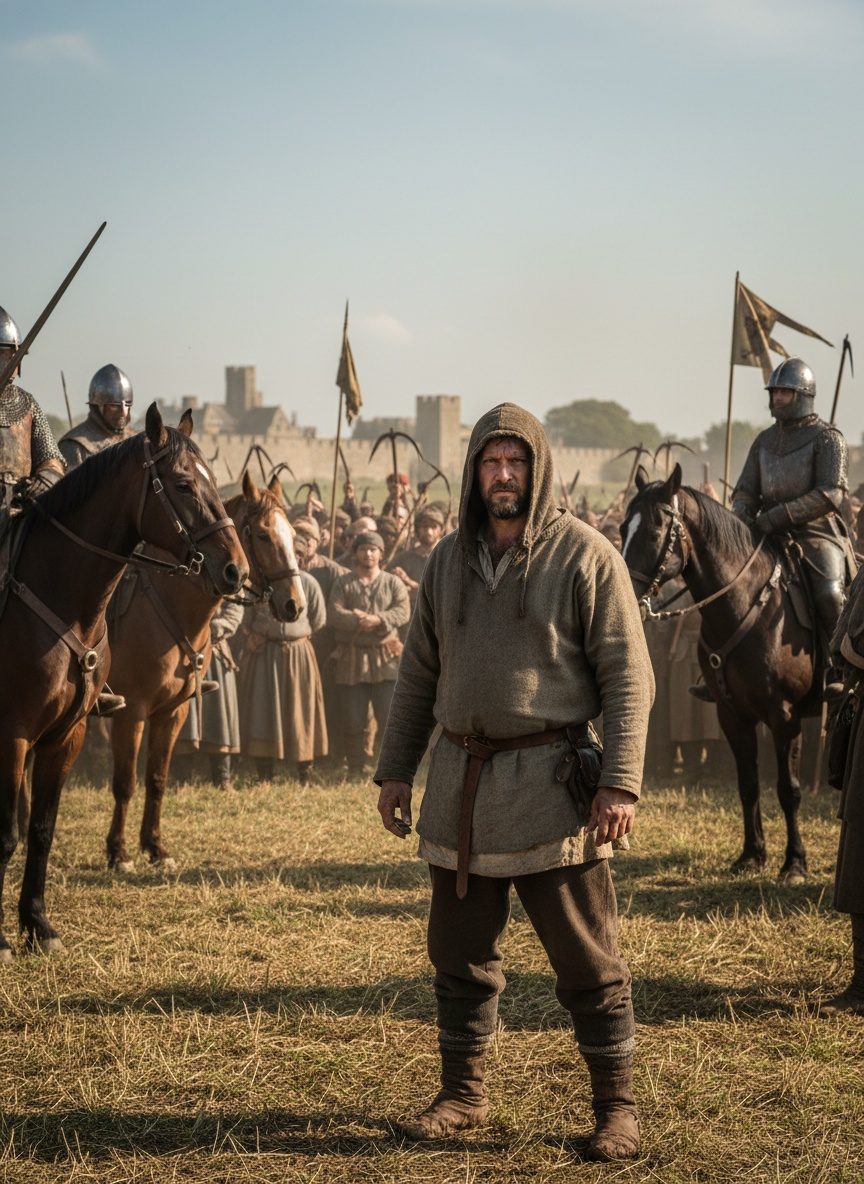
The field at Smithfield was a stage set for drama. On June’s sunlit plate, Tyler was poised not merely as a rebel but as a spokesperson for the myriad discontents bubbling beneath the polished veneer of the House of Plantagenet. History would record this as not just a meeting, but a confrontation between disparate worlds, separated by class and privilege yet united momentarily on this common ground. King Richard II, just fourteen, stood with the weight of the crown pressing upon his young brow, surrounded by armored nobility wary of the hordes.
Face to face, Tyler pledged the demands of the people: an end to serfdom, fair wages, and true justice that could clasp the hand of any man, regardless of class. To a nation mired in rigid hierarchies, the very notion was as incendiary as the flames that had devoured the Archbishop’s home. Wat Tyler, embodying the unyielding spirit of the commons, spoke as if he held a nation's destiny in his hands. The king, youthful yet shrewd, listened, a flicker of uncertainty or perhaps intrigue crossing his gaze. For a brief, flickering moment, the old order teetered, confronted by a challenge it never anticipated, from a man it never intended to engage.
Yet, this dramatic interlude would not suffice to alter course through mere words alone. A misunderstanding erupted—a scuffle sparked when Tyler attempted a show of courtesy construed as offence. A courtier's dagger flashed, and with brutal swiftness, it all unraveled. Tyler, defender of the disenfranchised, voice of the masses, fell under the thrust of this singular blade, his vision of freedom lodging within it as he lay dying on the blood-streaked field.
The Aftermath of a Moment
In the heartbeat gap where Wat Tyler lay, so did the hopes of those who followed him, watching in horrified silence as the promise of reform slipped through their reach. A day that began with the scent of possibility now reeked of rout and repression. Yet, even in disillusionment’s grasp, the spirit of the 1381 uprising left footprints that history would never entirely remove. While the immediate repercussions led to the rebellion's swift suppression, the embers of Tyler’s defiance kindled a dialogue that would blaze through the annals of English history.
Though he and his cause were quelled by the sharp weight of a single dagger, the resonance of his demands thundered on through the decades—reforms began to seep into the extremities of the social body. In the centuries that followed, the English peasants’ revolt stood as a reminder—a blemished yet bright shaft of resistance—that the voices of the many could not be eternally silenced by the altitudes of birthright nor the brutality of state.
The story of Wat Tyler is not merely the tale of dramatic confrontation but the embodiment of a relentless push for equity, a battle for the souls held captive by historic injustices. Though it failed in its immediate objectives, the rebellion remains a crucial shard of human history, capturing the universal truth that in every field, town, and heart, the dream of justice and dignity will persist, waiting for the next dawn to kindle that ever-pliable flame of change. The reminders are there, etched in history, that every field can be a stage where a commoner's voice might yet ring louder than a king's.