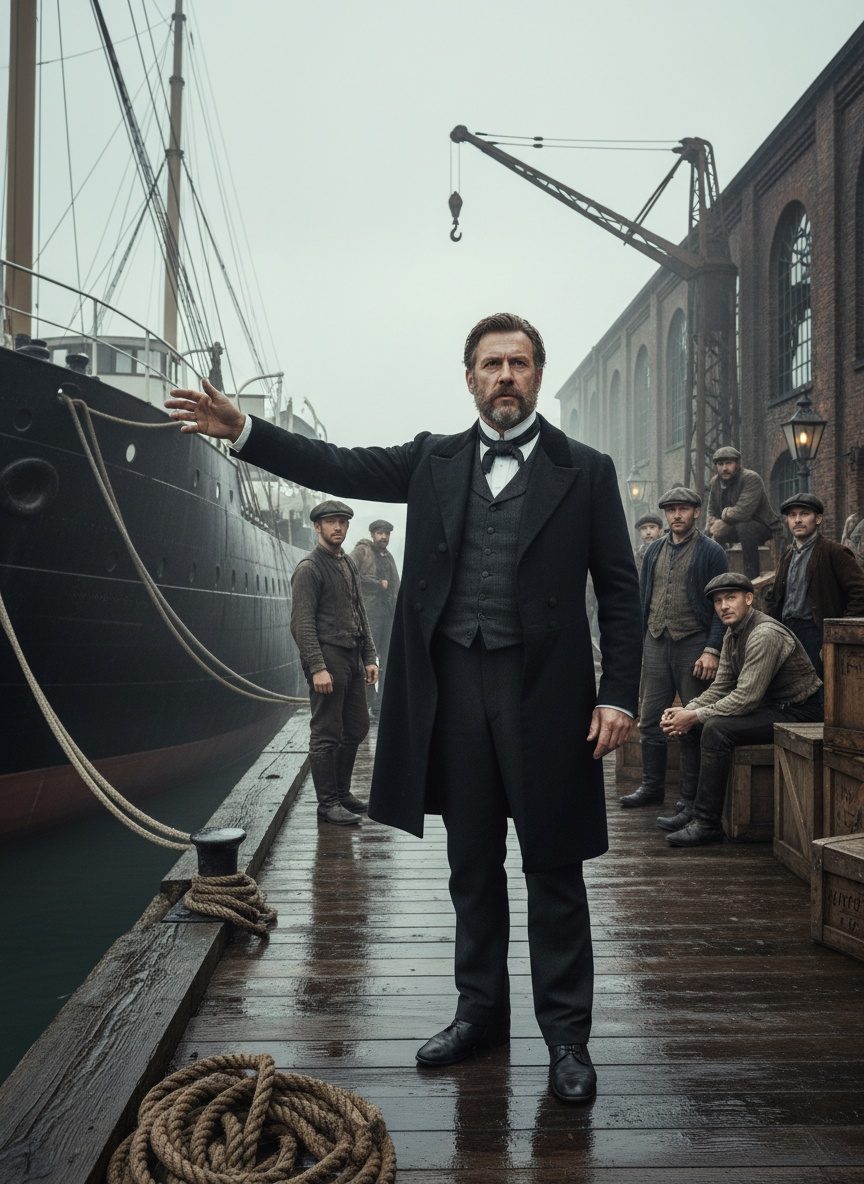
The wind howled through the rigging, and the ship's timbers groaned ominously under the weight of the cargo. Below decks, a sailor whispered a quick prayer, clutching a small photo of his family while the storm tossed their vessel like a toy in a bathtub. It was 1876, and as the British Empire's maritime reach stretched across the globe, the dangers of the deep lurked not just in the waves but in the greedy hands of the ship owners. Enter Samuel Plimsoll, a man whose name would become synonymous with the safety of sailors, and whose fight against corruption in maritime trade would etch his name into history.
The Coffin Ships of the Victorian Seas
In the mid-19th century, the vast expanse of the British Empire depended heavily on its merchant navy. These ships, laden with goods from the four corners of the world, were the lifeblood of trade and commerce. However, behind the prosperous façade lurked a lethal reality—ships known grimly as "coffin ships". These merchant vessels, under the direction of unscrupulous owners, were frequently sent to sea overloaded and ill-maintained. A journalist from The Illustrated London News wrote in 1873, "They sailed with no regard for life, sailed to profit from insurance, not from trade."
Sailors, often ill-informed and desperate for work, boarded these ships, many of which were destined not for distant ports, but the bottom of the ocean. According to reports, nearly 1,200 British sailors perished each year under these grim circumstances. The ships were heavily insured, so owners saw more profit in their loss than in their safe return. This grim calculation transformed the seas into another front of capitalism's darkest tendencies.
Samuel Plimsoll: A Reluctant Crusader
Into this hazardous tapestry stepped Samuel Plimsoll, a coal merchant from Sheffield known more for his meticulous bookkeeping than any adventures at sea. Born in 1824, Plimsoll was a man of contrasts—a self-made businessman with the heart of a reformer, compelled by a deep-seated sense of justice. By the time he entered politics as a Liberal MP in 1868, his business ventures had introduced him to the shipping industry's murkier depths.
What set Plimsoll apart was his singular focus on the safety of sailors, viewing them not as cogs in the vast imperial machine but as individuals with families and futures. In 1873, he addressed the House of Commons, painting a vivid picture of the neglect faced by them. Despite his harrowing accounts, he was met with resistance from an establishment deeply entrenched in the profits awarded by the status quo.
A Battle on Parliamentary Waters
Plimsoll's campaign was relentless, filled with impassioned speeches and pamphlets warning the public of the dangers lurking in the "graveyards of the deep." He published "Our Seamen," a book that shamed the shipowners and revealed startling realities. The book's success ignited a public outcry, garnering the support Plimsoll desperately needed among the seafaring communities and ordinary citizens alike. Still, Parliament dismissed him as a fanatic, a crank lost in idealism.
On an influential day in 1875, inside the hallowed chambers of power, Plimsoll reached his breaking point. Faced with continued delay tactics on his proposed legislation—known initially as the Plimsoll Line—his temper flared. He hurled invectives at the so-called "respectable" members of the House, branding them accessories to murder. Though expelled for his outburst, Plimsoll's raw passion turned the tide of public opinion sharply in his favor.
The Birth of the Plimsoll Line
Just one year after his dramatic confrontation, Plimsoll's fervor bore fruit. In 1876, the British Parliament passed the Merchant Shipping Act, a watershed moment that codified safety regulations for the merchant navy. At the heart of the Act was the mandate for the Plimsoll Line—a simple yet revolutionary load line marked on a ship's hull.
This painted line, still utilized today, indicates the maximum legal draft of the vessel when loaded and serves a fundamental role in maintaining buoyant stability. The implementation was not instant, nor was it uniform, but Plimsoll's legacy was secured. Thousands of ships were re-evaluated for seaworthiness, and untold numbers of sailors' lives were saved from what had become a calculated gamble on the turbulent seas.
From Then to Now: The Echoing Waves of Change
Samuel Plimsoll's crusade for maritime safety resonates well beyond the Victorian era. Today, the Plimsoll Line continues to serve as a universal symbol of maritime safety, a silent sentinel that ensures ships are loaded responsibly. The proposition Plimsoll fought so tirelessly for set a precedent not only in shipping but also in reformative efforts across other industries plagued by similar abuses.
In the annals of maritime history and legislation, Plimsoll's story serves as a reminder of the power of individual resolve, the impact of public empathy, and the importance of accountability in commerce. His name, emblazoned not just on ships but across history, implores us to remember what is at stake when lives are weighed against profit.
Samuel Plimsoll showed us that while the seas may be vast and indomitable, human compassion, when anchored by courage, can chart a course to safer harbors.