Picture this: A seven-year-old girl walks through the grand corridors of Windsor Castle in 1850, her silk dress rustling against marble floors that have hosted kings and queens for centuries. But this isn't just any Victorian child. Her name is Sarah Forbes Bonetta, and just months earlier, she was marked for death in a ritual sacrifice in West Africa. Now she's about to curtsy before Queen Victoria herself—not as a curiosity or a charity case, but as an honored guest who will become the Queen's goddaughter.
This is the extraordinary true story of how an African princess navigated the heights of Victorian society, charmed the most powerful woman in the world, and rewrote the rules about who could belong in the British Empire's inner circle.
From Palace to Slavery to Palace Again
Sarah's story begins in tragedy wrapped in royalty. Born around 1843 as Aina, she was likely a princess of the Yoruba people in what is now southwestern Nigeria. Her world was one of sophisticated kingdoms, elaborate ceremonies, and ancient traditions—until it all came crashing down.
When the aggressive Dahomey Kingdom swept through her homeland around 1848, five-year-old Aina watched her family die and found herself captured. The Dahomey were known for their fierce female warriors and their brutal annual ceremonies where prisoners were sacrificed to honor dead kings. Young Aina was being kept alive for exactly this fate.
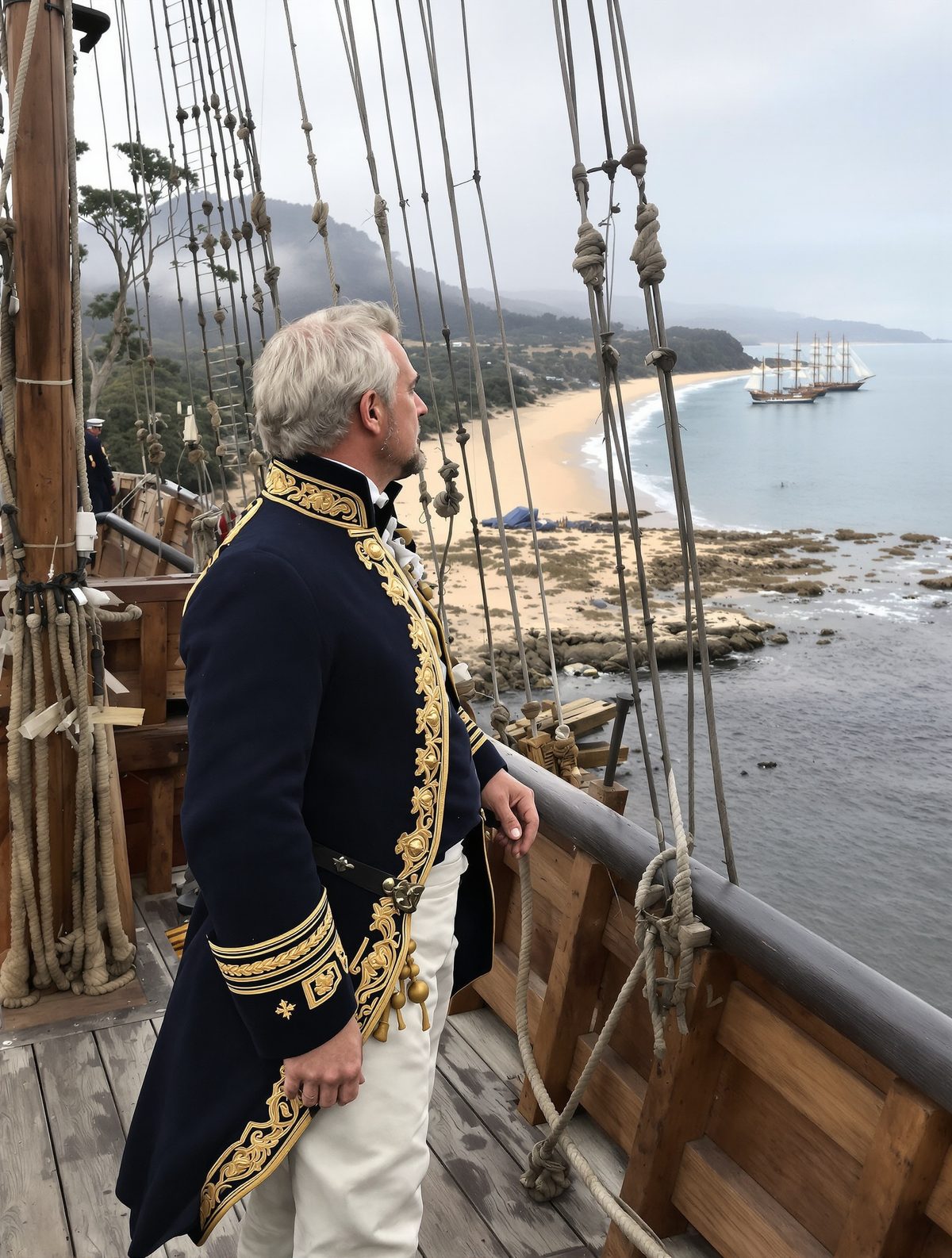
Enter Captain Frederick Forbes of the Royal Navy, a man on an unusual diplomatic mission. In 1850, Forbes arrived at the court of King Ghezo of Dahomey to negotiate an end to the slave trade. What he found was a complex society that both fascinated and horrified him—and a remarkable seven-year-old girl who was about to die.
Forbes later wrote that Aina possessed "a considerable share of natural intelligence, an excellent memory, and great talent for music." More crucially, he convinced King Ghezo to give him the girl as a "gift" for Queen Victoria. It was an unprecedented request that would change one life—and challenge Victorian England's assumptions about race and capability.
The Queen's African Goddaughter
When Sarah Forbes Bonetta (renamed to honor both the captain who saved her and his ship, HMS Bonetta) first met Queen Victoria at Windsor Castle in November 1850, something remarkable happened. The Queen didn't just receive her politely—she was genuinely charmed.
Victoria wrote in her diary that Sarah was "a most remarkable girl, very intelligent & speaks English very well now." Within months, the Queen had made an extraordinary decision: she would become Sarah's godmother and personally oversee her education. This wasn't mere Victorian charity—it was revolutionary.
Sarah was enrolled at the Church Missionary Society's Female Institution in Freetown, Sierra Leone, but her connection to the Queen remained strong. Victoria sent regular financial support, gifts, and took a genuine personal interest in Sarah's progress. When Sarah excelled at her studies—particularly music, where she showed exceptional talent at the piano—the Queen arranged for her to return to England for advanced education.
By 1855, fifteen-year-old Sarah was back in England, studying at an elite school in Brighton. She spoke perfect English with a refined accent, played classical piano to performance standard, and moved through British high society with remarkable grace. Photographs from this period show a poised young woman in elaborate Victorian dress, every inch the accomplished lady.
Dining with Royalty: A Princess Between Worlds
The scene that truly captures Sarah's unique position occurred during multiple visits to Windsor Castle throughout the 1850s and 1860s. Picture the great dining hall: crystal chandeliers casting light over gleaming silverware, footmen in royal livery serving elaborate courses, and there, seated near Queen Victoria herself, was Sarah Forbes Bonetta—discussing literature, politics, and music as an equal.
These weren't token appearances. Sarah genuinely belonged in these spaces. She could discourse on Shakespeare as easily as she could play Chopin, and she understood the intricate social codes of Victorian high society better than many who were born to it. Prince Albert found her conversation engaging, and the royal children considered her almost family.
Yet Sarah never forgot her origins. She maintained correspondence with missionaries in West Africa and showed deep interest in the welfare of other Africans in the diaspora. She was walking a tightrope between worlds with extraordinary skill—African by birth, British by education, and royal by adoption.
The Queen's confidence in Sarah was perhaps best demonstrated in 1862, when Victoria chose her to be photographed alongside other members of the royal household. In an age when most Africans appeared in European photography as exotic subjects or examples of "before and after" colonial intervention, Sarah was simply there as herself—accomplished, elegant, and belonging.
Love, Marriage, and the Weight of Expectations
Even royal goddaughters must navigate matters of the heart, and Sarah's romantic life became a delicate diplomatic affair. Queen Victoria had strong opinions about suitable marriages for her protégée, and when Sarah fell in love with James Pinson Labulo Davies, a wealthy Yoruba businessman and fellow Sierra Leone Creole, the Queen initially had reservations.
The wedding, which took place in August 1862 at St. Nicholas Church in Brighton, was a remarkable social event. Queen Victoria herself provided Sarah's trousseau and wedding gifts, including a gold watch and chain. The guest list read like a who's who of Victorian society, and the bride was given away by Captain Forbes—the man who had saved her life twelve years earlier.
The marriage meant Sarah would return to West Africa, settling in Lagos (now Nigeria). This transition reveals the complex reality of her position: she was simultaneously too African for some British social circles and too British for others. Yet she managed this cultural navigation with characteristic grace.
In Lagos, Sarah became a prominent society figure, known for her elegant entertaining and her charitable work. She maintained her correspondence with Queen Victoria, sending updates about her children (including daughter Victoria, named for her godmother) and the social and political developments in West Africa.
Legacy of an Extraordinary Life
Sarah Forbes Bonetta's life was cut short when she died of tuberculosis in 1880 at just 37 years old. Queen Victoria was genuinely grieved, writing of her "dear Sarah" with obvious affection. The Queen also took a personal interest in Sarah's children, particularly her daughter Victoria, continuing the connection into the next generation.
But Sarah's legacy extends far beyond her personal relationships with royalty. She proved something that many Victorians claimed was impossible: that an African child, given the same opportunities as any European, could excel in the most demanding intellectual and social environments. She didn't just survive in elite British society—she thrived.
Her success challenged fundamental assumptions about race and capability that underpinned colonial ideology. While the British Empire was built on the premise that Africans needed European guidance and control, here was living proof that the real barriers were opportunity and education, not inherent ability.
Sarah Forbes Bonetta's remarkable journey from condemned prisoner to royal goddaughter reminds us that history is always more complex than the simple narratives we tell ourselves. In an age when empire was justified by claims of racial superiority, one young woman quietly proved that talent, intelligence, and grace recognize no color barriers—they only need the chance to flourish. Her legacy challenges us to imagine how many other extraordinary stories were lost simply because those opportunities were so rarely given.