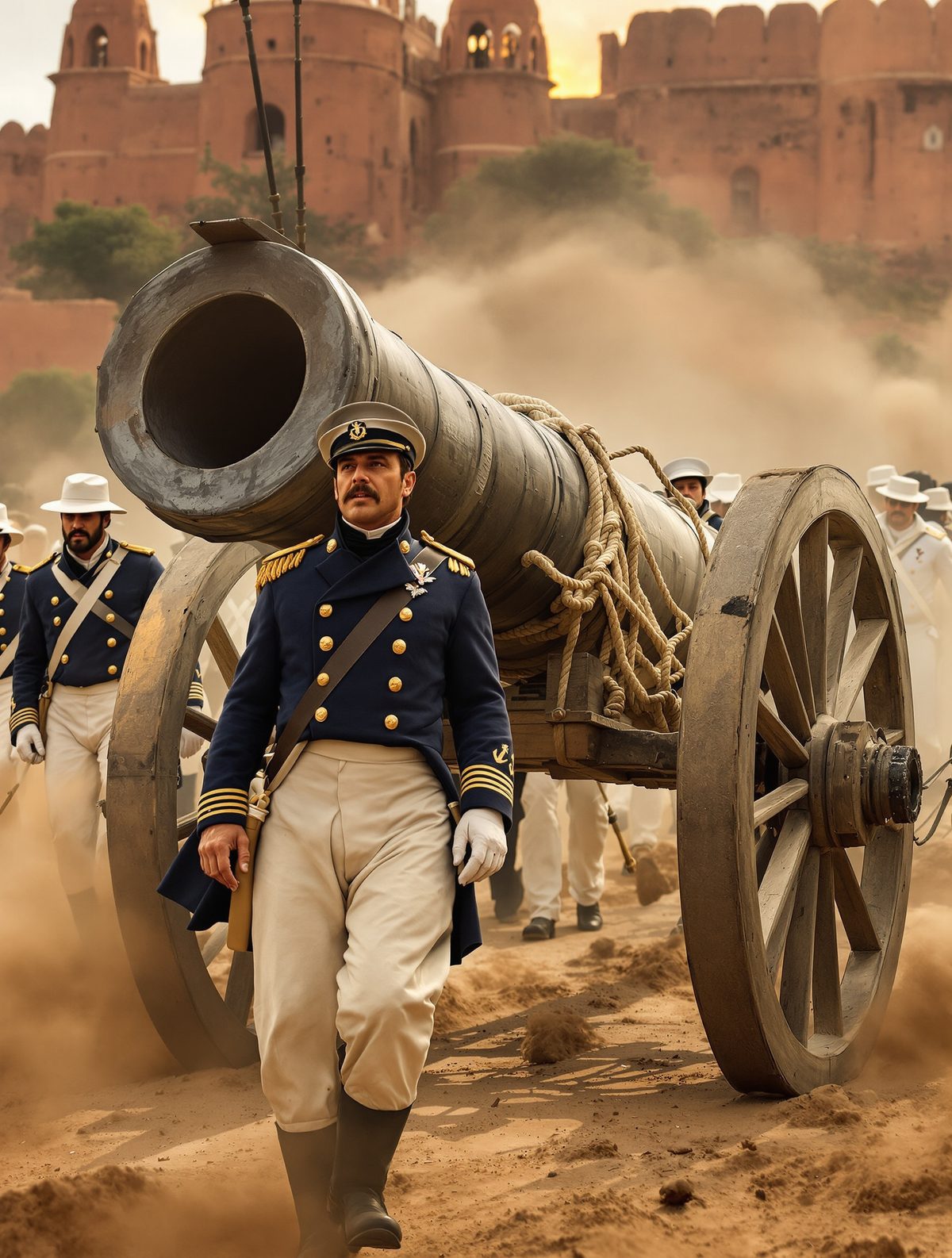
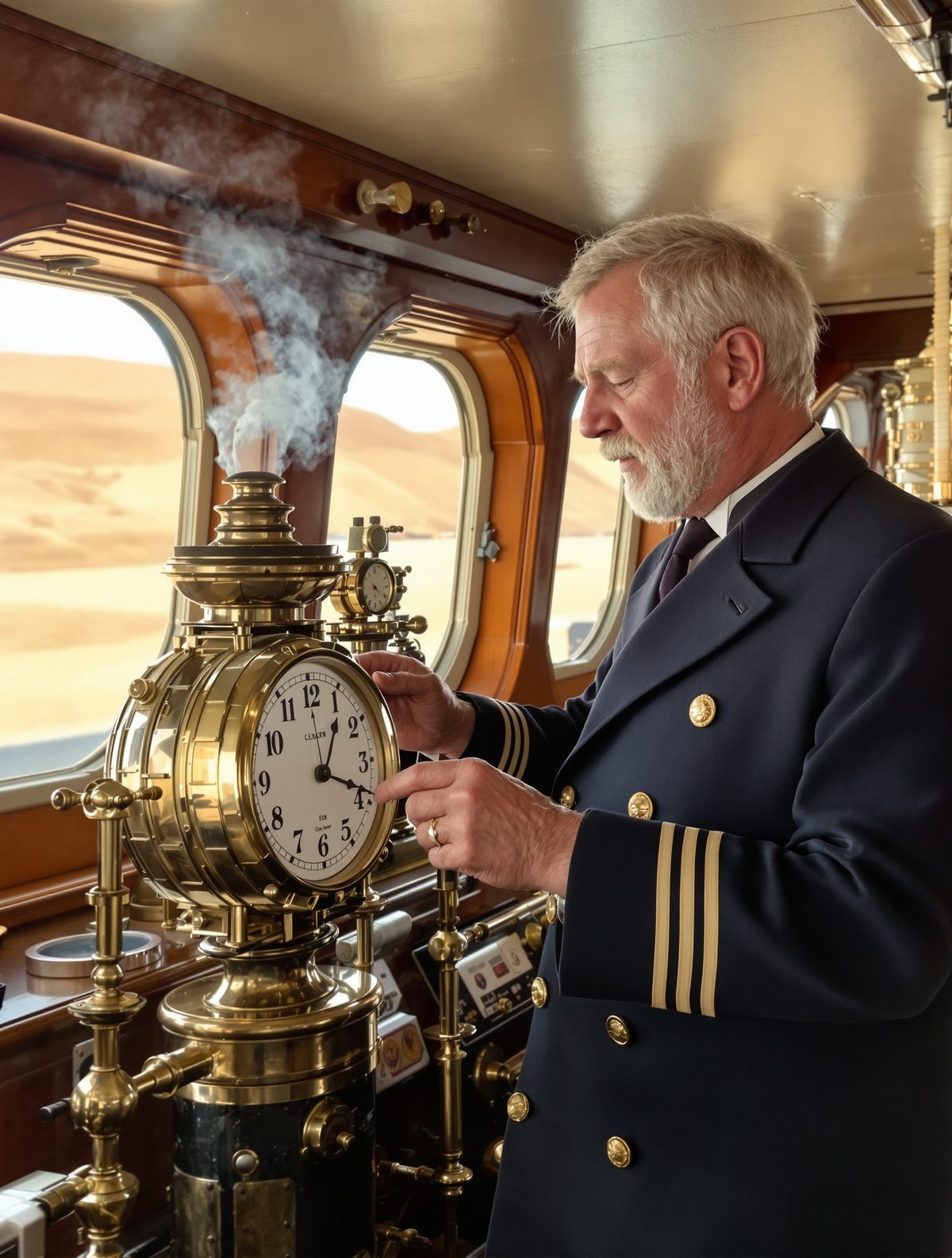
The grandfather clock in the corner of Government House struck eleven fifty-nine. Admiral Louis Mountbatten sat alone at his mahogany desk, a single document before him—the Indian Independence Act. Outside his windows, Delhi held its breath. In sixty seconds, the British Empire would lose the crown jewel that had funded its global dominance for three centuries. With one stroke of his fountain pen, 400 million people would go to sleep as subjects of the Crown and wake up as citizens of two brand-new nations.
But what the history books rarely tell you is that Mountbatten almost didn't sign at all.
The Viceroy Who Inherited an Impossible Task
When Louis Mountbatten arrived in New Delhi on March 22, 1947, he was supposed to have 18 months to orchestrate the transfer of power. Prime Minister Clement Attlee had given him until June 1948 to untangle three centuries of imperial rule. Instead, Mountbatten took one look at the communal violence already tearing through Punjab and Bengal and made a decision that shocked Whitehall: he moved the deadline forward by ten months.
"I think the transfer of power should be advanced," he cabled London in early May. What he didn't say was that British intelligence reports crossing his desk painted a picture of impending civil war. Hindu-Muslim riots in Calcutta had left 4,000 dead the previous August. The writing was on the wall—and it was written in blood.
The 46-year-old admiral, great-grandson of Queen Victoria and uncle to the future Prince Philip, found himself presiding over the death of the very empire his family had helped build. His own great-great-grandmother had been proclaimed Empress of India in 1876. Now he would be the man to lower the Union Jack for the final time.
The Midnight Hour That Changed Everything
August 14th began with Mountbatten hosting his final Viceroy's dinner. The guest list read like a who's who of the independence movement: Jawaharlal Nehru, who would become India's first Prime Minister in hours; Mohammed Ali Jinnah, soon to lead Pakistan; and dozens of other leaders who had spent decades fighting for this moment. The irony wasn't lost on anyone—the last imperial feast was being shared by former prisoners and their former jailers.
As the evening progressed, Mountbatten retreated to his study. The weight of what was happening seemed to hit him all at once. His wife Edwina later wrote that she found him staring at a map of the subcontinent, tracing the new borders with his finger. These weren't just lines on paper—they would separate families, divide communities, and displace millions.
Here's what most people don't know: the final borders weren't even finished when independence arrived. Sir Cyril Radcliffe, the British lawyer tasked with drawing the boundary between India and Pakistan, was still working frantically in his office. His maps wouldn't be published until after independence day. Mountbatten was essentially signing a blank check, creating two nations without knowing exactly where one ended and the other began.
Two Nations Born in a Single Breath
As midnight approached on August 15th, 1947, two ceremonies were unfolding simultaneously. In New Delhi, Nehru rose to address the Constituent Assembly with words that would echo through history: "At the stroke of the midnight hour, when the world sleeps, India will awake to life and freedom." Meanwhile, 700 miles away in Karachi, Jinnah was taking his oath as Pakistan's first Governor-General.
But there's a detail the textbooks miss: Pakistan actually became independent on August 14th, not the 15th. Mountbatten had to be present at both ceremonies, and since he couldn't be in two places at once, Pakistan's independence was scheduled for the day before. This seemingly minor scheduling issue means that Pakistan celebrates its independence day 24 hours before India—a quirk of logistics that became permanent tradition.
At exactly midnight, Mountbatten signed the final order. The British Raj, which had controlled territory from the Khyber Pass to the Bay of Bengal, ceased to exist. The Union Jack was lowered for the last time, and two new flags—the Indian Tricolor and Pakistan's green and white crescent—were raised in its place.
The numbers were staggering: 565 princely states had to choose which nation to join. An area of 1.5 million square miles was being divided. The Indian Civil Service, the administrative backbone of British rule, was split between two governments overnight. Even the imperial library's books were divided—India got the odd-numbered volumes, Pakistan the even-numbered ones.
The Human Cost of a Pencil Line
What followed Mountbatten's signature was one of the largest mass migrations in human history—and one of the bloodiest. Within weeks, an estimated 14 million people were on the move. Hindus and Sikhs fled Pakistan for India; Muslims made the journey in reverse. Entire villages emptied overnight. Trains that should have carried hopeful citizens to their new homelands instead became death traps.
The violence was horrific and immediate. In Punjab, where the new border cut through the heart of Sikh and Hindu communities, revenge killings spiraled out of control. Conservative estimates put the death toll at 200,000, though many historians believe it was closer to a million. Mountbatten received reports of villages where not a single person remained alive.
The Admiral, who had expected to oversee a orderly transition, found himself managing a humanitarian catastrophe. He set up an Emergency Committee that met twice daily, coordinating refugee camps and trying to protect the massive population movements. But the infrastructure of empire—designed to control, not to serve—proved woefully inadequate for the task.
The Papers That Revealed the Truth
For decades, the full story of those final hours remained classified. Only when British government files were released in the 1970s did historians learn just how close everything came to complete collapse. Mountbatten's private papers, not declassified until 1997—fifty years after independence—revealed the depth of his private anguish.
In his diary entry for August 15th, he wrote: "I have today signed the death warrant of the Indian Empire and the birth certificate of two new dominions. I pray to God I have done the right thing." His wife Edwina was more blunt in her own diary: "The violence is beyond anything we imagined. Have we created two nations or unleashed hell?"
Perhaps most shocking was the revelation that Mountbatten had prepared a secret cable to London, ready to be sent if the violence became uncontrollable. The message would have requested immediate military intervention to restore order. The cable was never sent, but its existence showed just how close the partition came to complete failure.
Other documents revealed that British intelligence had predicted mass violence but failed to adequately prepare. A classified report from July 1947 warned that "the division of the Indian Army and police will leave vast areas with no effective law enforcement during the critical transition period." The report recommended delaying independence by six months. Mountbatten ignored it.
The Legacy of a Midnight Signature
Today, India and Pakistan are home to nearly 1.6 billion people—about one in five humans on Earth. Both nations possess nuclear weapons, largely because of the security fears that emerged from partition. The Kashmir conflict, still unresolved after seven decades, traces directly back to those hastily drawn borders of 1947.
But there's another legacy that's often overlooked: partition created the template for decolonization that would reshape the world. The speed of British withdrawal from India—compressed from 18 months to 10—became the model for how European powers would abandon their empires across Africa and Asia in the following decades. Sometimes orderly, often chaotic, but always rapid.
Mountbatten himself never fully escaped the shadow of partition. He would go on to become NATO's Supreme Allied Commander and later Chief of the Defence Staff, but colleagues noted he never spoke easily about those final days in Delhi. When the IRA assassinated him in 1979, some observers saw it as imperial history coming full circle—the violence that marked the end of empire finally catching up with the man who had presided over its dissolution.
That midnight signature did more than create two new nations. It marked the moment when the age of empire truly began to end, when subject peoples across the globe realized that independence wasn't just possible—it was inevitable. The clock that struck midnight in Government House wasn't just marking the birth of India and Pakistan. It was tolling the death knell of the colonial world order itself.