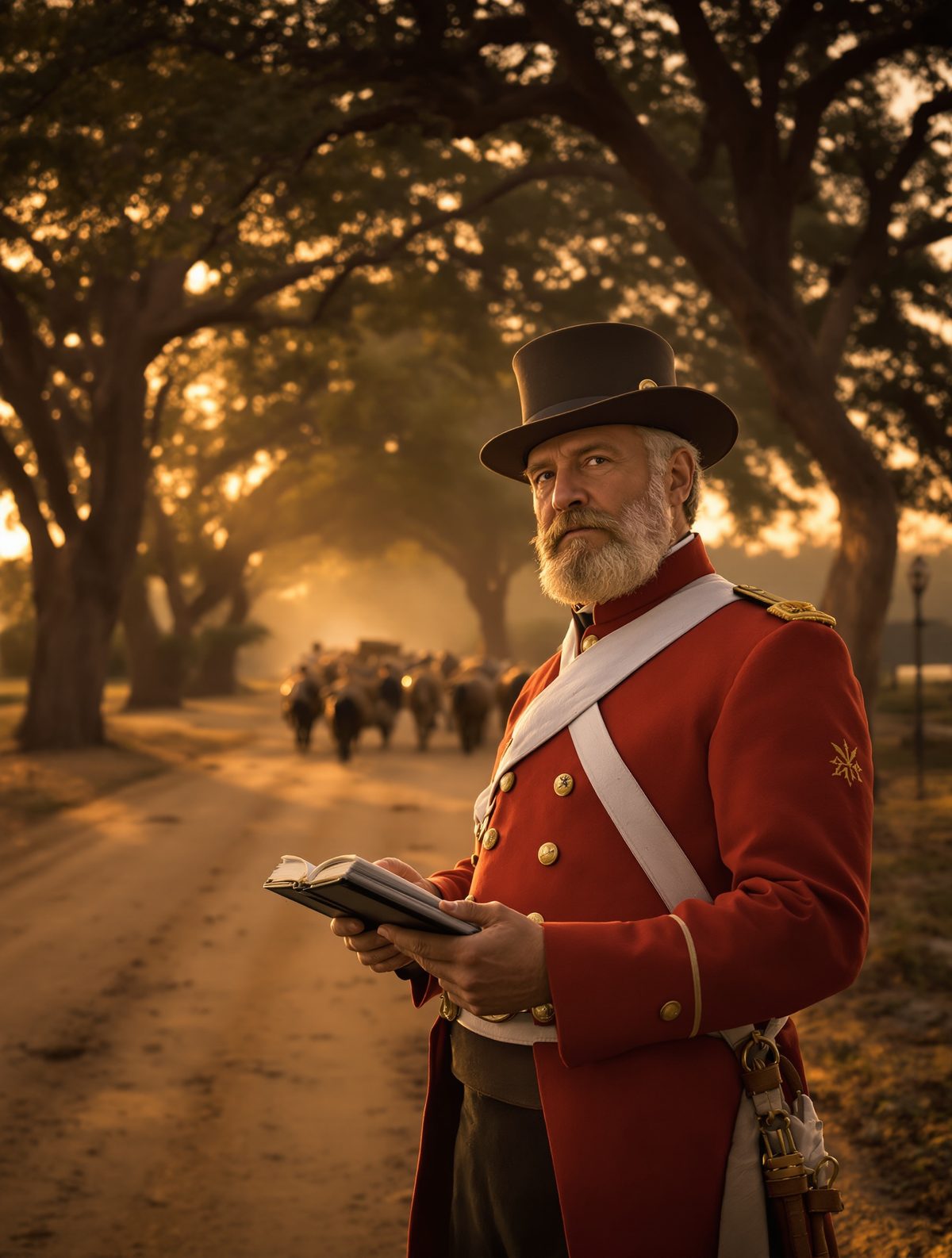
Picture this: It's 1883, and a steamship captain approaching the Suez Canal pulls out his pocket watch to check the local time. But which local time? Port Said runs on Egyptian time. His ship's chronometer shows London time. The canal authorities use French time. His cargo manifest lists arrival times in Bombay time. In his coat pocket, he carries four different timepieces, each ticking to a different rhythm, each claiming to hold the "correct" time.
This wasn't just inconvenient—it was dangerous. Across the British Empire, trains collided because station masters couldn't agree what time it was. Ships missed crucial tidal windows. Telegraph messages arrived stamped with times that made no sense to their recipients. The world's first global economy was choking on its own temporal chaos.
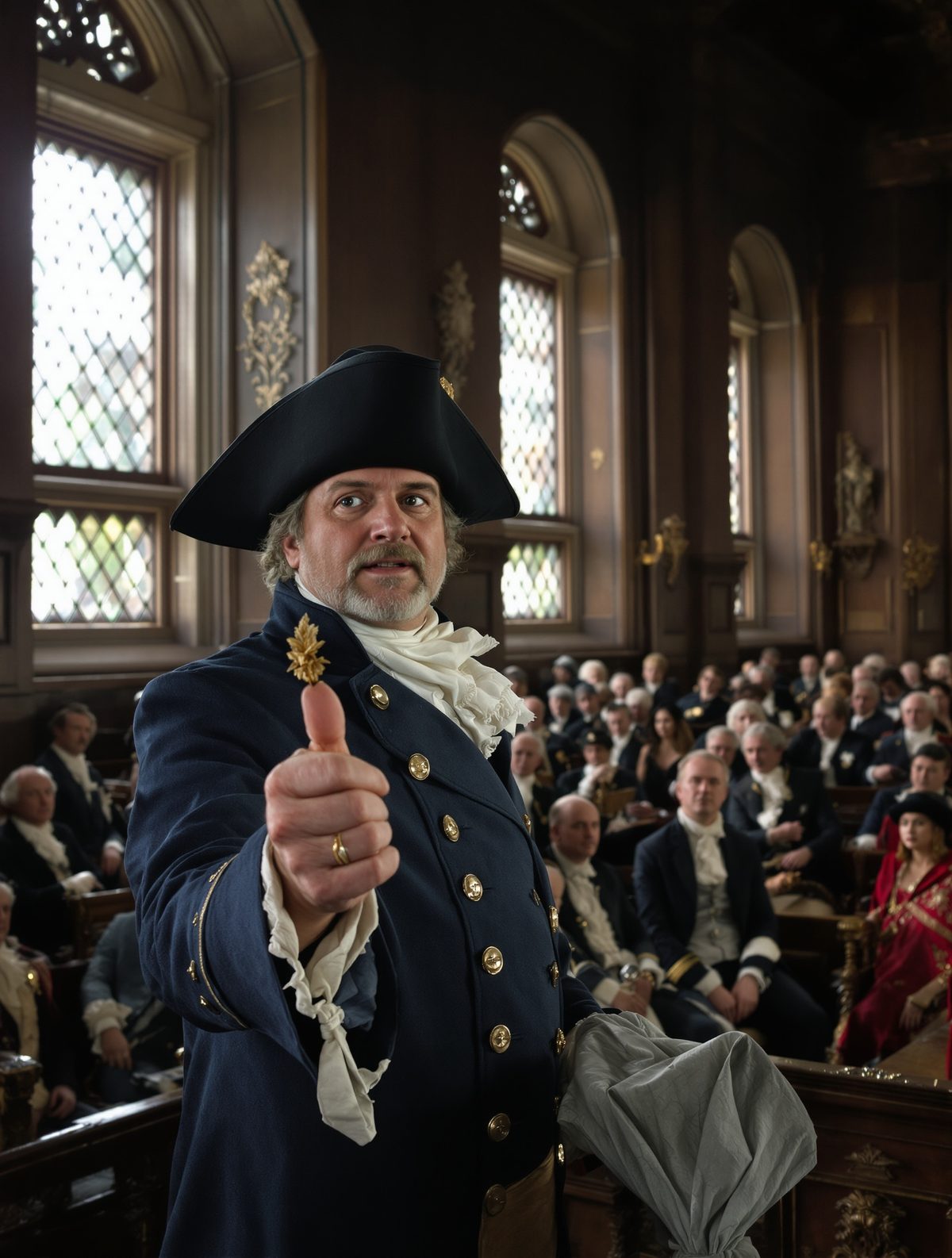
Then, in a grand conference room in Washington D.C., twenty-five nations gathered to solve humanity's greatest timing crisis. Their decision would hand control of every clock on Earth to a modest observatory perched on a hill in Greenwich, London—transforming a small scientific institution into the keeper of world time.
The Chaos Before the Clock
Before 1884, the world operated on what we might charitably call "creative timekeeping." Every major city, every railway company, every shipping line kept its own time based on when the sun reached its highest point overhead. This meant that as you traveled from London to Edinburgh, you'd encounter dozens of different "local times," each a few minutes off from the last.
The problem became acute with the expansion of railways and steamships. In Britain alone, railway companies juggled over 100 different local times. The Great Western Railway famously kept "God's time" (local solar time) while running on "railway time" (London time)—leading to passengers missing trains and cargo arriving at the wrong destinations.
But nowhere was the chaos more pronounced than in the arteries of the British Empire: the shipping routes that connected London to India, Australia, and the Far East. The Suez Canal, opened in 1869, had become the empire's most crucial bottleneck. Ships queued for days to transit the narrow waterway, their captains desperately trying to coordinate with canal pilots, port authorities, and oncoming traffic—all while operating on different temporal systems.
Consider the complexity: A British merchant vessel sailing from London to Bombay would adjust its clocks continuously throughout the journey. Departing on London time, switching to Gibraltar time, then Alexandria time, Port Said time, Suez time, Aden time, and finally Bombay time. Navigation calculations became nightmarish puzzles. Cargo manifests listed arrival times that meant nothing to dock workers. Insurance claims couldn't establish when accidents actually occurred.
The Greenwich Gambit
Enter Sir Sandford Fleming, a Scottish-Canadian engineer who had spent years wrestling with time chaos while building the Canadian Pacific Railway. Fleming had a radical idea: divide the entire world into twenty-four time zones, each exactly fifteen degrees of longitude wide, all synchronized to a single "universal time."
But which time would become the universal standard? Fleming's proposal sparked an international debate that revealed the hidden power dynamics of the Victorian world. The French championed Paris time. The Germans promoted Berlin time. The Americans, with characteristic audacity, suggested Washington time.
The British had a secret weapon: they didn't need to argue. By 1880, roughly 65% of all ships worldwide were already using Greenwich Mean Time for navigation, thanks to the dominance of British maritime charts and the Royal Navy's global influence. The Greenwich Observatory had been publishing nautical almanacs since 1767, and British naval charts—marked with Greenwich meridian lines—were the gold standard for ocean navigation.
More importantly, the submarine telegraph cables that were revolutionizing global communication all synchronized to Greenwich time. When a stockbroker in Bombay sent a telegram to London, when a plantation manager in Ceylon coordinated with shipping agents in Liverpool, when colonial administrators across the empire filed their reports—they all danced to Greenwich's temporal rhythm.
The Washington Conference: Twenty-Five Nations, One Clock
On October 1, 1884, delegates from twenty-five nations gathered in Washington D.C. for the International Prime Meridian Conference. The stakes were enormous: they would choose not just a global time standard, but the very lines that would organize human civilization on planet Earth.
The conference sessions reveal fascinating glimpses of Victorian-era geopolitics. French delegate Jules Janssen argued passionately against Greenwich, proposing instead a "neutral" meridian that passed through the Atlantic Ocean, touching no nation's territory. The Dominican Republic's delegate supported Greenwich purely because all their nautical charts already used it. The Ottoman Empire's representative, Ahmed Rüstem Bey, shrewdly noted that since most international commerce already ran on Greenwich time, fighting it would be economically disastrous.
The most telling moment came when British delegate Sir Frederick Evans calmly presented the numbers: 65% of global shipping tonnage used Greenwich-based charts. The British merchant marine dominated world trade. The Royal Navy protected the sea lanes. London was the world's financial capital. Greenwich was already the de facto global standard—the conference could either formalize this reality or create an expensive, chaotic alternative.
On October 22, 1884, the vote was decisive: twenty-two nations voted to make Greenwich the Prime Meridian and Greenwich Mean Time the foundation for global time zones. Only France abstained (they wouldn't officially adopt Greenwich time until 1911). San Domingo (now the Dominican Republic) abstained. Brazil voted against.
The Observatory That Ruled the World
Suddenly, a modest astronomical observatory on a hill in southeast London found itself at the center of global civilization. The Royal Observatory Greenwich, founded in 1675 to help British sailors navigate more accurately, now controlled the temporal rhythm of every railway, steamship, telegraph, and stock exchange on Earth.
The observatory's astronomers faced enormous pressure to maintain perfect accuracy. Every day at 1:00 PM, they dropped a red time ball from the observatory roof—a signal visible to ships on the Thames below. Telegraph lines carried Greenwich time signals to major cities worldwide. Railway companies synchronized their entire networks to Greenwich's master clock. Stock exchanges opened and closed by Greenwich's command.
The practical changes were immediate and dramatic. Ship captains approaching the Suez Canal no longer needed multiple timepieces—they simply calculated their position using Greenwich Mean Time and consulted standardized tables for local time zones. Railway timetables across the empire became consistent and reliable. Telegraph timestamps finally made sense across continents.
But the psychological impact was even more profound. For the first time in human history, a farmer in New Zealand, a factory worker in Manchester, and a tea planter in Ceylon could look at their clocks and know they were all synchronized to the same universal rhythm. The world had truly become smaller.
The Unexpected Consequences of Global Time
The adoption of Greenwich Mean Time triggered changes that the 1884 delegates never anticipated. International commerce accelerated dramatically when businesses could coordinate across time zones with mathematical precision. The age of global financial markets truly began—London, New York, and Hong Kong could trade continuously as the Earth rotated.
But standardized time also revealed the British Empire's staggering reach. When every clock from Cairo to Calcutta synchronized to Greenwich, the empire's temporal unity became a daily reminder of British global dominance. Local traditions of timekeeping—some thousands of years old—vanished virtually overnight, replaced by the mechanical rhythm of Greenwich's pendulum clocks.
Perhaps most surprisingly, Greenwich Mean Time accelerated the development of modern technology. Precise time synchronization enabled complex industrial processes, coordinated scientific observations across continents, and laid the groundwork for technologies we take for granted today: radio navigation, satellite communications, and the internet itself.
When London's Clock Stopped Ruling the World
Today, atomic clocks scattered across the globe maintain Coordinated Universal Time with accuracy that would astonish the Victorian astronomers at Greenwich. The observatory itself moved to Cambridge in the 1950s, driven out by London's light pollution. The time signals that once traveled by telegraph now bounce off satellites and race through fiber optic cables.
Yet every time you check your smartphone, book an international flight, or join a video call with colleagues on different continents, you're participating in a system born in that Washington conference room in 1884. The decision to make Greenwich the center of world time didn't just solve a practical problem—it created the temporal infrastructure that makes our connected world possible.
The next time you glance at your watch, remember: you're not just checking the time. You're consulting the descendants of those Victorian chronometers that once ticked away in the pockets of steamship captains approaching the Suez Canal, desperate for a world that could agree on what time it was. In our age of instant global communication, we've inherited their solution—and with it, the hidden power to synchronize human civilization itself.