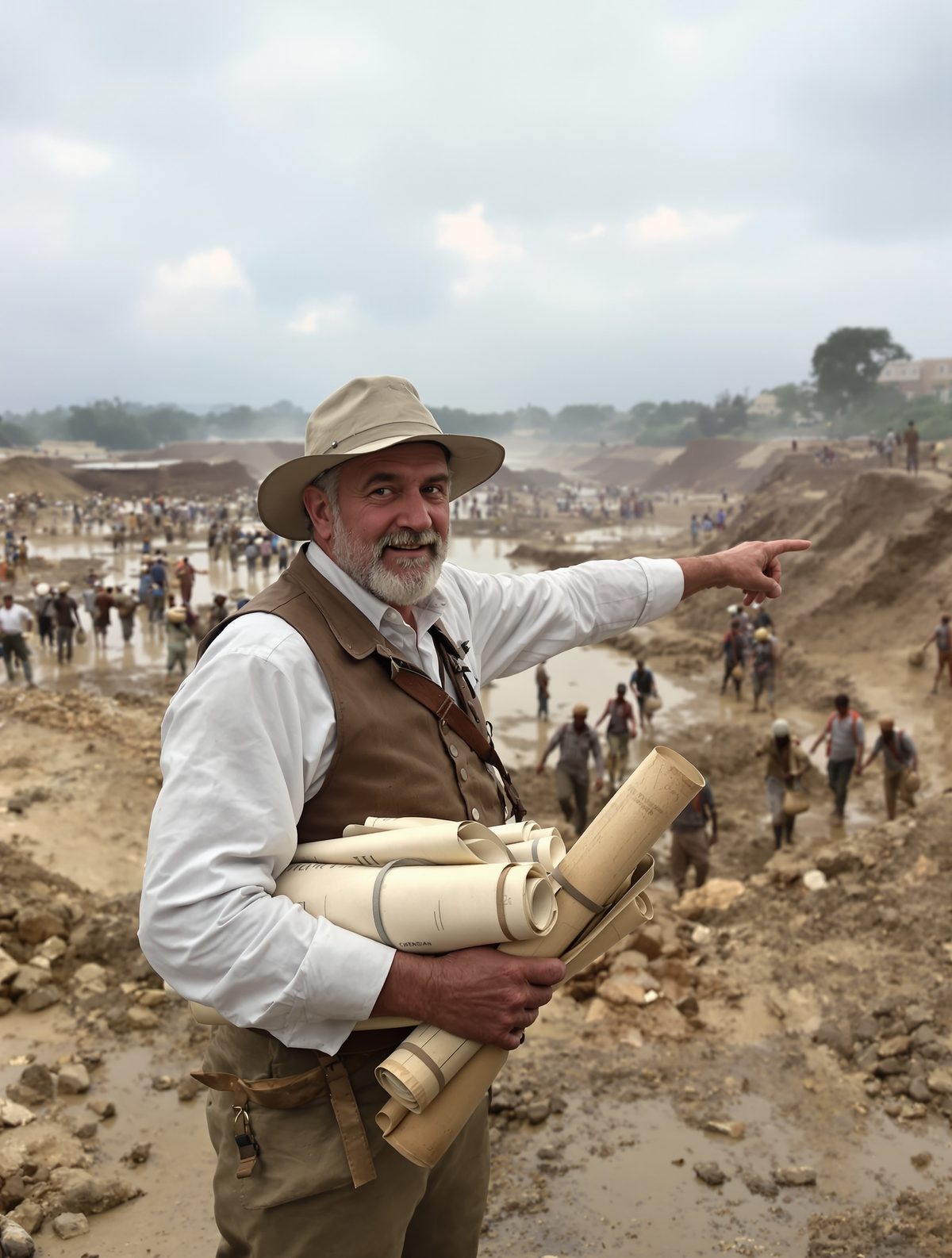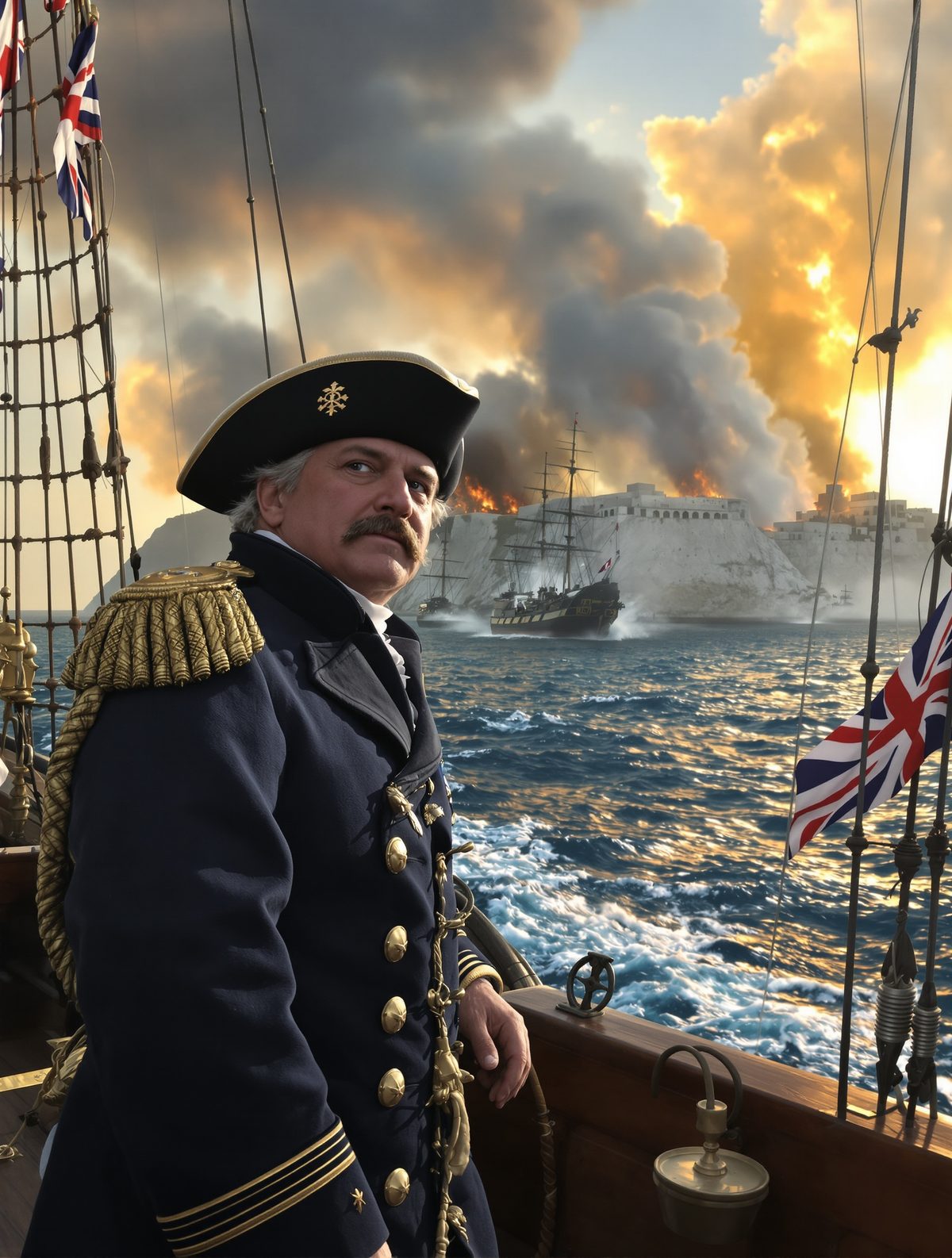
Picture this: It's December 1891, and a slight British gentleman in a sweat-stained colonial uniform stands alone on the shores of Lake Nyasa, facing down 10,000 armed Arab slave traders who've just ordered him to pack up and leave Africa forever. Behind him, sixty Sikh soldiers grip their rifles, knowing they're outnumbered more than 150 to one. The slave traders' dhows bob menacingly on the lake, their holds recently emptied of human cargo. The air crackles with tension as vultures circle overhead, as if sensing the bloodbath that seems inevitable.
What happens next would reshape the map of Africa and end centuries of slave trading in the region. Sir Harry Johnston—botanist, painter, and one of the most audacious diplomats in British history—was about to pull off one of the greatest bluffs in colonial history.
The Unlikely Empire Builder
Harry Hamilton Johnston was hardly the stuff of imperial legend. Standing just 5'6" with a scholarly demeanor and thick spectacles, he looked more like a university professor than a man destined to claim an entire country through sheer nerve. Born in 1858 to middle-class parents in Kennington, Johnston had trained as an artist and naturalist. He'd made his name painting landscapes and collecting specimens, not conquering territories.
But Johnston possessed something far more dangerous than military prowess: an unshakeable belief in his own authority and an almost supernatural ability to read people. By 1891, he'd already talked his way into founding the colony of Kenya after a chance meeting with Chancellor Bismarck at a Berlin dinner party. Now, as Her Majesty's Commissioner and Consul-General for the newly declared British Central Africa Protectorate, he faced his greatest challenge yet.
The problem was simple: Britain had claimed this slice of East Africa on paper, but the Arabs who'd controlled the slave trade here for centuries weren't particularly impressed by documents signed in London. Led by the powerful Mlozi bin Kazbadema, these traders had built a network of fortified settlements around the northern shores of Lake Nyasa, where they'd been capturing, buying, and shipping slaves for over 300 years.
The Slave Coast's Last Stand
To understand the magnitude of Johnston's challenge, you need to grasp the sheer scale of the Arab slave trade in this region. Every year, an estimated 20,000 enslaved Africans passed through the northern Lake Nyasa route alone. The Arabs hadn't just built trading posts—they'd created a parallel civilization, complete with stone fortresses, private armies, and economic networks stretching from the Congo to Zanzibar.
Mlozi, the undisputed king of this trade, ruled from a massive fortified town called Karonga. His compound featured 12-foot-high stone walls, watchtowers, and enough weapons to arm a small country. Contemporary accounts describe seeing over 400 ivory tusks stacked like cordwood in his courtyards, alongside chains and shackles for thousands of captives. This wasn't some ragtag band of raiders—this was an industrial operation that had been perfecting human misery for generations.
The local African chiefs, caught between Arab slavers and British colonizers, watched nervously as these two forces moved toward an inevitable collision. Many had already been paying tribute to Mlozi for decades. Why should they believe this soft-spoken Englishman and his handful of foreign soldiers could change anything?
Sixty Men Against an Empire
Johnston's military resources were laughably inadequate for the task at hand. His entire force consisted of 60 Sikh soldiers from the Punjab—men who'd never set foot in Africa before and were already struggling with malaria and dysentery. These weren't even British regulars, but Indian troops borrowed from the colonial forces in India. They carried single-shot Martini-Henry rifles and had enough ammunition for perhaps one sustained engagement.
The Sikhs, however, brought something invaluable: a reputation. Word of their military prowess had somehow preceded them to Central Africa, possibly through Arab traders who'd encountered them in India. To many Africans, these bearded warriors in distinctive turbans seemed almost mythical—soldiers from a distant land who never retreated and never showed fear.
But reputations don't stop bullets, and Johnston knew that a direct military confrontation would be suicide. He'd have to rely on what he did best: psychological warfare wrapped in the mystique of British imperial authority. The question was whether anyone would buy his bluff when the chips were down.
The Moment of Truth
The confrontation came to a head in December 1891 when Mlozi's forces gathered at Karonga and sent Johnston an ultimatum: leave British Central Africa immediately or face annihilation. Contemporary accounts describe a scene straight out of a fever dream—hundreds of dhows crowding the lake shore, their crews armed with everything from ancient muskets to modern rifles acquired through the ivory trade.
What happened next has been described by historians as either the height of British imperial arrogance or a masterstroke of diplomatic theater. Johnston, instead of retreating or negotiating, walked directly toward the assembled Arab forces. Alone.
According to eyewitness accounts from his Sikh soldiers and local African interpreters, Johnston approached to within shouting distance of Mlozi's representatives and delivered what might be the most audacious speech in colonial history. Speaking in fluent Swahili, he declared that the Queen of England—Empress of India and ruler of the seas—had claimed this land. The slave trade was finished. Anyone who remained would be subject to British law.
Then came the masterstroke: Johnston announced that his 60 Sikhs were merely the advance guard of thousands more troops already marching from the coast. British warships were steaming toward Lake Nyasa. The full weight of the Empire was about to descend on anyone foolish enough to resist.
It was complete fabrication. Johnston had no reinforcements, no warships, and no backup plan beyond the sheer audacity of his claim.
The Bluff That Changed History
For several hours, the two forces stared at each other across the African bush. Mlozi's commanders huddled in heated discussion while Johnston stood calmly in the sun, projecting absolute confidence in his phantom army. His Sikh soldiers, though they must have suspected they were living their final hours, maintained perfect discipline.
Then something extraordinary happened: the slave traders blinked first.
Whether they genuinely believed Johnston's claims about incoming reinforcements, or whether the psychological impact of facing soldiers from the legendary British Empire simply broke their nerve, Mlozi's forces began withdrawing to their boats. Within hours, the dhows were disappearing across Lake Nyasa, carrying with them the remnants of a slave-trading network that had operated for centuries.
The retreat wasn't total—Mlozi himself would continue resistance from his fortress for another two years before Johnston finally besieged and destroyed Karonga in 1893. But the crucial psychological victory had been won. Local African chiefs, seeing the mighty Arab slavers back down before this small British force, began switching their allegiance. The balance of power in the region had shifted forever.
The Empire Built on Audacity
Johnston's bluff at Karonga reveals something uncomfortable about how empires are really built—not through grand military campaigns or noble civilizing missions, but through calculated deception and the willingness to stake everything on a single moment of theater. The British Empire's claim to what would become Malawi rested entirely on one man's ability to project confidence he didn't feel, backed by forces he didn't have.
The human cost of this imperial sleight-of-hand is harder to calculate. The end of the slave trade undoubtedly saved thousands of lives, but British colonial rule brought its own forms of exploitation and suffering. The Africans caught between these competing powers had little say in their fate, whether their masters spoke Arabic or English.
Yet there's something darkly fascinating about Johnston's gamble—a reminder that history's pivotal moments often turn not on grand strategies or overwhelming force, but on the willingness of one person to step forward and claim the impossible. In an age when we can track military movements by satellite and fact-check claims in real-time, it's worth remembering that empires were once won and lost on nothing more than nerve, timing, and the audacious belief that sometimes the biggest lie can become the most powerful truth.