The horse beneath Sir Harry Smith was already lathered with sweat, its flanks heaving as it thundered across the harsh South African veld. Behind him, 600 miles of punishing terrain stretched back to Cape Town. Ahead lay Grahamstown, where 50,000 British settlers huddled in terror as Xhosa warriors swept across the Eastern Cape like a tide of vengeance. It was December 1834, and Smith had already been riding for four days straight. His mission was simple in concept, impossible in execution: reach the frontier before the colony fell, or watch British South Africa collapse entirely.
What happened next would become one of the most extraordinary rides in military history—a desperate race against time that would reshape the future of an empire. Yet somehow, this incredible journey has been relegated to footnotes in history books, overshadowed by grander imperial campaigns. This is the story they left out of the textbooks.
The Powder Keg Explodes
The trouble had been brewing for decades along the Great Fish River, that invisible line that separated British colonial ambition from Xhosa ancestral lands. By 1834, the Eastern Cape frontier had become a pressure cooker of competing claims, cattle raids, and cultural misunderstandings that would make the American Wild West look like a peaceful neighborhood dispute.
The spark that lit the fuse was, ironically, an attempt at justice. In December 1834, a British magistrate ordered the arrest of several Xhosa chiefs for cattle theft. To the Xhosa, this was the final insult—foreign invaders presuming to judge their leaders. On December 11th, over 10,000 Xhosa warriors, led by chiefs Maqoma and Tyali, crossed the Great Fish River in what would become known as the Sixth Frontier War.
The colonial response was catastrophically inadequate. Governor Sir Benjamin D'Urban sat in his comfortable Cape Town mansion, 600 miles from the action, while his scattered frontier forces—a motley collection of British regulars, local militia, and Khoi auxiliaries—found themselves overwhelmed by the coordinated Xhosa assault. Farms were burned, livestock seized, and settlers fled toward fortified towns like Grahamstown, their faces etched with the kind of terror that comes from realizing your world can disappear overnight.
What made this crisis particularly desperate was its scale. Unlike previous frontier skirmishes, this was total war. The Xhosa weren't just raiding—they were reclaiming, systematically destroying the colonial infrastructure that had been carved from their homeland over the past half-century.
Enter the Hurricane
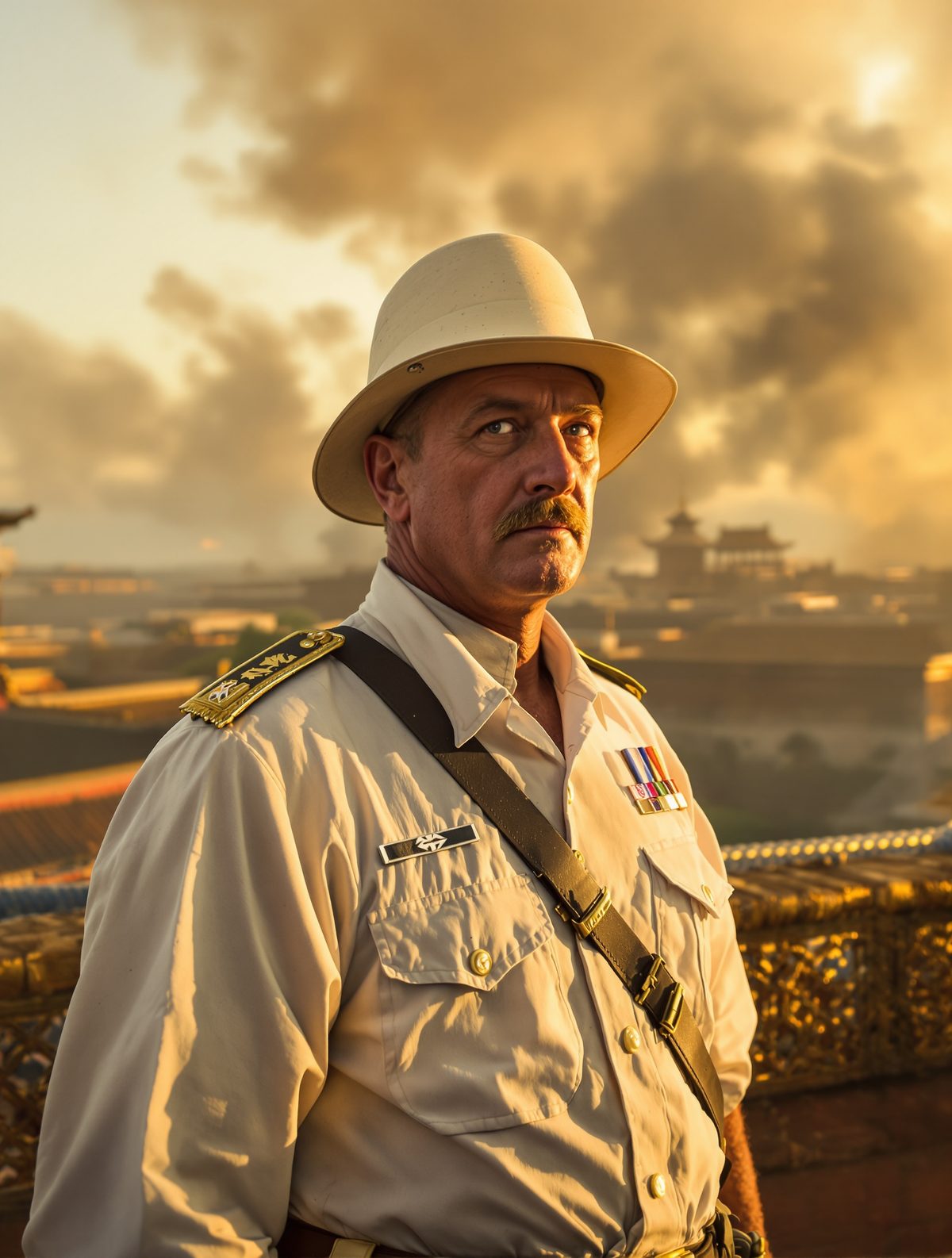
Sir Harry George Wakelyn Smith was not your typical British officer. Born in 1787 in Whittlesey, Cambridgeshire, he had earned his reputation as a soldier who thrived on impossible missions. His fellow officers called him "Hurricane Smith," partly for his explosive temper, but mostly for his uncanny ability to appear wherever the fighting was fiercest, usually at precisely the moment when all seemed lost.
Smith's résumé read like an adventure novel. He had fought at the Battle of Waterloo, where he personally captured Napoleon's treasure chest (and promptly married a Spanish woman he'd rescued during the Peninsular War, scandalizing proper British society). He'd served in India, survived shipwrecks, and had already spent time in South Africa dealing with frontier conflicts. But nothing had prepared him for what D'Urban was about to ask.
On December 20th, 1834, a dust-covered messenger stumbled into D'Urban's residence with news that made the Governor's blood run cold. The Xhosa offensive was succeeding beyond anyone's worst fears. Grahamstown—the unofficial capital of the Eastern Cape—was under siege. If it fell, the entire colony would collapse like dominoes.
D'Urban had exactly one card left to play: Harry Smith. But Smith was in Cape Town, 600 miles away, and every day of delay meant more death, more destruction, more territory lost. Traditional military wisdom suggested that moving reinforcements to the frontier would take weeks, possibly months. The colony would be history long before help arrived.
Smith's response was characteristically audacious: "Give me six days."
The Ride That Defied Physics
At dawn on December 21st, Smith mounted his horse outside Government House in Cape Town and spurred eastward toward what seemed like certain failure. What he was attempting had never been done—600 miles across some of the most punishing terrain on earth, in six days, with 1830s technology and whatever horses he could commandeer along the way.
The route Smith chose was a testament to his intimate knowledge of South African geography. Rather than following the established wagon roads, which meandered through mountain passes and around natural obstacles, he plotted a direct line across the Karoo desert, through the Zuurberg Mountains, and across the sunbaked plains that rolled toward the Eastern Cape frontier.
His strategy was brilliantly simple: ride each horse to exhaustion, then switch to a fresh mount at predetermined staging posts. Smith had sent messengers ahead to arrange relay horses at key points—Somerset West, Caledon, Swellendam, George, and beyond. It was the Pony Express concept, decades before Americans invented it, executed across terrain that would challenge modern vehicles.
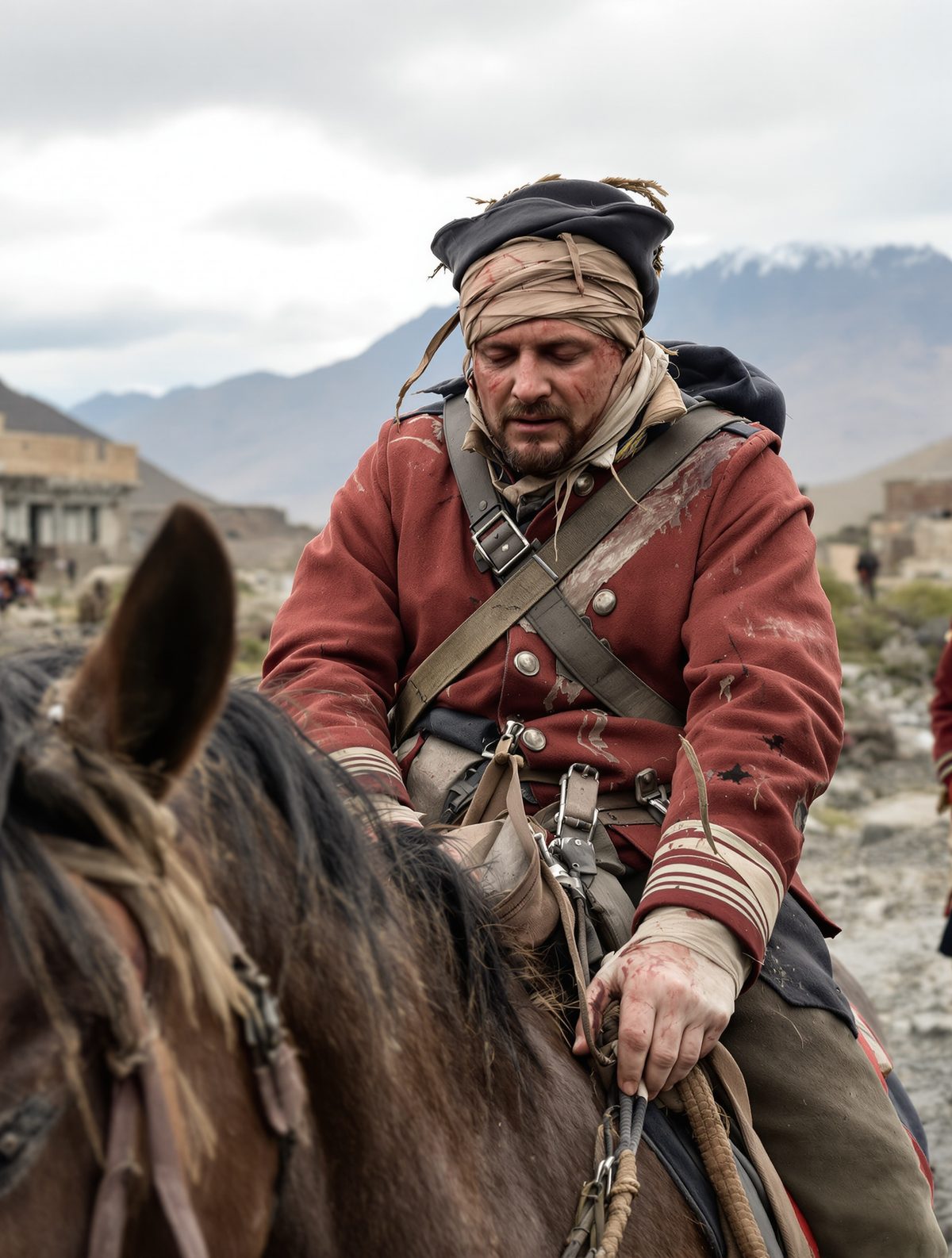
The physical demands were staggering. Smith averaged 100 miles per day across country where 30 miles was considered good progress. He slept in the saddle, ate while riding, and changed horses without stopping. His small escort—a handful of mounted messengers—dropped away one by one, unable to maintain the punishing pace. By the third day, Smith was riding essentially alone, a solitary figure cutting across the vast African landscape like a man possessed.
The weather added another layer of misery. December in South Africa means blazing summer heat, and temperatures soared above 100 degrees Fahrenheit. Smith's lips cracked, his skin burned, and his uniform became a salt-stained rag. Yet he never slowed. Behind him, he could almost feel the colony disintegrating; ahead, he could sense time running out with each mile that remained.
Racing Against Disaster
While Smith pushed his body and his horses to their absolute limits, the situation on the frontier deteriorated by the hour. Grahamstown was indeed under siege, its 5,000 inhabitants crammed behind hastily reinforced walls while Xhosa impis—warrior bands—prowled the surrounding countryside like hungry wolves.
The town's defenders were a desperate mixture of British regulars, local volunteers, and terrified civilians who had never held a musket in their lives. Their commander, Colonel Harry Somerset, sent increasingly frantic messages toward Cape Town, each one painting a darker picture than the last. Ammunition was running low. Food supplies were dwindling. Morale was cracking like ice in the summer sun.
What Somerset didn't know was that Smith was already more than halfway to salvation. By December 24th—Christmas Eve—the general was thundering through the Zuurberg Mountains, his current horse foaming at the mouth as it navigated treacherous mountain paths that would challenge a sure-footed mule. Smith had been in the saddle for four straight days, sustained by nothing but willpower and the growing certainty that he might actually achieve the impossible.
On Christmas Day, as families across the British Empire gathered for festive dinners, Harry Smith was crossing the Fish River valley, the smoke of burning farmsteads visible on the horizon. He was now in Xhosa territory, technically behind enemy lines, but his small party moved too fast for the scattered warrior bands to intercept. Smith had become a ghost, a legend racing across the landscape faster than news of his own approach.
Salvation Rides Into Grahamstown
At precisely midday on December 26th, 1834—six days after departing Cape Town—a dust cloud appeared on the road leading into Grahamstown. The exhausted sentries on the town walls raised their telescopes, expecting to see another Xhosa war party. Instead, they witnessed something that defied belief: Sir Harry Smith, swaying in his saddle but very much alive, riding into Grahamstown exactly as promised.
The effect was electric. Word spread through the besieged town like wildfire: "Hurricane Smith is here!" Settlers who had been preparing to die fighting suddenly remembered they were part of the British Empire. Militia members who had been discussing surrender began checking their ammunition. Children who had been crying in terror started cheering from behind barricaded windows.
Smith's first act was characteristically dramatic. Still covered in dust and barely able to stand, he climbed onto a makeshift platform in the town square and addressed the assembled crowd: "I have come to restore order to this frontier, and by God, I shall do it!" The man who had ridden 600 miles in six days was just getting started.
His second act was pure military genius. Smith immediately organized the scattered colonial forces into coordinated columns, each with specific objectives designed to break the Xhosa siege through swift, decisive action rather than passive defense. Within 48 hours of his arrival, British forces were counterattacking across the frontier, their confidence restored by the simple presence of a general who had proven that impossible things could be accomplished through sheer determination.
The psychological impact of Smith's ride extended far beyond Grahamstown's walls. News of his achievement spread throughout the colony and eventually back to London, where it captured the public imagination in ways that more conventional military victories never could. Here was empire-building distilled to its romantic essence: one man, one horse, one impossible mission accomplished through courage and endurance.
The Man Who Saved an Empire
Smith's six-day ride didn't just save the Cape Colony—it fundamentally altered the trajectory of British expansion in southern Africa. His successful relief of Grahamstown allowed colonial forces to regroup and eventually push the Xhosa back across the Great Fish River. More importantly, it established a template for how the British would approach frontier crises: with overwhelming speed, decisive leadership, and a romantic flair that transformed military necessity into imperial legend.
The ride also cemented Smith's reputation as one of the empire's most extraordinary figures. He would go on to govern the Cape Colony, play a crucial role in the annexation of Natal, and become one of the architects of British South Africa. But nothing he achieved in the remainder of his career quite matched the pure audacity of those six days in December 1834.
Perhaps most remarkably, Smith's achievement has been largely forgotten by popular history, overshadowed by more famous imperial adventures and more politically palatable colonial narratives. In our modern era of air travel and instant communication, it's difficult to grasp what 600 miles in six days actually meant in 1834—or to appreciate the physical and mental toughness required to accomplish something that existed at the very edge of human possibility.
Yet Smith's ride offers us something valuable: a reminder that history's most crucial moments often hinge not on grand strategies or vast armies, but on individual acts of extraordinary determination. In a world where we constantly debate the limits of human achievement, Hurricane Smith's dust cloud, visible on the horizon of a desperate South African town, reminds us that sometimes the impossible is just another word for what hasn't been attempted yet.