Picture this: It's a bitter February morning in 1566, and London's most powerful merchants are huddled against the stone pillars of St. Paul's Cathedral, their fine doublets soaked through with freezing rain. Purses heavy with Spanish silver and Flemish gold hang from their belts as they shout commodity prices over the howling wind. When the weather turns particularly foul, they duck into nearby taverns, conducting million-pound deals between tankards of ale and the stench of unwashed bodies.
This was how the financial heart of England operated—not in gleaming towers or marble halls, but in the literal streets, at the mercy of London's notoriously cruel weather. Until one man with a golden grasshopper emblem decided to change everything.
The Merchant Prince Who Mortgaged His Fortune
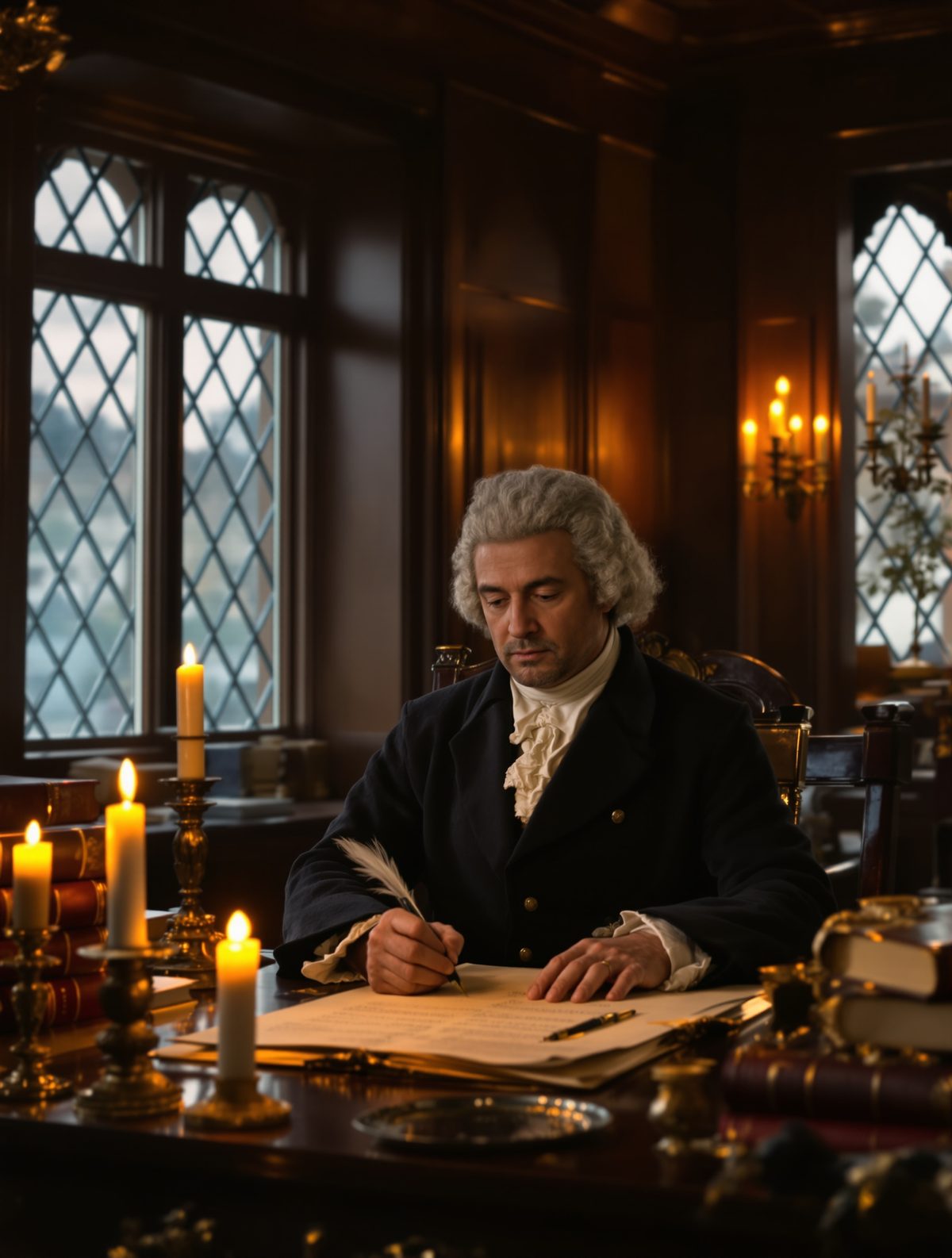
Sir Thomas Gresham was not your typical Elizabethan courtier. While others chased titles and land, this shrewd financier had spent decades orchestrating England's economic survival from the counting houses of Antwerp. As Queen Elizabeth's royal agent, he had manipulated currency markets, negotiated with European bankers, and somehow kept England solvent during some of its darkest financial hours.
But Gresham harbored a grander vision. He had witnessed the magnificent Bourse of Antwerp—a covered trading floor where merchants from across Europe conducted business in comfort and dignity. The sight of London's traders shivering in doorways and conducting international finance in puddles of street mud offended his sense of English pride.
In 1566, at the age of 47, Gresham made an extraordinary gamble. He approached Queen Elizabeth with a proposal that would either bankrupt him or transform London forever: he would build England's first purpose-designed trading exchange, spending his own fortune to do it. The final cost? A staggering £3,737—equivalent to roughly £2 million in today's money.
Contemporary records show that Gresham mortgaged several of his properties and liquidated investments across Europe to fund the project. His friends thought he'd lost his mind. His wife, Anne, reportedly pleaded with him to reconsider. But Gresham had calculated that London's transformation into a major trading hub was inevitable—and he intended to profit handsomely from that transformation.
Stealing Secrets from Antwerp's Masters
Gresham didn't just admire the Antwerp Bourse from afar—he systematically studied it. During his years as Elizabeth's financial representative in the Low Countries, he had walked its marble corridors, observed its operations, and even befriended its architect's apprentices.
The Antwerp exchange was revolutionary: a rectangular courtyard surrounded by covered walkways, where merchants could trade regardless of weather. Different sections were designated for specific commodities—spices in one corner, textiles in another, precious metals along the eastern wall. Information flowed as freely as money, with news from Venice reaching Hamburg in hours rather than days.
But Gresham had grander ambitions than mere imitation. His London exchange would feature 150 individual shops on the upper floors—making it part trading floor, part shopping center, and part real estate investment. He envisioned luxury goods from across the known world: furs from Russia, silks from China, precious stones from the Indies, all displayed under one magnificent roof.
The location he chose was brilliant: a plot on Cornhill, in the heart of London's existing financial district, where Lombard Street met the ancient trading routes. He demolished several houses and a church to make room, compensating the displaced residents generously enough to avoid the lawsuits that typically plagued such projects.
The Grasshopper's Gambit
Construction began in the summer of 1566, and Londoners watched in amazement as something unprecedented rose from their familiar streets. The building stretched 178 feet by 117 feet—massive by 16th-century standards—built around an open courtyard paved with Turkish stone. Covered walkways provided shelter, while the upper floors housed those 150 individual shops accessible via elegant staircases.
But the building's most distinctive feature was its weathervane: a golden grasshopper, Gresham's family emblem. This wasn't mere vanity—the grasshopper told a story of social mobility that resonated throughout London. Legend held that Gresham's ancestor had been a foundling, discovered as a baby by the chirping of a grasshopper. From those humble beginnings, the Greshams had risen to become one of England's wealthiest merchant families.
The symbolism was intentional and powerful. In an age when social advancement seemed impossible, Gresham's exchange proclaimed that commerce could elevate anyone willing to take risks and work intelligently. The golden grasshopper became London's first great monument to entrepreneurial capitalism.
More surprising still, Gresham's attention to detail extended to creature comforts that seem remarkably modern. The building featured what were essentially the first public restrooms in London, private meeting rooms for sensitive negotiations, and a sophisticated system of bells that announced opening and closing times across the district.
Royal Opening and Immediate Success
On January 23, 1571, Queen Elizabeth herself arrived for the Royal Exchange's grand opening. The ceremony was carefully orchestrated theater: Elizabeth toured the building, proclaimed it a wonder of the age, and officially bestowed the "Royal" designation that would make Gresham's fortune.
But the real drama happened immediately afterward. Merchants who had spent decades huddling in doorways suddenly found themselves conducting business in heated comfort. International traders, previously reluctant to endure London's primitive commercial conditions, began establishing permanent offices. The building's 150 shops filled within months, generating rental income that exceeded even Gresham's optimistic projections.
Within a year, the Royal Exchange had fundamentally altered London's economic geography. Property values in the surrounding area soared. New financial services—currency exchange, international banking, marine insurance—sprouted up to serve the concentrated merchant community. The exchange's central courtyard became the de facto nerve center of English commerce, where news of Spanish treasure fleets arriving in Seville reached English ears within days.
Perhaps most importantly, the exchange attracted international merchants who had previously considered London a backwater. Dutch financiers, German metalworkers, Italian silk traders, and Flemish cloth merchants all established regular presences. This concentration of expertise accelerated London's commercial education, creating the sophisticated financial culture that would eventually challenge Amsterdam and Venice for European supremacy.
The Legacy That Built an Empire
Gresham died in 1579, collapsing dramatically in the Royal Exchange's courtyard—a fitting end for a man who had literally built his legacy in brick and stone. But his creation lived on, surviving the Great Fire of London in 1666 (though requiring extensive rebuilding), and serving as London's commercial heart for over 300 years.
The principles Gresham established—centralized trading, standardized practices, international connectivity—became the foundation upon which London's eventual dominance of global finance was built. The Royal Exchange spawned Lloyd's of London, the London Stock Exchange, and countless other institutions that would finance Britain's imperial expansion.
Today, as we conduct trillion-dollar transactions with smartphone taps and debate the future of cryptocurrency exchanges, it's worth remembering that it all began with one man's refusal to accept that business had to be conducted standing in the rain. Gresham's golden grasshopper, still perched atop the modern Royal Exchange building, reminds us that the most profound changes often come from solving the most mundane problems—like keeping warm and dry while making money.
In an age when we take sophisticated financial infrastructure for granted, Gresham's story offers a crucial reminder: someone, somewhere, had to build it first. And sometimes, changing the world requires nothing more revolutionary than providing people with a roof over their heads and a warm place to do business.