The clatter of hooves against the cobblestones reverberated through the narrow streets, a symphony of iron against stone echoing in the cool morning air. The riders, draped in the muted colors of their military regalia, held their heads high, each face set in solemn reflection. As they approached their destination, a singular monument loomed ahead, its bronzed figures frozen in time—an eternal tribute to those who had charged headlong into history, forever entwined with the past they had forged in the crucible of war.
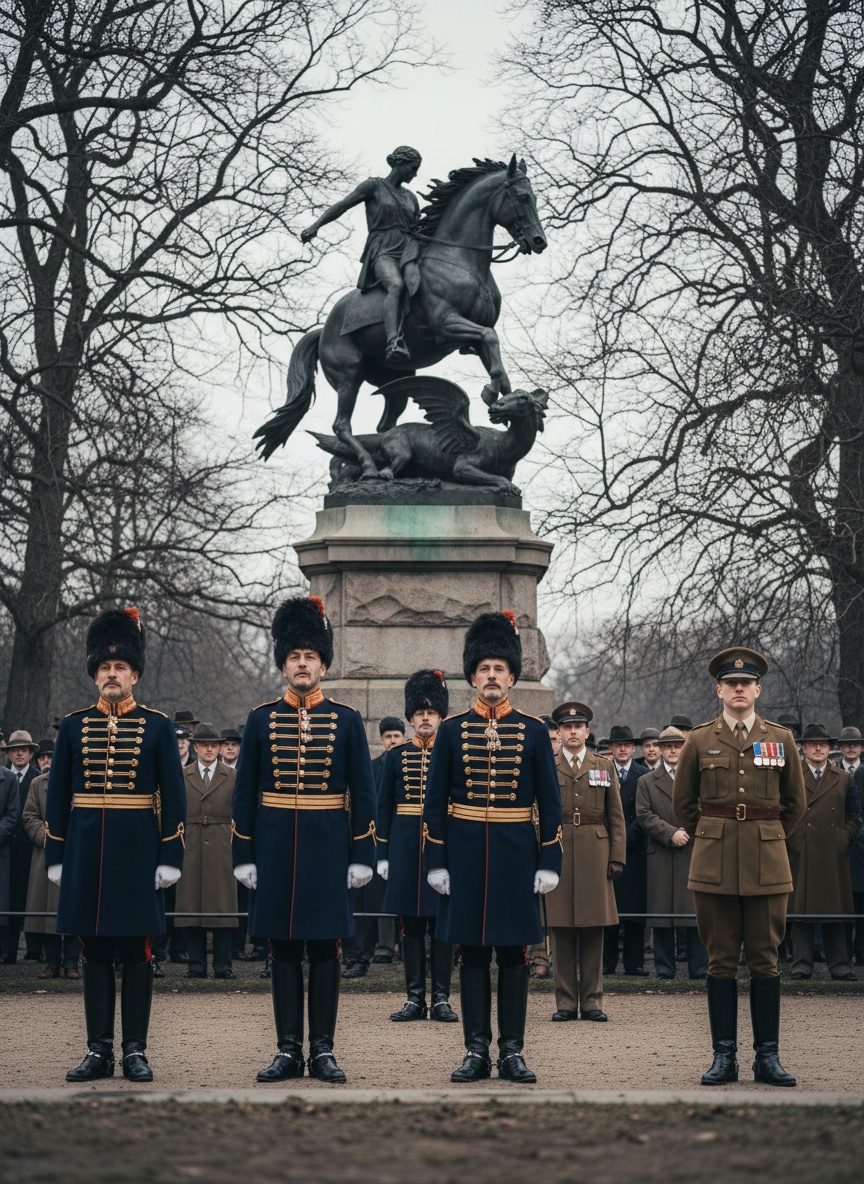
It was the year 1924, a moment when the scars of the Great War still bled through the fabric of society, yet here, in the hushed embrace of Hyde Park, the unveiling of the Cavalry Memorial stood to heal, to remember, and perhaps to reconcile. The bronze that formed this sculpture was no ordinary metal, but rather fragments of history repurposed—captured artillery pieces once commanded by those who had faced the cavalry's ferocious advance. It was a choice both poignant and purposeful, ensuring that the very tools of war would serve as a commemoration for peace.
As the tarp fell away to reveal the monument, the assembled crowd fell into silence, granting the moment its due reverence. Among those gathered were veterans, men who had lived through the hellish thunder of guns on the Western Front, who had felt the earth shake and feared it might swallow them whole. They were the fortunate ones, not unscathed, but alive. Their eyes traced the contours of the bronze sculpture before them, recognizing in it the essence of their own experiences, cast into lasting tribute.
The decision to use captured guns in the creation of the Cavalry Memorial was not merely symbolic—it was deeply practical. The Great War had drained Britain's reserves, leaving stone and traditional resources scarce. The Ministry of Works, endeavoring to honor the cavalry's legacy, saw the opportunity for a gesture both pragmatic and poetic. With an artist's finesse, the captured artillery was melted down, reshaped, and reincarnated into the bronze behemoth that now stood sentinel over the field.
For the sculptor tasked with this transformation, the challenge was both exhilarating and daunting. Here was an opportunity to create something that would speak to the last living witness of a fading era, an artwork not just observed but deeply felt by those who comprehended its full gravity. The horses, rendered in exquisite detail, seemed almost ready to gallop off their bronze pedestal, their riders eternal companions in this perpetual charge.
The memorial's unveiling was attended by an array of dignitaries, military officers, and citizens, but it was the veterans who imbued the event with its true solemnity. These men, once young and brave, had learned war's terrible lessons firsthand. They had faced the German guns, seen their comrades felled, and heard the last whispers of the fallen. Now they stood before a bronze reminder of those they had left behind, their silence a somber homage.
That the memorial was specifically dedicated to those who perished during mounted charges was a recognition of the unique and harrowing experience faced by the cavalry. The war, often remembered for its trench warfare, barbed wire, and mechanized brutality, also had its moments of almost medieval gallantry. The image of cavalrymen riding into the inferno, sabers pulled, was a stirring testament to courage amid artillery fire. In reclaiming the guns for art, the cavalry had, in a sense, won a posthumous victory by transforming instruments of death into a touchstone for unity and remembrance.
As the ceremony concluded, the sun, peeking over London's skyline, cast long shadows over the memorial, elongating the figures into ghostly reminders of their own stories. The veterans lingered, some stepping forward to lay wreaths while others paused to whisper what could only be fragments of private remembrances. It was, in many ways, a moment of catharsis, where the blending of past and present allowed for a modest reconciliation with the years they could not reclaim.
In time, the Cavalry Memorial would become a staple of Hyde Park, indistinguishable from its surroundings by those unfamiliar with its origins. It would stand resilient against the passage of years, much like the men it commemorated. Future generations, unaware of the battles once fought to create its quiet ambiguity, would admire its artistry while rarely pausing to consider the choices behind its creation.
And yet, that was as it should be. The memorial's presence was, after all, not just about remembering what was lost but embracing what had been preserved—the resolve, courage, and indelible spirit of human endeavor in the face of overwhelming odds. This story, writ in bronze from the spoils of war, was a narrative carried forward by the very air that swirled around London—a reminder that history, like the metal of old guns, could be reshaped into something enduringly beautiful.