August 15, 1900. The sun blazed relentlessly over the South African veldt.
Scarlet and Splendor: The Ceremonial Guards
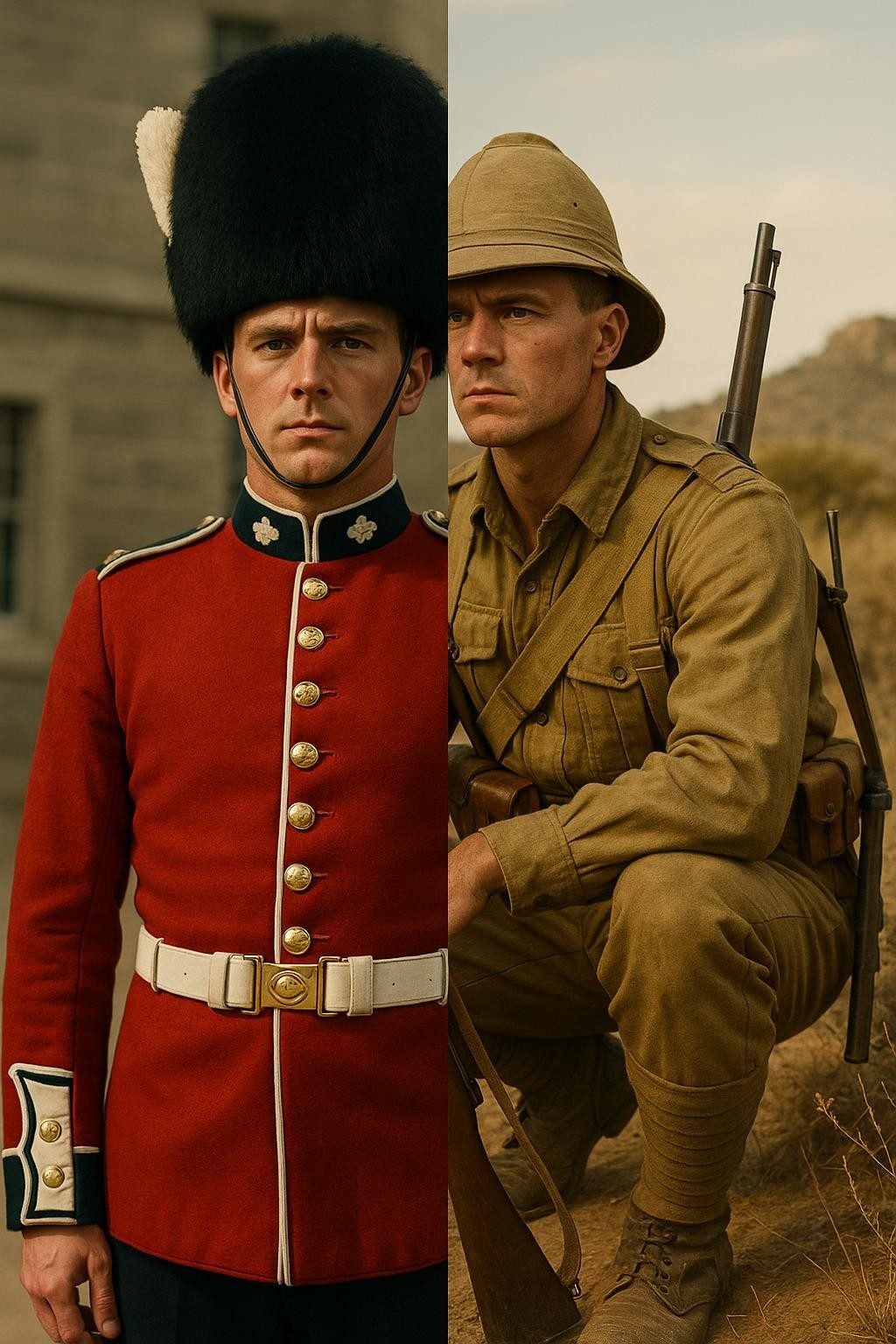
On home soil, the Coldstream Guards were the embodiment of imperial majesty. Towering and regal in their scarlet tunics and imposing bearskin hats, they were more than soldiers—they were living symbols of Britain’s global might. When the Coldstream Guards paraded through the streets of London, the scarlet of their uniforms mirrored the vibrancy of an empire at its zenith. These men, stoic and unwavering, stood as the ultimate personification of disciplined elegance and the martial tradition of the British Army.
The ceremonial dress of the Guards was not just a display but a carefully curated pageantry that harkened back to centuries of military history. Many did not realize that the bearskin hats, towering over the heads of the guardsmen, were not merely for show; their origin lay in the aftermath of the Napoleonic Wars, when such attire was adopted in emulation of the French Imperial Guard. The striking uniforms spoke to the vast traditions and power vested in each soldier, their figure unmistakable against the backdrop of Buckingham Palace or along the cobblestones of The Mall.
Public perceptions were largely crafted by this image of the Coldstream Guards. The tourists, the locals—even the monarch—gazed at these soldiers in awe, seeing men who projected an image of polished perfection, an air of controlled majesty. Yet, few knew that when these same men were called to service in the dusty, distant battlefields of South Africa, their scarlet uniforms were left behind.
The Khaki Transition: A New Kind of Warfare
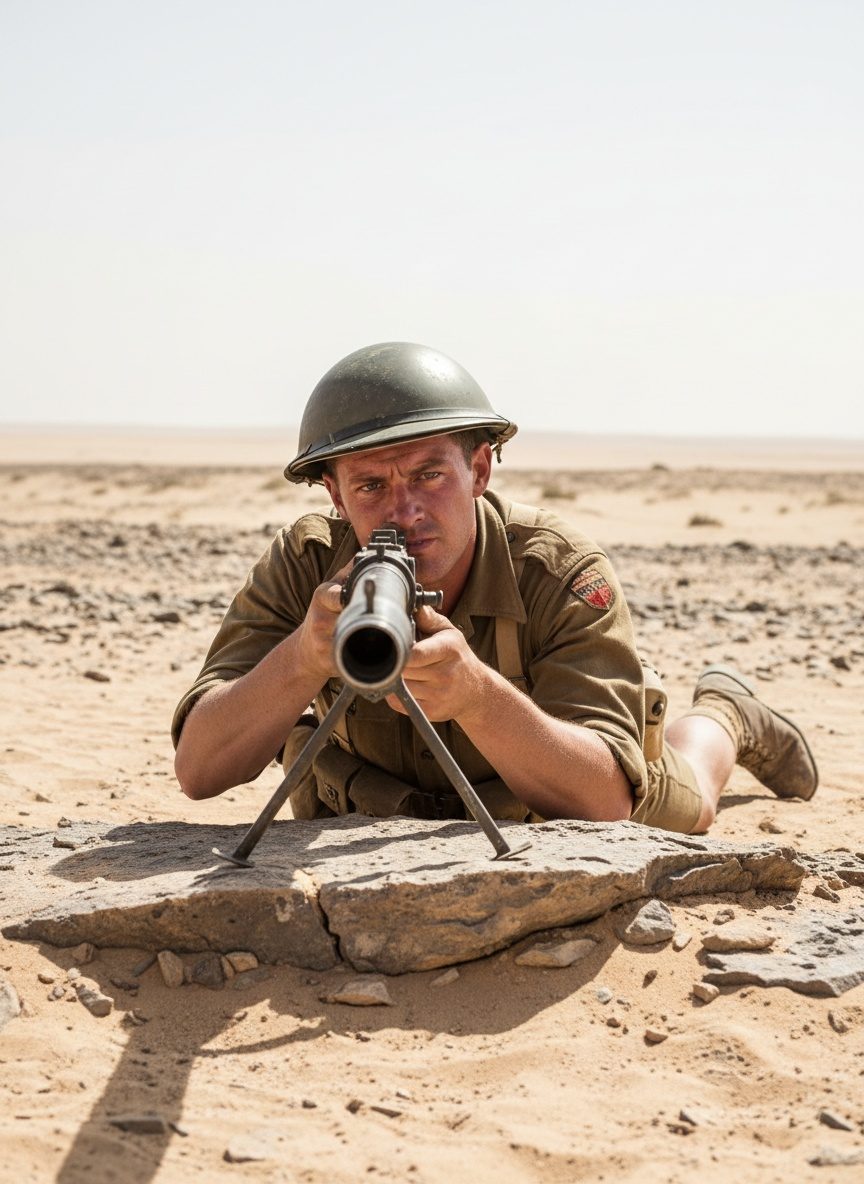
As the 19th century gave way to the 20th, the very nature of warfare was shifting. Engaged in South Africa against the Boer Commandos, the Coldstream Guards had to swiftly adapt to new and challenging conditions. Gone were the shining reds, replaced by rough khaki, blending seamlessly into the golden hues of the veldt. It was a pragmatic change, born out of necessity; the gleaming scarlet would have offered a target far too easy for enemy marksmen.
Fighting the Boers required the Coldstream Guards to adopt guerrilla tactics alien to their traditional training. Unlike the neat rows and organized charges of conventional European warfare, the Boers fought with agility and improvisation, using the landscape to camouflage their movements. To counter this, the Guards became students of their environment, transforming into soldiers of stealth, patience, and cunning. They learned to disappear into the dust and the scrub, rendering their once-ceremonial selves almost invisible.
This required not just a change in attire but a fundamental shift in mindset. The men who once stood with unbroken lines and polished boots now crawled, knelt, and skirmished on foreign soil. Their stoic figures became shadows in the vast expanse of the South African frontier, a symbol of an empire forced to adapt or face irrelevance.
Dual Faces of Empire: Home and Away
The dual life of the Coldstream Guards during this era reveals much about the changing face of the British Empire. At home, the ceremonial duties of the Guards reinforced stability and tradition, comforting a nation at the heights of its imperial reach. These displays were not mere vanity but served to remind both the populace and the world of Britain's disciplined strength. Spectacle was a powerful form of diplomacy, a statement that the Empire was as grand as the sun that never set upon its dominions.
Yet abroad, the demands of modern warfare imposed a different reality. The adaptability displayed by these soldiers in South Africa spoke volumes about the challenges that the sprawling empire faced on its fringes. The Boer War was among the earliest conflicts where camouflage rather than visual splendor became crucial, foreshadowing the mechanized and guerilla war tactics that would dominate the 20th century's global conflicts.
This dual existence required a subtle balance between tradition and transformation. The men of the Coldstream Guards were required to embody both identities seamlessly—returning from the dust of the veldt, shedding their khaki, and stepping back into their scarlet uniforms and into their ceremonial roles. For the Guards, this wasn’t just a change of uniform but a shift between two distinct modes of being, neither fully one nor the other, yet perfectly both.
Why This Story Matters
The story of the Coldstream Guards during the Boer War serves as a poignant reflection on the nature of tradition and modernization, a narrative that continues to resonate today. As empires rise and fall, the tension between maintaining cultural identities and adapting to new realities has always been a defining challenge. The tale of these men dressed for two different wars—continually straddling tradition and transformation—illuminates the broader human struggle for balance in a rapidly changing world.
The dual roles played by the Coldstream Guards remind us that history is not static but an evolving tapestry where identities must adapt to thrive. As the soldiers melded their roles in the public eye with the necessities of survival in far-flung battlefields, they became emblematic of an empire—and indeed a world—in flux. Their story, long untold in conventional histories, beckons us to consider how we too harmonize the spectacle we present with the reality we face.