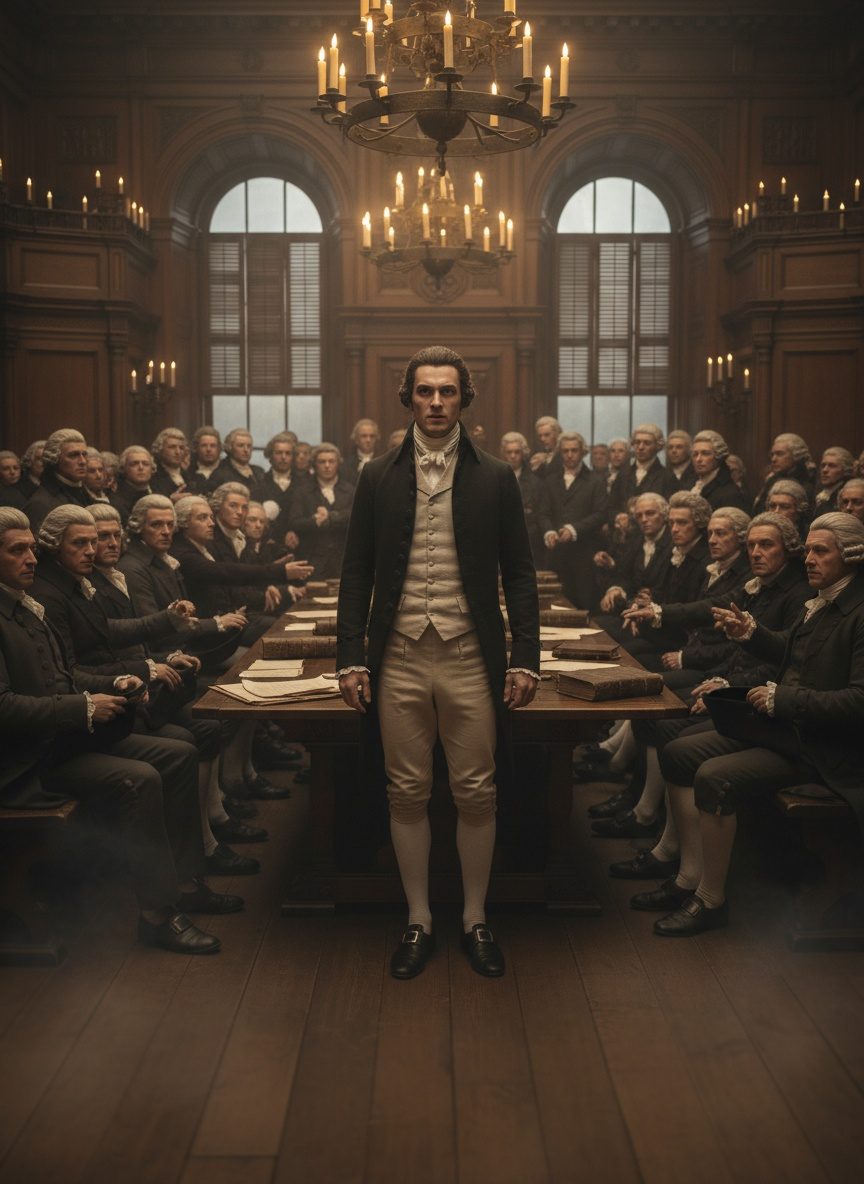
The air in London was thick and oppressive that May of 1789, a blend of lingering spring heat and the coal smoke that clouded the narrow streets. Inside the House of Commons, the atmosphere was equally stifling, charged with anticipation and apprehension. The chamber was packed, a cacophony of whispers and coughs echoing off the high, shadowed ceilings. The members of Parliament perched on the edges of their seats, their embroidered coats flickering in the dim gaslight, as a sickly yet resolute figure rose slowly to his feet: William Wilberforce, a man whose frail body belied the indomitable spirit within.
A Voice Amid Shadows
The room quieted as Wilberforce, his voice hoarse and cracking, began to speak. Though the odds were stacked against him, and his health was ailing—the result of a torturous bout with a mysterious illness—the determination in his eyes shone brighter than any candle. That night, under the weight of powerful opposition and against the lucrative tide of the transatlantic slave trade, he stood firm. For three relentless hours, he presented the moral imperative to end the practice of enslaving human beings, his language clear and unwavering, reaching into the very conscience of those assembled. The sound of his voice filled the room, marrying passion with purpose, framing a vision of a future unburdened by such egregious cruelty.
The Battle Ahead
As Wilberforce fought to regain his health, determined hands had prepared for battle. The slave trade was a monstrous machine, its wealth and influence sweeping across the British Empire. Many of those present in the chamber had ties to it—either through direct investment or indirect benefit—and they were well aware of the financial tempest the abolition of such a lucrative trade would unleash. Yet, Wilberforce was undeterred, even as whispers of doubt loomed in private corners of the Commons. His allies—like Thomas Clarkson and Olaudah Equiano—had armed him with compelling evidence, meticulously documenting the grueling realities and moral atrocities of the trade. Yet it was understood, painfully so, that this fight would not be fought with facts and figures alone; it was a battle of hearts, requiring the strength to sway souls impervious to empathy.
The Resilience of Hope
Within the months that followed, Wilberforce became a beacon of relentless hope. Each day was fraught with the threat of defeat; his every return speech was preceded by anxious whispers regarding his fragile health. Despite these odds, he commanded the discussion, gaining supporters with every carefully crafted argument. He endured setbacks again and again, met with frustration where he sought understanding, and opposition where he sought change. But in this crucible of trials, his resolve only hardened. The more his physical strength waned, the brighter the flame of his determination blazed—a testament to his unwavering belief in the goodness of the human spirit, a force that crossed oceans and challenged the status quo at its core.
Cracks in the Monolith
By the close of the decade, a subtle crack had appeared in the erstwhile monolithic support for the slave trade. Wilberforce had succeeded not only in swaying individual opinions but in creating an indelible shift in societal attitudes. His moral and intellectual rigor drew a diverse following—across social classes, beyond nationality, and along religious lines—all rallying under the banner of abolition. The searing images and heart-wrenching testimonies shared by allies had planted seeds of doubt in even the most hardened supporters of the trade, opening paths to legislative victories in the years that followed. Against the backdrop of grim determination and systemic change, a glimmer of collective guilt began to gloss the eyes of the public, urging peers and commoners alike to action.
A Legacy Unyielding
Wilberforce may not have triumphed on that fateful night in May 1789, nor during his lifetime as swiftly as he would've wished. Yet, the unyielding pursuit of justice and humanity he set in motion, driven by a man pushing against the tide of societal inertia, reshaped history. When the British Parliament ended the trade in 1807—nearly two decades after his impassioned plea—and finally abolished slavery in the empire in 1833, it vindicated his tireless mission. His story endures, not only through the laws that emerged but also in the realization that the quiet strength of a single voice can challenge immovable systems. In today's world, where new battlegrounds for justice continue to emerge, Wilberforce's saga serves as a timeless reminder that even when our bodies fail, our conviction can be an unfaltering beacon of change.