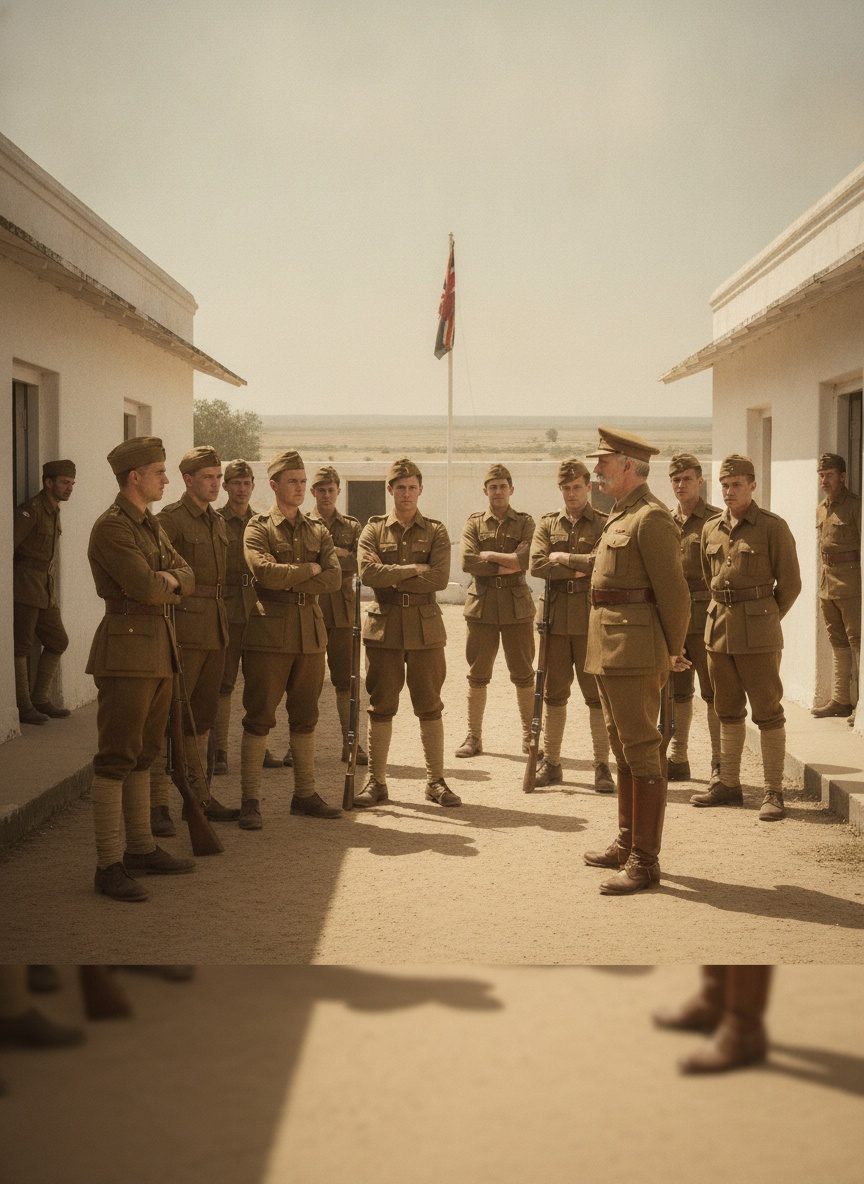
The air felt heavy in the oppressive heat of the Punjab summer as whispers of discontent rippled through the ranks of exhausted soldiers. The Connaught Rangers, once a disciplined unit of Irishmen serving under the British flag, now found themselves on the edge of mutiny. The distant roar of the Empire sounded hollow as rifles, once symbols of power, lay discarded in the dust, a silent testament to the brewing rebellion. Captain Meredith, eyes wide with disbelief, watched as his men—a squadron of disciplined soldiers only yesterday—tore the Union Jack down with grim determination. His words of reason, drowned in a chorus of defiance, were carried away by the buzzing heat and simmering tensions.
The Seeds of Defiance
In 1920, the normally stoic routine of the Connaught Rangers stationed in India was suddenly disrupted by alarming news from across the world. These were not mere rumors or the fantastical tales spun by distant voices, but rather stark reports of brutality back home in Ireland. The Black and Tans—a notorious auxiliary force sent by the British government—were conducting a campaign of ruthless violence, their reputation for terror quickly reaching even the furthest corners of the Empire.
For these Irish soldiers, whose hearts yearned for their homeland, the reports were not just news; they were a call to action. Their allegiance was torn between the uniform they wore and the call of their blood; the Empire they served versus the Ireland that pined for freedom. As letters from home painted a grim picture of oppression and strife, the seeds of discontent were sown deep within the Rangers’ hearts. It was no longer a distant conflict. It was personal.
Then came June, a month not easily forgotten. Fueled by conversations in the shadows and rallying cries of camaraderie, the fist of resistance slowly tightened its grip. It was in the humid barracks of Jullundur and Solon where whispers turned to outright defiance, and a collective decision echoed amongst the echoing halls: no longer would they shoulder arms for an Empire that butchered their kin.
The Flickering Flame of Rebellion
The courtyard buzzed with an electrifying intensity on the fateful morning when rifles clattered to the ground, a metallic symphony of dissent that reverberated through the stifling air. The mutiny was not sparked by grievances over pay, nor by the exhaustive desert conditions that plagued their daily schedules. It was a matter of conscience, ignited by loyalty to a cause greater than themselves. The actions taken by the Connaught Rangers in that pivotal moment were driven by a deep-rooted allegiance to Ireland—a nation struggling to shed the reins of colonial rule.
Brothers in arms faced one another, their eyes filled with both resolve and uncertainty. There was Sergeant Daly, who, with unwavering conviction, captured the essence of their struggle when he proclaimed that fighting for the British in India was no longer an option while Ireland bled. These sentiments resonated strongly through the ranks, sparking an irrepressible fervor among the men.
The rebellion did not remain contained to heated discussions or symbolic gestures, extending to actions that risked life and liberty. The Rangers refused the commands of their officers openly, the authority of the Crown wielded over them lost to defiance and determination. Patrols ceased, and deliberate disobedience became the path they chose, their insubordination fueled by the growing determination that shook the very foundations of British discipline.
The Harsh Aftermath
The wheels of the military machine, however, are relentless, and the weighty hammer of imperial law soon descended upon the Connaught Rangers. Not long after the mutiny seized the barracks, the British response was swift and unforgiving. Officers arrived en masse, determined to restore order and quash the mutiny with imperious authority.
To the rebel soldiers, the entrenchments in Solon became symbolic of the isolation of their cause; a fortress against a world still dominated by imperial prowess. In the end, the burgeoning hope they nurtured within those walls met reality with brutal finality. Their rebellion ended not in glory but in subjugation.
Back at the barracks, the court-martial stood as both a somber spectacle and a sobering reminder of the cost of defiance. Despite their impassioned pleas and the righteousness of their cause, military law knew little in the way of mercy. The ringleaders, bearing the weight of their comrades' hopes, faced the stark coldness of British military justice. Ultimately, a grim procession accompanied the firing squad as it delivered judgment with grim precision; shots rang through the air, echoing elements of sacrifice—but perhaps salvation, depending on one's perspective.
More Than a Mutiny
The story of the Connaught Rangers in 1920 might have been a fleeting footnote in the winding saga of the British Empire, yet it bears profound significance. It raises visceral questions about loyalty, identity, and the harsh choices faced by those torn between country and Crown. In the turbulent aftermath of World War I, amid the ongoing tumult of colonial resistance, the Rangers’ defiance encapsulated something deeply powerful: the intrinsic struggle for self-determination. Their rebellion echoed beyond the sun-drenched confines of their barracks to ripple through Ireland's landscape of resistance.
Perhaps what resonates most is the realization that this was not simply a military insurrection; it was a powerful testament to human conscience and conviction. It reminds us that in moments of moral crisis, people are capable of breaking ranks with their circumstances. In doing so, they often pave the way for epochs of change and inspire new chapters in the stories of nations yearning for autonomy. And though the Connaught Rangers paid the highest price for their rebellion, their legacy endures—a poignant reminder of the enduring fight for freedom and justice that reverberates through history. In their singular act of defiance—an insistent demand to be rightfully heard—they left an indelible echo across time.