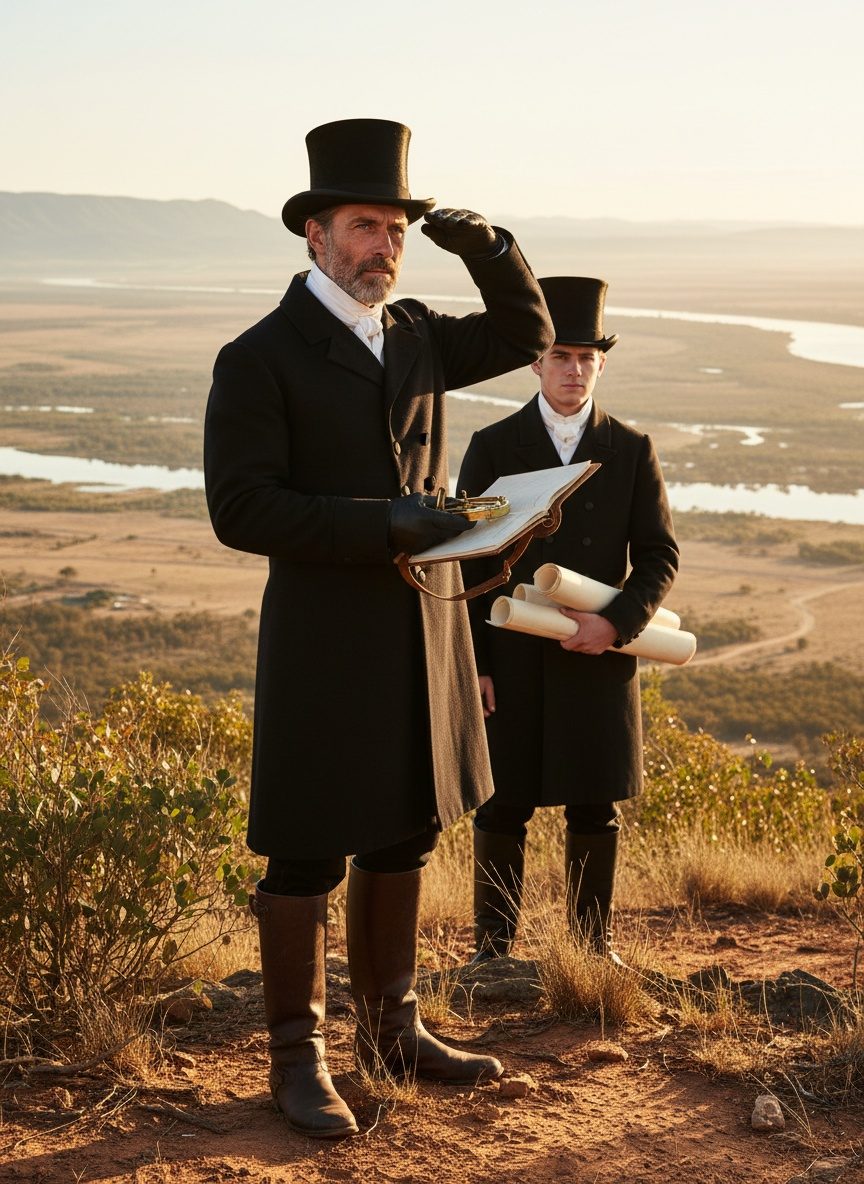
Most people think of jewels as just pretty things. But in the early 18th century, one diamond changed the course of European history forever.
The Secret Gamble in Madras
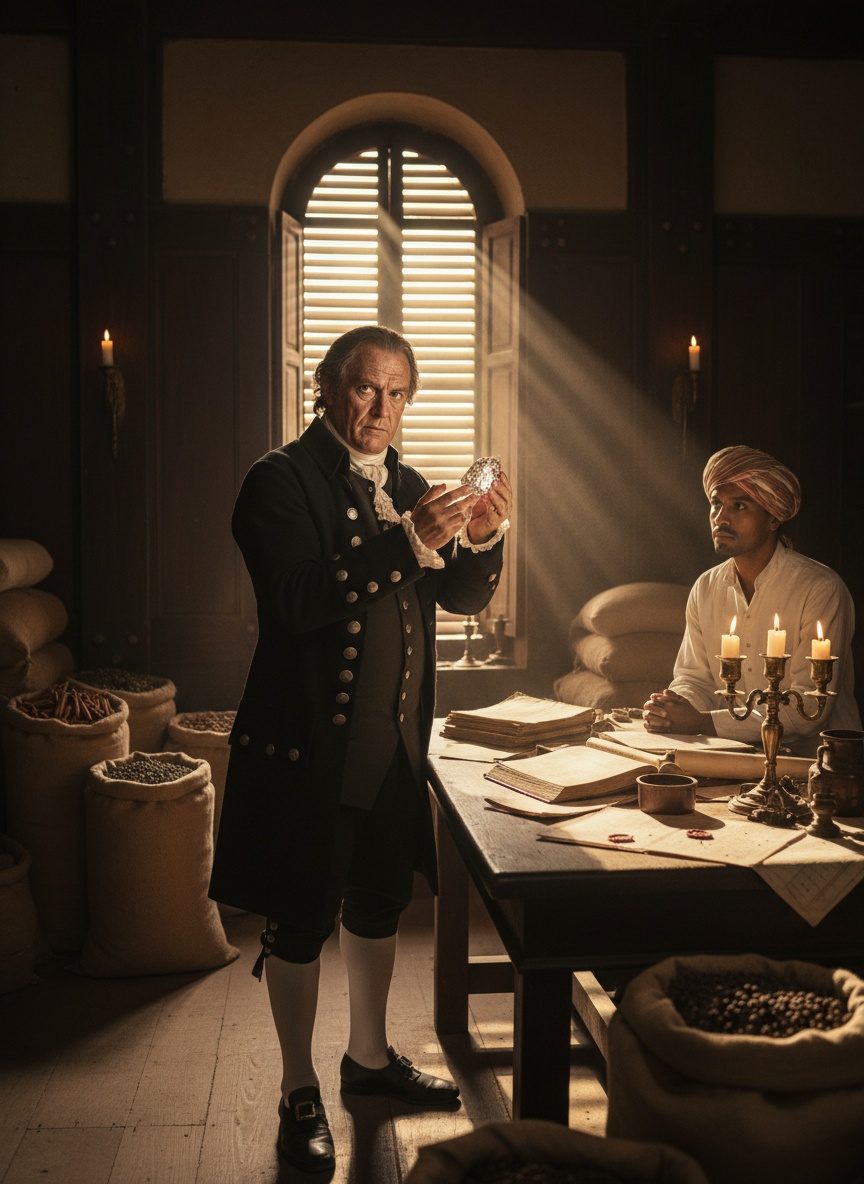
The year was 1702. In the bustling port city of Madras, far from the cobbled streets of London, a savvy and somewhat controversial British governor named Thomas Pitt found himself at the center of a clandestine transaction. The East India Company, with its grip tightening on the Indian subcontinent, had appointed Pitt as the Governor of Madras. This was a position of both prestige and peril, where fortunes could either soar or get sunk in scandal.
Pitt was approached by a merchant—a shadowy figure cloaked in colorful local tales and mystery—who offered something extraordinary: a rough diamond the size of a hen's egg. The merchant, keen on discretion, unraveled a tale of how the massive gem came into his possession. Intrigued and recognizing the magnitude of this rare opportunity, Pitt decided to purchase the diamond silently, weaving a web of secrecy around the transaction to prevent the prying eyes of both local and European authorities. The British East India Company had a strict rule against its servants engaging in private trade, and Pitt knew his gamble could cost him dearly.
Transforming a Stone into a Legend
In those days, diamonds from India had captivated the imagination of Europe, with whispered stories regaling royal courts of their undeniable splendor. But this diamond was different in magnitude, and Pitt saw its potential not just in its raw forms but as a relic that could ascend beyond simple wealth—a symbol. After securing this gem, Pitt faced the daunting task of transforming the rough diamond into a masterpiece. Transporting it back to England required cautious planning. Allegedly, he commissioned expert gem cutters in London to work on the diamond with precision and patience over two long years.
The diamond, famously known as the Pitt Diamond—though later to be glorified as the Regent Diamond—was deftly cut down to 141 carats. It was nothing short of breathtaking. Its polished facets projected a brilliance that would make it the most celebrated gem in Europe and beyond. The transformation was risky, and the cutting process could have easily destroyed it, leaving Pitt with a worthless pile of shards. Yet, his gamble paid off spectacularly.
From British Governor to European Emissary
As news of the remarkable gem spread, it caught the attention of the most powerful monarchies. Not one to pass up an opportunity to bask in the glitter of royal favor, Pitt astutely maneuvered the sale of the diamond to Philippe II, Duke of Orléans, who was then the Regent of France. The Duke acquired it amidst whispers of its unrivaled allure and had it set in the crown for the coronation of Louis XV in 1722. Its journey from the Indian sands to the European courts was a testament to the bold foresight of one man and the interconnected tapestry of burgeoning global trade.
This exhilarating transaction provided Pitt not only with immense wealth but also cemented his legacy. His unexpected feat elevated his social standing, and despite the initial controversy, he capitalized on this opportunity with the finesse that could rival the most shrewd of statesmen.
An Emblem of Power Worn by an Emperor
The tale of the Pitt Diamond did not end there. Over the following decades, it changed hands, passed down, and was nestled amongst the shining hoard of the French crown jewels. When Napoleon Bonaparte rose to the height of his conquests and sought symbols that encapsulated his imperial supremacy, the Regent Diamond found itself atop his sword’s hilt—a gleaming signet of his empire's might and his determination to shape history.
As Napoleon gallivanted across Europe, the diamond reflected not only the light of battlefields but the nuanced intricacy of power, obsession, and ambition. Intriguingly, despite its association with many rulers, few artifacts could embody the notion of power quite like Napoleon wielding a sword encrusted with this legendary stone. Its mystique and beauty made it a paramount insignia of authority.
Why One Diamond Matters
The tale of Thomas Pitt and the diamond he dared to buy bespeaks a broader narrative of risk, enterprise, and imperial ambition. The transformation from a raw gem into a chief jewel in Europe's ruling dynasties is not just about trade and commerce. It illumines a period where power dynamics were written not only through wars and treaties but also through singular objects whose legacies transcended borders and centuries.
Today, diamonds continue to capture imaginations and incite dreams akin to those of empires. From an unlikely setting under the Indian sun, one man made a decision with far-reaching consequences. What Pitt might not have foreseen was how this gem would emerge, a luminescent witness to the ebbs and flows of history, as radiant in legacy as it was in form. Its value is not merely in carats or crowns but in the stories it continues to weave through time, reminding us that sometimes, history pivots on the daring decisions born in the shadows.