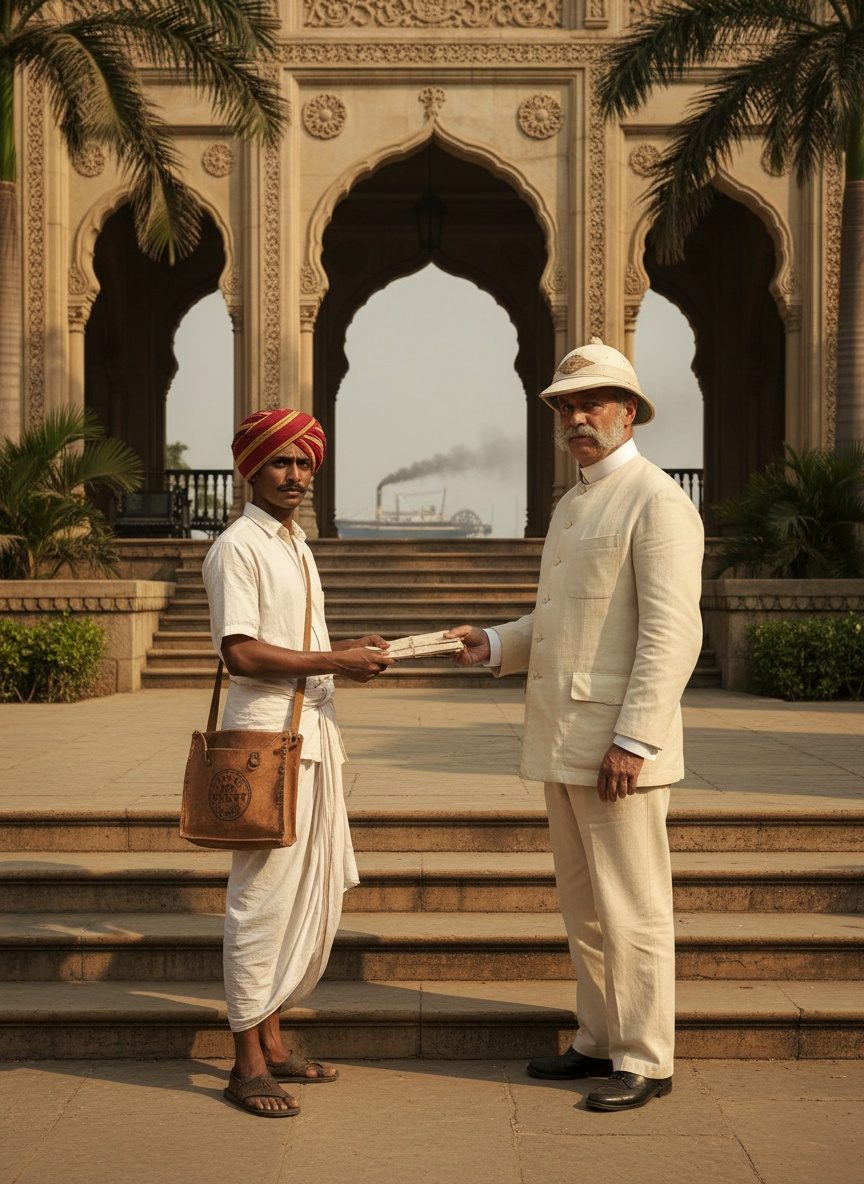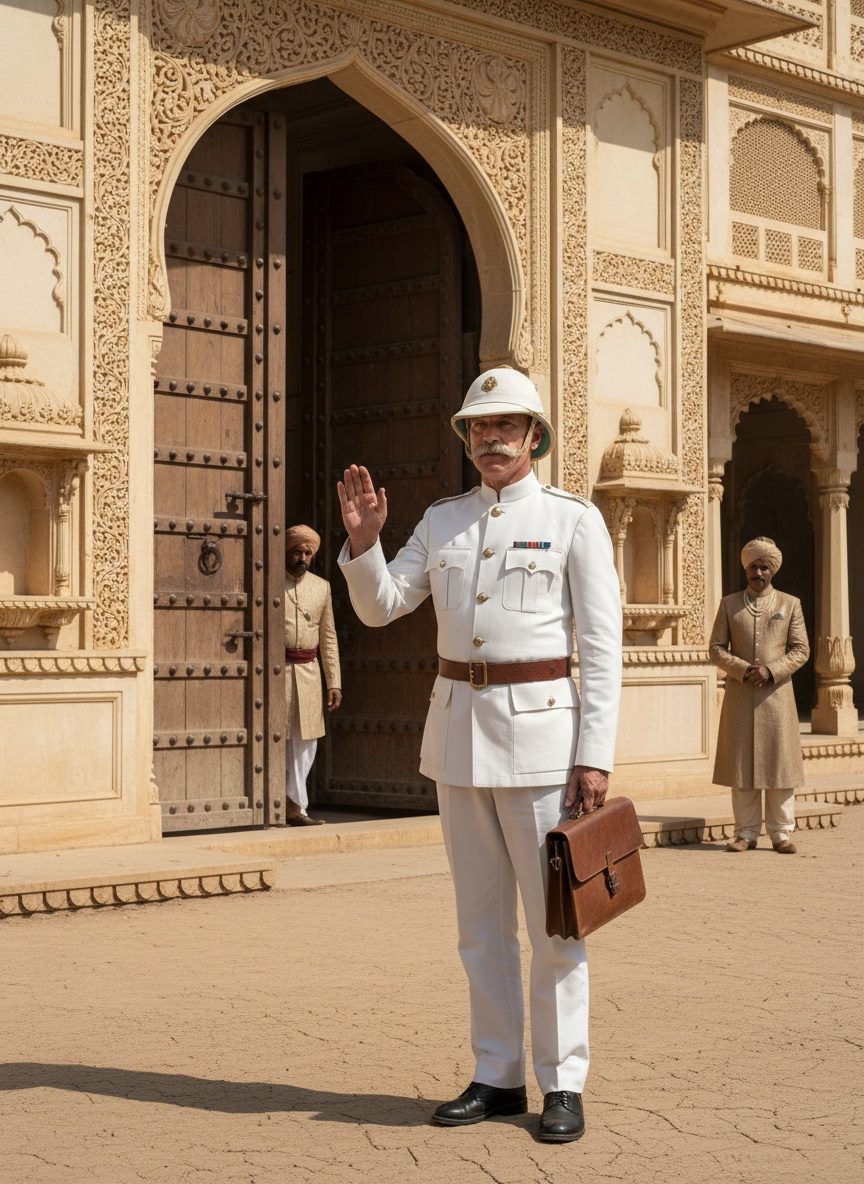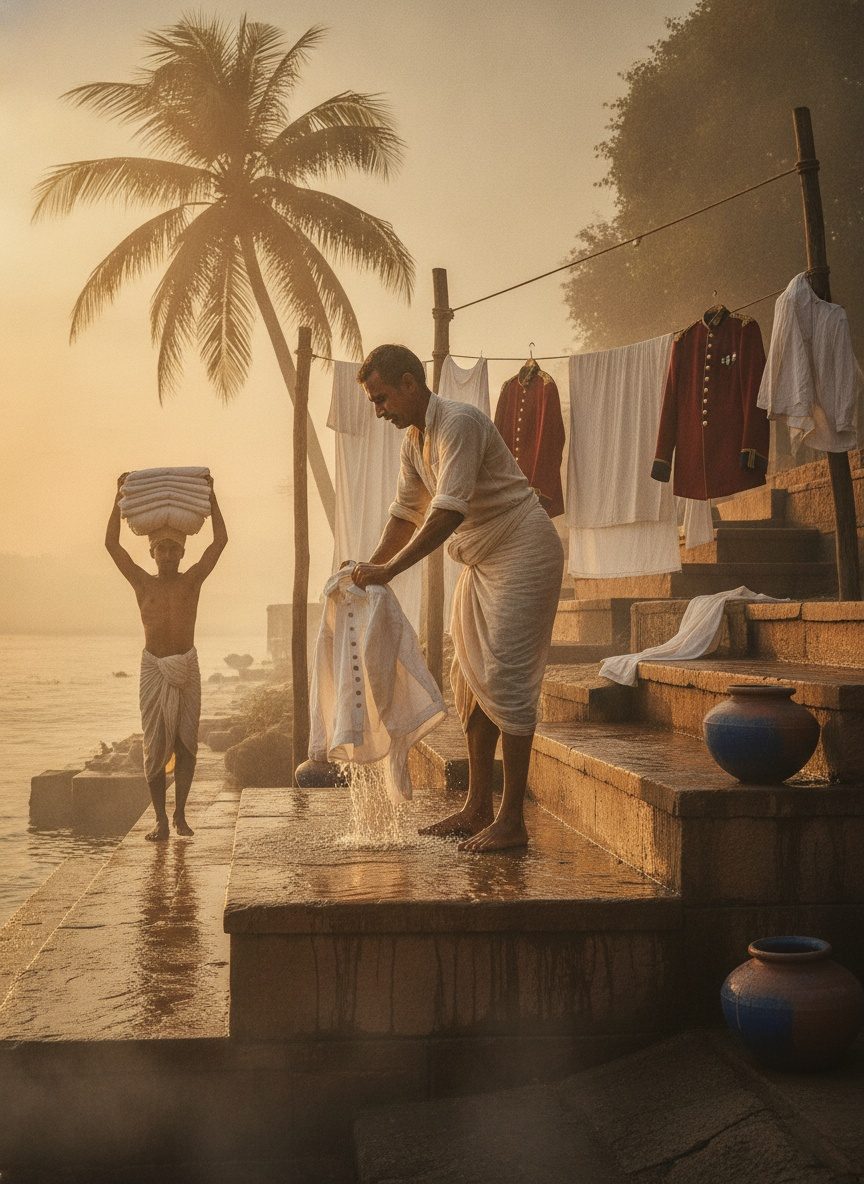
He was a cornerstone of the Empire's daily life, yet he was never invited to its lavish balls. Before dawn each day, he would lift the Empire's laundry onto his head.
The Ghats Come to Life
In 1890s Calcutta, as the first hint of light touched the city, the ghats by the river transformed into a tapestry of activity. These stone steps, leading gracefully into the river, served as silent witnesses to the frantic labor that unfolded each day. Here, the dhobi wallahs — India's washermen — began their relentless toil. Despite being the unseen backbone of colonial society, their critical role often went unacknowledged.
Before the sun could rise fully to scorch the city, the dhobi wallahs were already deep into their work, their silhouettes moving in synchrony against the first blush of dawn. Each washerman carried a daunting load of garments on his head. Shirts, tunics, linens — all the articles that cloaked the powerful Raj officials were their responsibility. By the banks, their work bordered on ritualistic: garments soaked in the river water, methodically beaten against the stones, scrubbed with soap made from ash and plant extracts, and then rinsed with fresh water from urns. The rhythmic slapping sounds echoed like a heartbeat across the river's expanse.
While the nobles and officers awoke to a new day, seamless and meticulously starched garments awaited them, oblivious perhaps, that their polished image was crafted by hands they never saw. It was the dhobi wallahs who ensured the Empire marched forward, clad in gleaming whites and crisp uniforms — a testament to their relentless and skilled labor.
A Community in Motion
The dhobi wallahs were more than just skilled laborers; they were an entire community built on heritage, knowledge passed down through generations. These washermen often worked in familial units, with roles ranging from young children to the elderly, each contributing to the demanding process. Despite tiresome hours, pride permeated their collective identity. They knew the walls they scrubbed against were key battlements in the everyday battles of maintaining an expanding empire.
Each dhobi wallah's workday began as early as 3 a.m., collecting bundles from colonial residences scattered across Calcutta. With each article, they carried not just fabric, but the weight of expectations, reputation, and imperial dignity. Even the minutest stain could not be overlooked. On reaching the ghats, a flurry of activity ensued — a harmonious blend of solidarity and shared burden. Among them, you'd find a chorus of voices, some humming folk tunes, others exchanging stories, secure in their knowledge and fellowship amid shared hardships.
The community was bound by a network of support — a latticework of kinship and friendship. An injury or sickness was a communal concern. It was not just about clean clothes; it was about preserving dignity and integrity through untold struggles. Though unseen by the empire they served, the dhobi wallahs held their own empire of resilience and comradeship.
Empires of Fabric and Fate
In the expanse of the British Empire, an immaculate uniform symbolized authority, command, and decorum. Often, these garments were unwitting diplomats, speaking silently of the wearer’s stature and confidence. For the Raj, presenting an unblemished exterior was synonymous with asserting dominance and control. Yet, beneath this spotless image lay the quiet grit of the dhobi wallahs — anonymous custodians ensuring the Empire maintained its resplendent façade.
The dhobi wallahs’ lives were steeped in paradox — integral to the Empire’s everyday operation yet deliberately pushed to its peripheries. Not only did they manage herculean feats of cleanliness and order; they orchestrated a symphony of endurance. Their labor was relentless, their lives predictably unpredictable. Floods, rains, or riots might pause the Empire — but laundry was eternal, and the dhobi wallahs unstoppable.
As with many unsung heroes of history, their tales remain largely untold, but their lived experience is no less significant. A dhobi's thorough rinsing could determine the fate of a hastily planned meeting between colonial officers, while a precise crease could influence decisions impacting entire provinces. In their unwavering dedication, the dhobi wallahs kept the Empire's polished veneer as bright as the Calcutta sun.
Today, as we reflect on the machinery of the British Raj, spotlighting the dhobi wallahs illuminates a vital facet of empire-building often overlooked. They remind us that the stories of those who toil beneath power can be as compelling and integral as the tales of those who wield it. Their legacy lies beyond spotless garments; it lives in their resilience to be the force behind the glittering façade of an empire, crafting history from the shadows of the ghats.