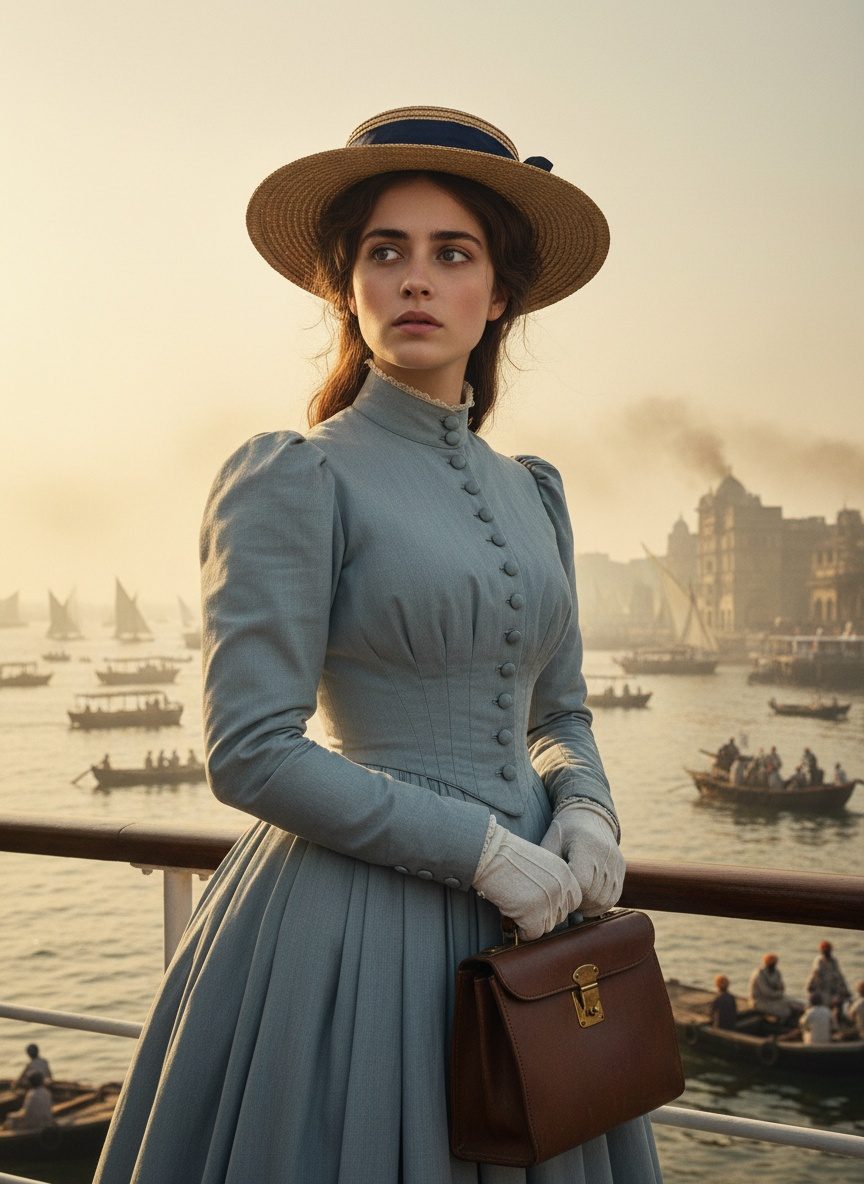
The warm breeze carried the distinct scent of the Arabian Sea as the ship's gangway thudded down onto the bustling dock. Mary adjusted her borrowed hat against the sun's glare, squinting at the vibrant chaos of Bombay that awaited her. The cacophony of hawkers, the cries of deckhands, the chuffing of steam engines—each sound burst vividly into her senses. Her heart thumped with the weighted anticipation of the land she had crossed oceans to meet, propelled by the hopes tethered to the mythical moniker of the "Fishing Fleet." She wasn't just stepping onto new soil; she was embarking upon an adventure draped in the allure of the unknown, with a borrowed dress and no certain future.
A Pioneer in Petticoats
The year was 1885, and the British Empire was at its zenith, stretching its grip across continents. Yet, within the beating heart of this vast dominion lay a peculiar custom born out of necessity and opportunity. As autumn settled over England, steamships of the P&O line departed Southampton, cutting through the English Channel and ploughing the expansive Indian Ocean. These vessels carried a special cargo, unseen in ship manifests but pivotal to the social fabric of the British Raj: young women of modest means, bound for India with a singular mission—to find husbands among the colonial elite.
These young ladies, aptly named the "Fishing Fleet," represented a vast array of aspirations and social motives. Many were daughters, sisters, or nieces of those in service to Her Majesty's colonial ambitions, eager to escape the drudged restrictions of Britain's class-conscious society. The journey of approximately six weeks was arduous; the Kala Pani, or Black Water, was a feared passage that separated them from the new life they envisioned. Yet for these women, it was a bridge of hope to personal fortune and societal status, all within a world that spoke of opportunity and exoticism unlike any they had known.
Uncharted Terrains
As much as India promised riches in the form of dowries, estates, or even love, it was the land itself that would leave an indelible mark on the hearts of these Victorian pioneers. Bombay, their first port of call, was a microcosm of the British Empire's influence, fused with India’s rich tapestry of cultures, scents, and colors. The city's vigorous pace, contrasted with its humid clime, might shock the unprepared; yet, it equally captivated those willing to delve beyond its surface.
For Mary and her contemporaries, there was much to comprehend, often within a swirl of luxury and discomfort. They attended elaborate balls, their silk gowns billowing in candlelight—which sometimes betrayed them in the form of tropical heat. But they also witnessed the stark realities of British rule, where the Empire's glitzy veneer barely masked the complexities and contradictions of colonial life. From the majestic Victoria Terminus to the buzzing Crawford Market, Bombay was a vibrant canvas, offering new horizons to those adventurous enough to explore its depths.
The Social Marketplace
As the leave wares of eligible young men joined the social whirl of the Fishing Fleet in India, a different kind of dance unfolded. Parties, races, and afternoons at the club presented opportunities for introductions, alliances, and sometimes, deep-seated rivalries. The pressure on these young women was immense; they were expected to charm, pique interest, and secure a proposal, lest they return home empty-handed—a fate that was whispered amongst mahogany whispers as a failure.
The careful craft of matchmaking was one steeped in the curious paradoxes of colonial India. Army officers, civil servants, and planters were not just looking for companionship but also alliances that offered social gains or enhanced prospects. For their part, "Fishing Fleet girls" had to navigate these expectations deftly while maintaining the propriety dictated by their upbringing. Each dance was a potential negotiation, and each conversation could be half a promise etched between sips of Darjeeling tea or rides through dusty bazaars shadowed by majestic trees.
A New World
For some, the promise of the Fishing Fleet's journey dovetailed neatly into paths of matrimony and stability. Yet, not all ventures met with success on these shores. India was not only a matchmaker's paradise but a revelator of the self. For Mary and her fellow adventurers, the subcontinent became a canvas to redraw lives in unexpected ways, whether through acts of social service, cultural exchange, or simply exploration unfettered by England's rigid confines.
The tales of the Fishing Fleet tell us more than just stories of marriage ambitions; they offer a lens into the zeitgeist of the British Empire, where individuals crisscrossed boundaries of geography and convention. Through sheer courage and resilience, these women cultivated lives far removed from the limitations they left behind, and often far richer in the experiences garnered. It reminds us of the indelible role played by women in shaping the unseen pages of history, challenging conventions, and embracing identities forged in unknown waters.