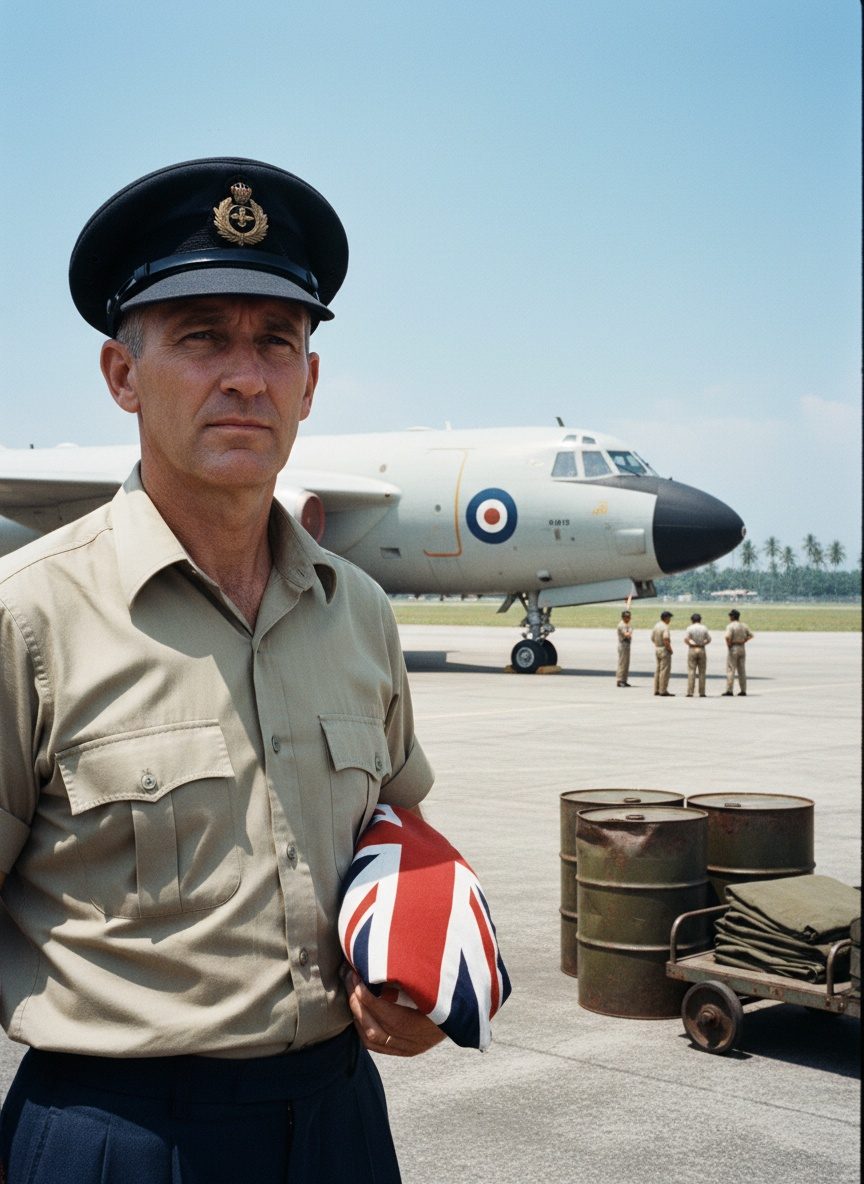
The last British military aircraft left Singapore. Yet, it did so to the sound of roaring engines rather than ceremonial applause.
The Jewel of the East
For decades, RAF Changi was more than just a military base; it was a symbol of British presence and power in Southeast Asia. Located on the eastern tip of Singapore, the airbase sprawled over a landscape that fused strategic importance with tropical beauty. Positioned just east of the Straits of Malacca, through which a third of global maritime trade passed, RAF Changi held the key not only to the skies but to the very heart of global commerce routes.
Established in the turbulent interwar years, Changi expanded significantly during World War II. When the Japanese stormed into Singapore in 1942, Changi took on a grim identity as a prisoner-of-war camp. After the war, it emerged like a phoenix, reborn as a cornerstone of the Royal Air Force’s Far East Air Force. Thousands of service members and their families rotated through the base over the decades, contributing to the vibrant tapestry of colonial and post-colonial life. Families established tight-knit communities amidst the dense tropical foliage, forging bonds that transcended military duty. The base became a hub for career officers, eager young pilots, and new recruits, each finding their place within its expansive, storied grounds.
By the 1960s, the world had changed. Independence movements swept through former colonies, leaving the British Empire a shadow of its former self. Amidst this changing geopolitical landscape, Britain grappled with financial woes and domestic pressures that forced a reevaluation of its global military commitments. The once-mighty empire's attention shifted inwards, and the far-flung outposts of imperial power became less tenable. Britain's east-of-Suez strategy was now the subject of debates, and Singapore, while still cherished, became economically and politically impractical to maintain in the face of these challenges.
A Lasting Departure
In 1968, Prime Minister Harold Wilson announced a landmark decision: all British forces would be withdrawn from east of Suez by 1971. It was a seismic shift in government policy. The decision sent ripples across the region, especially in Singapore, where thousands of British personnel and their families faced an uncertain future. The airbase that for so long had been a vital part of the regional security apparatus would soon be dismantled.
October 1971 marked the final chapter. The last RAF squadron stationed at Changi prepared their aircraft for departure. The scene was poignant—a stark contrast to the jubilant welcomes that characterized earlier arrivals. Equipment, documents, and personal belongings were meticulously packed. The airmen were not merely leaving a base; they were closing a significant chapter in British and Singaporean history.
There was no grand ceremony. No ranks of dignitaries offering farewell speeches or gratitude. Instead, there were quiet farewells mixed with the routine efficiency of a military operation. The last engines roared to life, echoing across the airfield as the planes taxied to the runway. Line upon line of familiar terrain raced by, disappearing beneath the wings as the planes lifted into the expansive blue, leaving behind a land that had been synonymous with British strength in the east.
Echoes of Empire
As the final aircraft ascended, the skies above Singapore were forever altered. The end of RAF Changi marked more than just the closure of a military facility. It was the embodiment of a world undergoing profound transformation—an era of imperial dominance fading into history. While life in Singapore shifted towards independence and self-governance, the departure symbolized a broader movement away from colonial influence. Economically and politically prepared for the transition, Singapore would flourish independently.
For the men and women of RAF Changi, the departure was bittersweet. They left behind friendships, experiences, and a vital part of their personal and national histories. Many would return to a Britain grappling with its diminished global role and increasingly introspective vision.
Though the empire's chapter in the east had ended, the echoes of its presence remained, lingering in the skylines, the memories of those who served, and the infrastructure built during its tenure. Today, the site of RAF Changi stands as a reminder of a bygone era, a testament to the transformative period of decolonization that reshaped world politics. Even as nations continue to evolve and redefine their roles on the global stage, the lessons of history—etched into the very earth where RAF Changi once stood—highlight the impermanent nature of power and the relentless march of time.