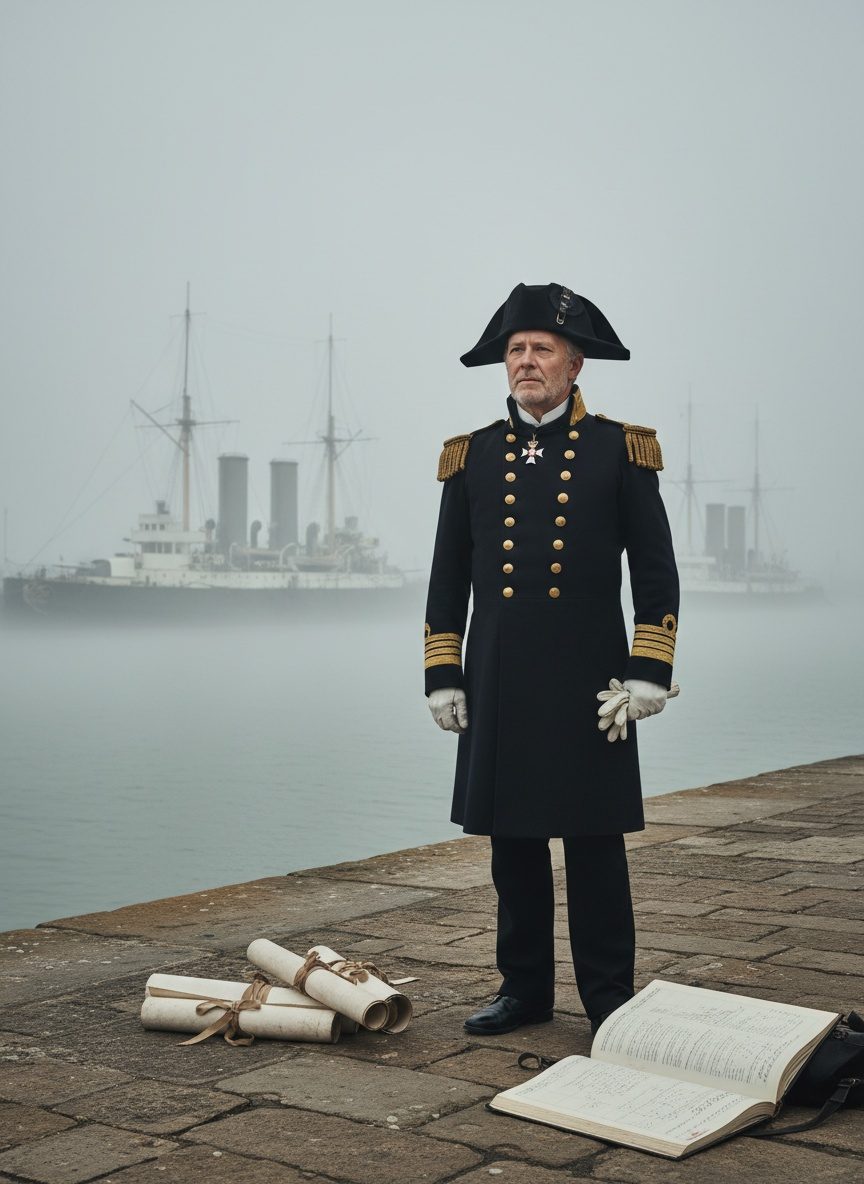
April 15, 1895. The dockyards of Portsmouth echoed with the clamor of men and metal.
The Pride of the Empire
In the late 19th century, the Royal Navy was the crowning jewel of an empire upon which the sun never set. It served as the guardian of Britain's far-flung colonies and a bulwark against potential adversaries, a symbol of not just might, but also prestige. The sight of a British battleship, guns glinting under the sun, was enough to assure allies and instill hesitation in foes. Every vessel was a floating fortress, a testament to industrial advancements and strategic superiority.
However, beneath this polished exterior lay an inconvenient truth that would eventually surface — the Royal Navy possessed more admirals than it had war-capable battleships. This was a curious state of affairs, given the empire's towering reputation for naval dominance. While the world watched an empire brimming with naval power, the actual number of readily deployable ships paled when compared to those steering the helm without a ship of their own to command.
Admirals Aplenty
Unclefted from media scrutiny, the rank of admiral was sought after not just for the command it bestowed but for the prestige and full pay it guaranteed. In 1895, this resulted in a disproportionately high number of flag officers in the Royal Navy, a fact which might seem comical if it weren’t so stark: there were fewer active battleships than there were admirals — a scenario that would estrange military efficiency proponents.
On paper, the reality read like a paradox. As technology rapidly evolved, so too did the complexities of modern naval warfare. Yet, the reasons for this overabundance of admirals were deeply rooted within the institution itself. Promotion through the ranks was often tied to seniority and service, more so than tactical acumen or direct command capabilities. Retiring admirals saw a steady pension, but retaining a large pool of them on active duty kept naval wisdom ostensibly close at hand. The political landscape also played its part as naval budgets hinged on the perceived strength — paper numbers frequently bolstered to secure continued funding.
Ashore and Aloft
While admirals’ names adorned dockets and requisition forms, the vessels they were supposed to command seldom required their presence. Many flag officers spent their careers largely ashore, ensconced within the walls of the Admiralty or in prestigious roles distant from the sea they served. This administrative labyrinth allowed for strategic planning and diplomatic initiatives but also cocooned many from the bite of cold sea air and salt spray. This was the gilded facet of a career naval officer’s life — a balance between the call of duty and the comfort of terrestrial appointments.
Consequently, the capability for quick mobilization through practical field command was vastly limited. When threats loomed or colonial interests needed safeguarding, the rate of response was hampered by this imbalance between experience in boardroom and in battle. Nautical plans were drafted often by those who would never test their mettle at sea. This remained a time of profound reflection for an empire that prided itself on naval prowess. How could it sustain its status as the sovereign of the seas with fewer warships than it needed to effectively deploy?
The Ripples of Empire
The paradox of rank and file in the Royal Navy is more than just a footnote in history; it serves as a revealing narrative about an institution grappling with its own identity during a period of transition. At the very juncture when Britain's maritime power seemed infallible, there persisted within its ranks a silent struggle between tradition and the demands of burgeoning modern warfare. This made apparent the limits of gilded rank and institutional inertia in the face of evolving threats and shifting geopolitical climates.
This tale of excess admirals over battleships reminds us that the optics of power and the reality of capability can be two starkly different matters. It underscores the delicate balance that any power must maintain between visibility and viability, be it through boats or those who stood at their helms. As we navigate today's waters, both literal and metaphorical, this story from a bygone era prompts us to consider — how do our own titles and structures fit against the challenges we face?