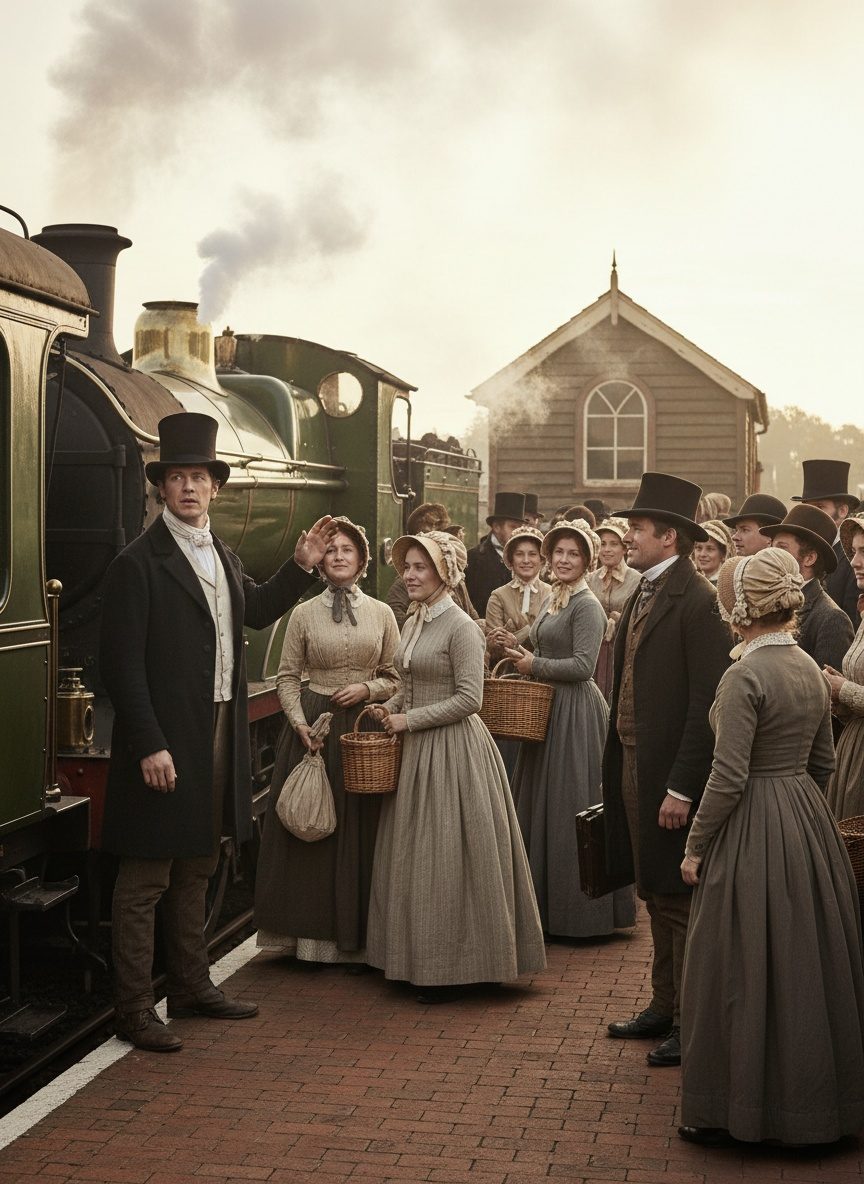
The morning of July 5, 1841, dawned with promise, shrouded in the soft amber glow of a burgeoning summer sun. The Derby Railway Station in Leicester teemed with an energy rarely seen. Excitement rippled through the crowd as 500 working men and women gathered, ready to embark on an unheard-of adventure. They were about to experience something revolutionary — the world's first package tour. The mastermind behind this innovation? A determined Baptist preacher named Thomas Cook, whose vision on that day would change the very concept of travel forever.
A Preacher’s Vision: More Than Just a Journey
On that brisk summer morning, Thomas Cook wasn't merely orchestrating a local excursion; he was forging the path for a socio-cultural revolution. Born in Melbourne, Derbyshire, in 1808, Cook was a devout Baptist, resolute in his campaigns against alcohol, and deeply committed to self-improvement and education for all social classes. It was these beliefs that drove him to propose a special trip in support of the temperance movement, offering an alternative to the pub as a leisure pursuit.
In collaboration with the Midland Counties Railway, Cook chartered a steam train to transport advocates of temperance from Leicester to a rally in Loughborough. The promise? An eleven-mile journey for just a shilling each, a fee even the humblest laborer could afford. This train wasn’t just carrying passengers — it was midwifing a novel idea that leisure and travel could be accessible to the masses.
The Steam Engine Rolls: A Symbol of the Industrial Era
To modern eyes, the trip might seem a mere blip on the map — a quaint, negligible distance. Yet, in the Victorian era, such railway excursions were groundbreaking. Rail travel itself was a burgeoning marvel of the Industrial Revolution, with Britain's railways expanding rapidly to connect its towns and cities like never before. Steam engines were the humming heart of this transformation, their rhythmic chugging a pulse of progress.
As the train departed, the passengers were filled with anticipation. Many were experiencing such swift, mechanized travel for the first time, their senses bombarded by the hiss of steam, the clatter of wheels, and the sight of picturesque landscapes unfurling rapidly out of carriage windows. For factory workers and their families, this trip would have been exhilarating — a temporary escape from the rigors of industrial life.
Leisure Defined: A New Concept for the Working Class
Before this innovative excursion, leisure travel was a privilege reserved exclusively for the wealthy — a symbol of status, with aristocrats taking "Grand Tours" across Europe. The notion of working-class leisure was virtually non-existent, their lives dictated by unrelenting work schedules and limited financial means. Thomas Cook changed that paradigm.
What Cook offered was more than mere transportation; he offered a day of pleasure away from toil, a brief respite in nature, and a communal experience of something grander. For the hundreds on that locomotive, it was an opportunity for laughter and camaraderie — an afternoon when they could cast aside their work-worn selves and embrace a new facet of life.
The Success of Innovation: A Recipe Cook Wasn't Done Tweaking
The roaring success of that first venture did not quell Thomas Cook's ambitions. Instead, it set the stage for a vast array of future tours. By the 1850s, Cook's tours had expanded to Europe. Astonishingly, by 1869, he organized his first round-the-world tour. Each journey bore his distinctive touch, with itineraries thoughtfully crafted to include planned logistics, meals, and accommodations, laying the groundwork for the modern tourist package.
Cook even introduced hotel coupons and travelers' cheques into his services, innovations that seem commonplace today but were radical in the context of their genesis. The reach of his tours stretched beyond geographical boundaries to facilitate social change — holidays that promoted cultural exchange and personal growth.
From a Humble Beginning to a Resounding Echo: The Legacy of Thomas Cook
The tale of Thomas Cook is more than a historical recount of the first package tour; it is a narrative of transformative change, capturing humanity's evolving interaction with travel. It highlights how one man's foresight transcended barriers, redefining leisure for the working class. A simple train ride became the epochal moment marking the democratization of travel, forever altering the standard of living for countless individuals.
In today's globally connected world, the concept of travel has evolved, yet the core ethos of accessible, enriching experiences remains just as resonant. In fields across the globe, from bustling city airports to remote untamed landscapes, the ripples of Thomas Cook's original venture continue to inspire. In modern times, when travel cultivates societal understanding and global interconnectedness, Cook's vision takes on new significance.
The lesson we learn from Thomas Cook is a timeless one. It is about the power of vision, determination, and innovation to create opportunities where none existed. In an era when barriers seem insurmountable and changes daunting, one can look to the past to see how enduring an impact a singular spark of an idea can have. If today's adventurers and visionaries stand on the shoulders of giants, then amongst them, Thomas Cook surely stands tall — a pioneer who turned a simple train trip into a journey without borders.