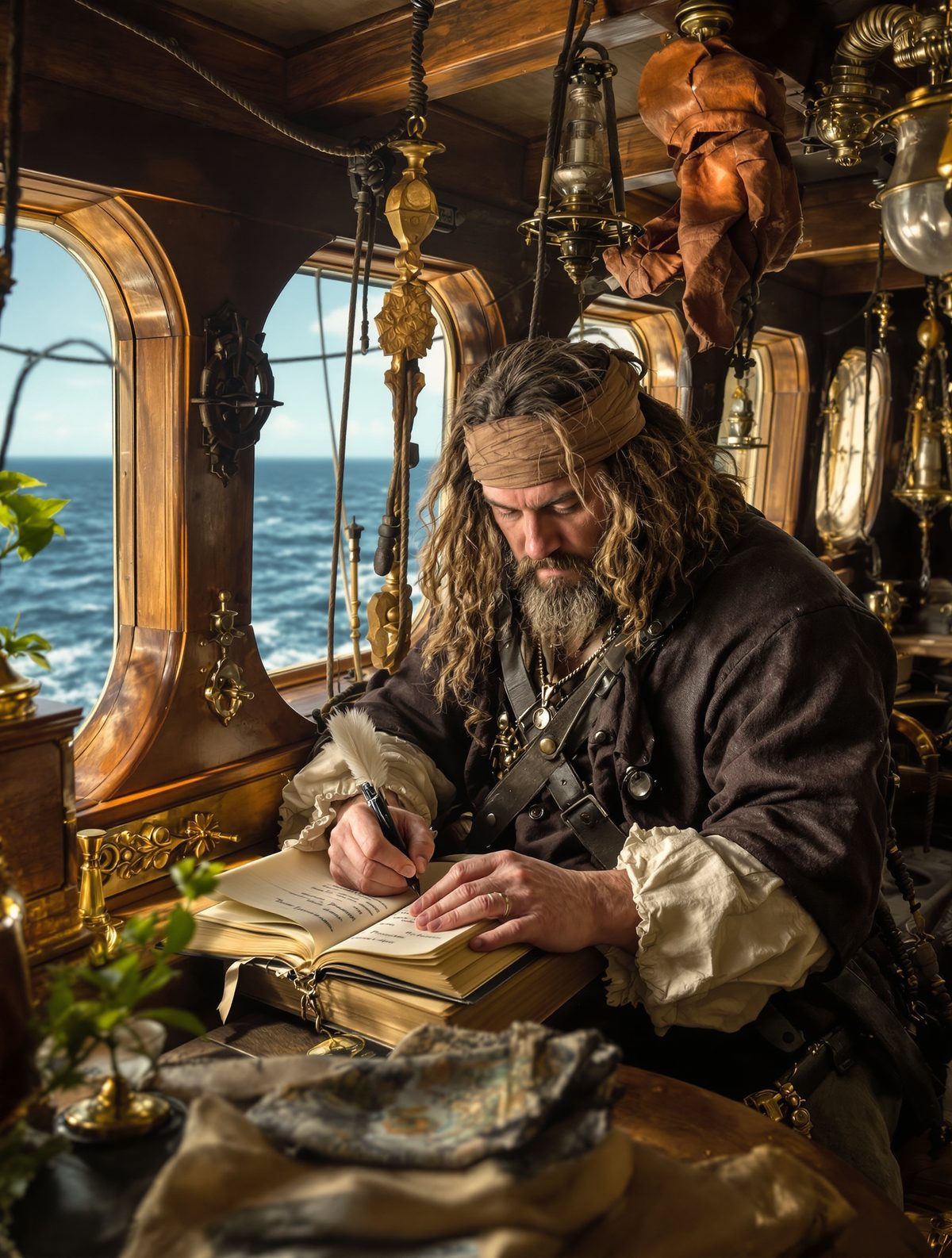
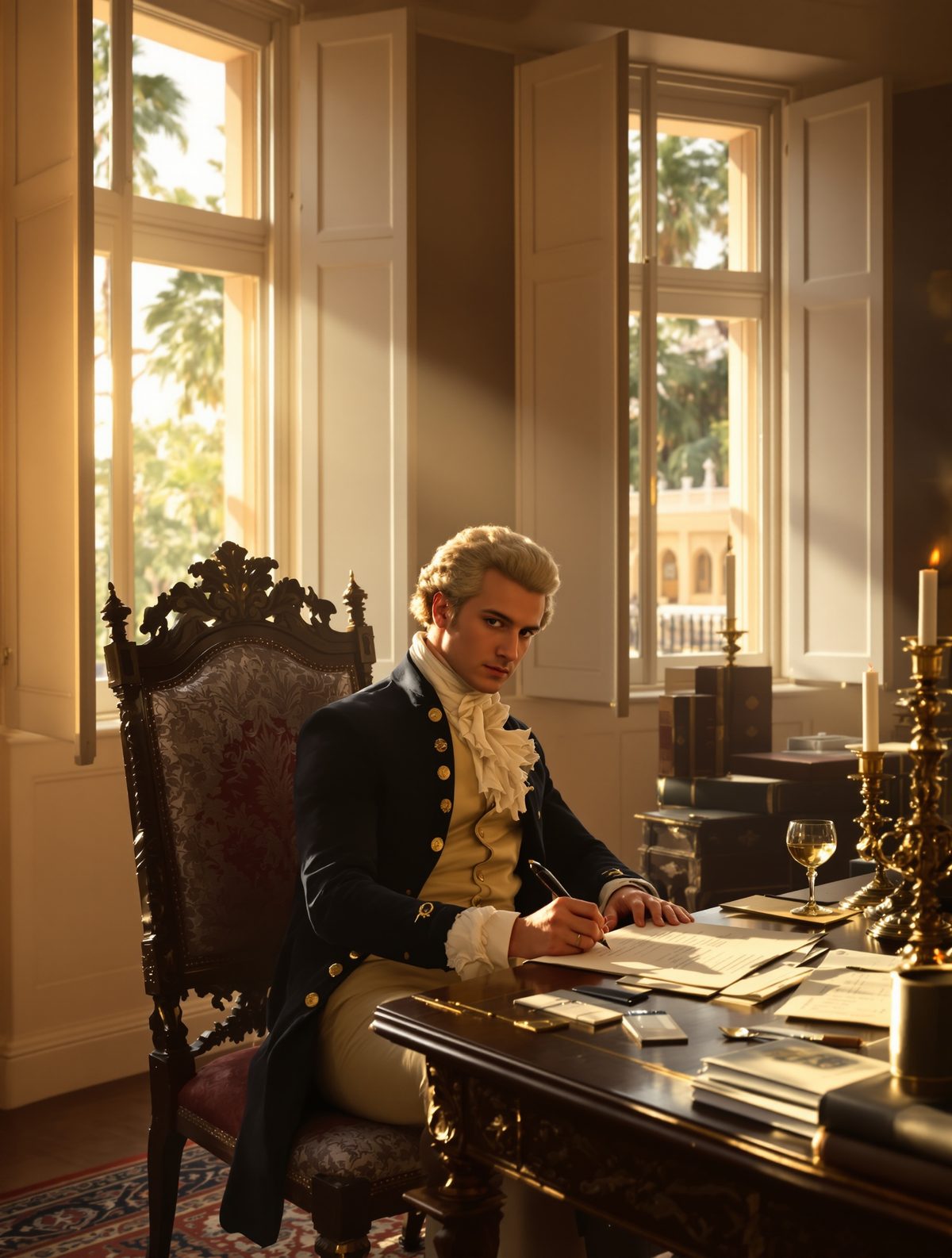
Picture this: it's 1611, and King James I sits on the throne of England with the entire realm at his disposal—yet there's a commoner in London whose personal fortune dwarfs the royal treasury. While His Majesty struggles with mounting debts, this former soldier counts a staggering £180,000 in wealth, making him richer than royalty itself. His name was Thomas Sutton, and his fortune came from something most gentlemen of the era would never dirty their hands with: coal.
In an age when nobility traced their wealth to ancient land grants and royal favor, Sutton had done the unthinkable—he'd become England's richest man through trade. But the real shock came when he died. Instead of founding a dynasty or buying his way into the aristocracy, this coal magnate did something that stunned the nation: he gave it all away to educate poor boys. The school he founded? It still educates students today, more than four centuries later.
From Battlefield to Boardroom: The Making of a Coal Baron
Thomas Sutton's path to unimaginable wealth began in the muddy fields of Flanders, not the drawing rooms of London. Born around 1532 in Knaith, Lincolnshire, to a minor gentry family, Sutton first made his mark as a soldier. He served as a captain in the Low Countries during the Dutch Revolt, where English forces supported Protestant rebels against Catholic Spain. It was dirty, dangerous work—but it taught Sutton something invaluable about opportunity.
While other officers complained about the hardships, Sutton observed how wars created demand. Armies needed supplies, and suppliers got rich. When he returned to England in the 1570s, he applied this lesson with ruthless efficiency. He didn't chase after prestigious but unprofitable ventures. Instead, he looked for the kind of unglamorous businesses that gentlemen avoided—and profits followed.
His first major coup came through marriage to Elizabeth Gardiner, a wealthy widow, in 1582. But Sutton didn't just rest on his wife's fortune—he multiplied it. He invested in land, particularly around Newcastle upon Tyne, where black gold lay buried beneath the earth. Coal was becoming the fuel that powered England's growing cities, and Sutton positioned himself at the very center of this energy revolution.
Black Gold Rush: The Newcastle Coal Empire
By the 1590s, London was transforming. The city's population had swelled to nearly 200,000 souls, all needing fuel to heat their homes, power their workshops, and fuel their forges. Wood was becoming scarce and expensive, but coal—dirty, smoky coal—was abundant in the north. The problem was getting it south, and that's where Sutton's genius showed.
Sutton didn't own the coal mines outright—he was far cleverer than that. Instead, he secured long-term leases on the most productive pits around Newcastle, particularly in areas like Whickham and Gateshead. This arrangement required less initial capital but gave him control over the supply. He then cornered the transportation network, investing in the ships that carried "sea coal" down the North Sea to London's wharves.
The numbers were staggering. By 1600, Newcastle was shipping over 160,000 tons of coal annually, much of it flowing through Sutton's network. Each ton sold in London for roughly four times what it cost to extract and transport. Contemporary records show Sutton's coal operations were generating profits of £6,000 per year—equivalent to millions today—when a skilled craftsman might earn £20 annually.
But Sutton's real stroke of genius was vertical integration before the term existed. He owned the leases, controlled transport, and even operated coal yards in London. When demand spiked during harsh winters, his profits soared. When new mines opened, he either bought into them or undercut them until they sold to him at bargain prices.
More Money Than the Crown: England's Wealthiest Commoner
By 1611, Thomas Sutton had achieved something unprecedented in English history. His personal wealth—estimated at £180,000—exceeded that of King James I himself. To put this in perspective, the entire royal revenue for a typical year barely reached £100,000, and the Crown was perpetually in debt. Sutton, meanwhile, could have bought and sold most of the nobility.
His wealth wasn't just in coal. Like any smart investor, Sutton had diversified. He owned vast estates across multiple counties, held lucrative government positions (including Master of the Ordnance in the Northern Counties), and had his fingers in everything from salt production to money lending. He lived like a prince in his mansion at Hackney, surrounded by gardens that rivaled royal palaces.
Yet Sutton remained an outsider to the traditional power structure. Wealth alone couldn't buy acceptance into the highest circles of aristocracy, where bloodlines mattered more than bank balances. This exclusion may have shaped what came next—a decision that would echo through the centuries.
The Shock Bequest: A Fortune for the Forgotten
When Thomas Sutton died on December 12, 1611, London's elite expected the usual: a massive inheritance battle, perhaps a scramble for noble titles, maybe even an attempt to buy a royal pardon for past business dealings. Instead, they got the shock of their lives.
Sutton's will, read aloud in hushed legal chambers, revealed an unprecedented act of philanthropy. The childless magnate had left virtually his entire fortune—some £180,000—to establish a charitable foundation. Not for his family, not for his business partners, but for something that would have seemed almost radical: the education of poor children.
The bequest was structured in two parts. First, Sutton established a hospital (in the medieval sense of a charitable institution) for elderly gentlemen fallen on hard times. Second, and more revolutionary, he founded a school where 44 poor boys would receive the same classical education previously reserved for the sons of nobility. They would learn Latin, Greek, mathematics, and rhetoric—the tools of power in Stuart England.
The location Sutton chose was equally symbolic: the former Charterhouse monastery in London, which had been dissolved during Henry VIII's reformation. Here, on the ruins of medieval Catholicism, England's richest commoner would build something new—a meritocracy based on learning rather than birth.
Charterhouse School: The Legacy That Endures
The Charterhouse School that opened in 1614 was unlike anything England had seen. While other schools educated the sons of the wealthy, Charterhouse specifically sought out promising boys from poor families. They were given not just education but room, board, and a pathway into careers that had previously been closed to their social class.
The school's early records reveal fascinating details about Sutton's vision in action. Boys arrived wearing rough country clothes and left speaking Latin as fluently as any lord's son. They went on to become clergymen, lawyers, physicians, and even courtiers—proving that talent existed across all social boundaries.
What makes this story even more remarkable is its persistence. Charterhouse School still operates today, though it moved from London to Surrey in 1872. Among its notable alumni are writers like William Makepeace Thackeray and politicians like Max Hastings. The school's motto, chosen in Sutton's honor, remains "Deo Dante Dedi"—"God having given, I have given."
The original Charterhouse site in London wasn't abandoned either. Part of it became another school, while portions were preserved as a museum. You can still visit the exact spots where Sutton's revolutionary experiment in education began, seeing the rooms where coal money was transformed into opportunity for the powerless.
The Coal King's Revolution
Thomas Sutton's story challenges everything we think we know about wealth, power, and social change in early modern England. Here was a man who made his fortune in the dirtiest possible business, who was excluded from the traditional elite, and who responded by creating something that outlasted every contemporary nobleman's dynasty.
In our own age of massive fortunes and debates about philanthropy, Sutton's example feels remarkably modern. Like today's tech billionaires who sign giving pledges, he recognized that wealth without purpose was ultimately meaningless. But unlike many modern philanthropists, Sutton's vision was radically egalitarian—he didn't just want to help the poor, he wanted to give them the same advantages as the rich.
Perhaps most importantly, Sutton proved that transformative social change could come from the most unlikely sources. A coal dealer's money, invested in young minds, created ripple effects that continue today. Every time someone from a humble background gets a world-class education, they're walking in the footsteps that Thomas Sutton laid out over 400 years ago—proof that sometimes the most lasting empires are built not with steel or stone, but with books and dreams.