August 10, 1943. The deep, vibrating hum of an army lorry echoed against the sunbaked road leading to the heart of Calcutta.
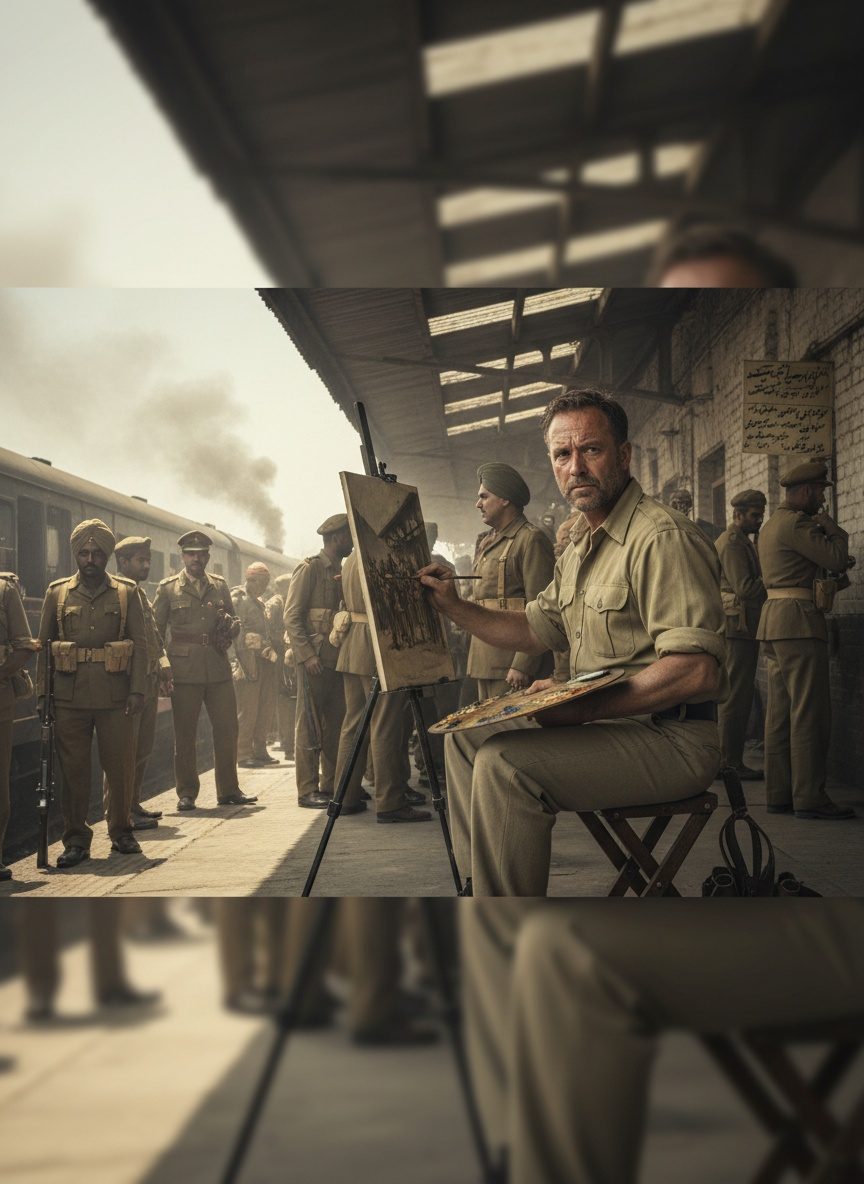
Sent amidst the swirl of the Second World War, the British War Artists Advisory Committee dispatched official artists across the Indian subcontinent. They were tasked with capturing the essence of military life — the mundane and the profound moments, the victories and the silence in between. These artists, carrying brushes and paints as their weapons, recorded scenes with a particular gravity that cameras struggled to convey. They documented what could be considered the British Empire's swansong in India. Calcutta, with its teeming streets and diverse populace, became the canvas that told stories still untold.
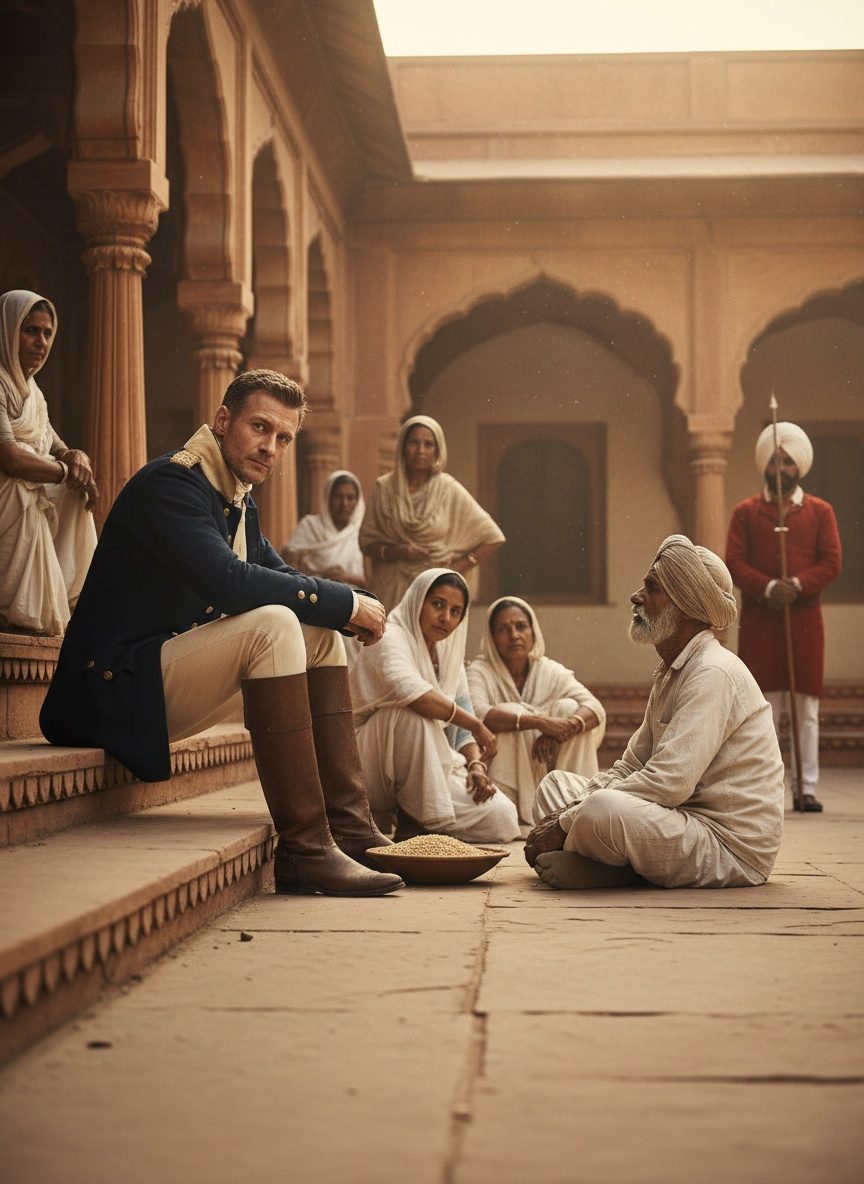
The artists found themselves immersed in an environment where conflict and culture collided with a beguiling intensity. India, poised precariously on the edge of independence, became a second battleground where the colors of conflict mixed freely with the vibrant tapestry of life. It was within this tumult that the true value of the artists' mission emerged. Whether painting the disciplined British soldiers or the Indian troops who stood with them against a common adversary, the resulting canvases spoke of brotherhood amidst adversity.
Artists like those enrolled by the committee could discern subtleties the blunt edges of a lens couldn't capture. There was a magic in their mediums that bottled the essence of a moment or emotion evanescent to the untrained eye. When they painted the solemn gaze of a sepoy, an Indo-British soldier, waiting on the battlegrounds' outskirts, or caught the laden expression of a nurse tending to the wounded, they didn't just immortalize wartime service — they captured a fracture forming in the facade of imperial solidarity.
The collective works created during this period were stained with the hues of an empire's decline. Every brush stroke added color not just to history's canvas but took from the palette of an era teetering on the brink of transformation. In some scenes, the Empire appeared in all its regimented pride — military parades that snaked ceremonially through city squares. Yet, in others, the observant artist revealed a deeper, serene unravelling; the way local children observed from the peripheries, their indifference masking a distant anticipation of change.
Calcutta was merely one city that bore witness to this montage of empire. Across the subcontinent, from the mountains of Assam to the arid landscapes of Rajasthan, the War Artists captured more than military sights. They painted markets bustling in unexpected normalcy, weaving their detailed tapestries of daily life. They observed the unrelenting resilience of people who balanced the weight of colonial occupations and pending liberation — their stories etched in the collected shadows.
As the war raged on, the role of these artists evolved from passive documentarians to active historians of a dying world order. They painted the chaotic beauty of chaos, transforming grays and browns of conflict into vibrant narratives brimming with life. Each canvas carried whispers of a thousand untold stories, most poignant in the knowledge that with every brushstroke, they were inadvertently chronicling an epoch its final hour.
Yet not all were blind to these subtleties. As the British marched allies into fortressed jungles, the deepening connection among Indian forces grew palpable. The war, while fiercely shared, had kindled an awakening — the idea that this was as much their fight as it was Britain's. To this nuance, the artists were not blind. Their portraits of soldiers bore a fleeting kinship, capturing moist brows and firm resolves that transcended allegiance, an unspoken foreshadowing of the dawn soon to fracture empire and align identity afresh. But, for now, the artists captured ambivalence; spirited creators in burnt umbers and ochres conjured fidelity and apathy alike with lips that asked no questions.
Their service extended far beyond mere creation of art. With paint-soaked brushes and solemn dedication, they shaped a lasting repository of reflections — of an England widely stretched and India distanced just enough for empire's sheen to lose its gloss. But not just empire’s enervation were they privy to; they harbored in prescience a burgeoning India emerging vivaciously from Britain’s embrace.
The post-war world swiftly unfolded stark realities. Their works, hastily transported back to England, caught the public's eye but struggled against the sweeping tides of history. Some may marvel at the paintings for their documentation of war alone, but their earnest observers understood the deeper image captured — one of transience captured exquisitely in oil and canvas. What flickered in those paintings was not just an empire unravelling but the tender genesis of nations awakening to self-identity.
When India championed its sovereignty in the shadow of 1945's end, these canvases remained vibrant records of a story spanning continents and ideologies — a world painted anew against familiar backdrops. The past could no longer be tethered in the dusty tomes of paper. Paintings amassed during this transitional epoch hold an eternal testimony to lost dominion’s colorful nadir, inviting viewers still to pause, to listen, and to breathe them afresh.
In witnessing the last painted moment of the Raj, we glimpse artistry serving history, capturing not just a war or an empire, but the beginnings wrapped in chaotic allure. And perhaps, through their art, these war artists bequeathed us the most eloquent elegy of all — one painted without sound that quietly noticed more than our education could ever teach.