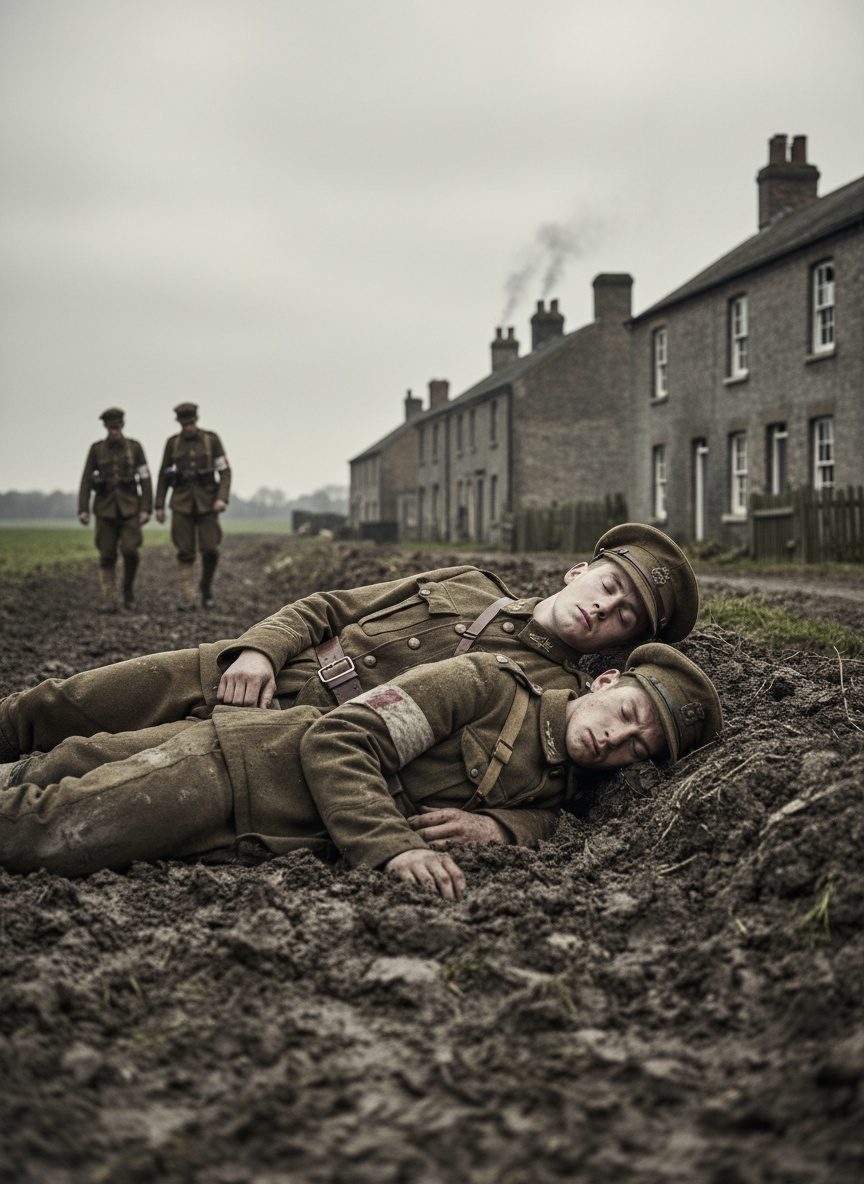
The sharp crack of gunfire echoed across the desolate landscape, and the young lieutenant's breath suddenly turned ragged and shallow, a patch of warmth spreading across his chest. Shattered by a sniper's bullet, he lay sprawled in the damp earth of a Flemish battlefield, his life quite literally slipping away with each gurgling breath. Around him, the eerie lull of mid-battle was punctuated only by the distant cries of the injured and the terse orders shouted over the cacophony. A mist hung bitter and heavy, mingling with the smoke from the artillery, casting an ominous shroud over the chaos and carnage of October 1914. This was the critical moment that cleaved Bernard Montgomery's life in two: before the bullet, and after, defined not just by survival but by the harsh lessons etched in blood and memory.
The Cruel Tutor of Experience
Amidst the mud and relentless gunfire of World War I, Lieutenant Bernard Montgomery, at the tender age of 26, faced an early brush with death—one that would leave an indelible mark on his psyche and career. His regiment had been ordered to hold their ground in a painfully exposed position. Without the benefit of cover or a strategic plan, they were like sitting ducks on the flat, unforgiving terrain of No Man’s Land. It was said that Monty, as he would later be known, had been standing among his men when the bullet found him, a cruel symbol of the war’s disregard for planning and precision.
Taken down where he stood, the situation would've been his end, if not for an eerie twist of fate. A slain comrade fell across him, forming an unlikely shield that would save Montgomery's life. Beneath the weight of the dead, he lay still, the dust from exploded shells settling like a death shroud. Lost in shadows as the light faded, Montgomery used every ounce of his will to feign lifelessness, his fragile breath hidden from the snipers' watchful eyes. The grim countenance of such an encounter became a defining touchstone in his life—one that colored his perception of military strategy forevermore.
Montgomery's survival may have been nothing short of miraculous, but it wasn't the result of luck alone. It painfully exposed the pitfalls of inadequate planning and indecision, searing him with the realization that battlefield success demanded more than raw courage. This devastating close call informed his future ethos, one built around the careful orchestration of resources and systematic execution. It was a creed carved deeply with the resolve to eschew senseless sacrifice and personal hubris.
The Birth of a Strategist
The lessons borne from that violent introduction to war forced Montgomery into the role of an observer and thinker as he pieced together his recuperation; he watched, listened, and reflected. Where others saw only madness and loss, Montgomery discerned valuable insights. His close shave with mortality had taught him, above all, the value of comprehensive planning and the grave costs of its absence.
Montgomery's life was spared when many of his contemporaries were not. For months, he lay in convalescence, reflecting on the catastrophe and sheer waste of human life that he had narrowly escaped. The war didn't just rage on the fields; it thrived in the minds of men like Montgomery who were forced to contend with its unrelenting chaos. An introspective figure by nature, he absorbed the gritty truths the war had to offer, letting each painful whisper mold him as a future leader.
He emerged from his recuperation with a granite resolve, pursuing a career forged by precision and caution. Montgomery's drive to remove variables and impose order upon chaos came to define his future commands. By internalizing his near brush with death, he cultivated a style distinctly his own—one centered on reducing uncertainty and directing control. His critiques of disordered command and execution matured into a doctrine where each soldier's life was considered a precious asset to be judiciously wielded.
A Legacy Cast in Steel
The bloody fields of Flanders had baptized Montgomery into a new ethos—one of meticulous strategy over blind aggression. His leadership in later campaigns was characterized by methodical precision, where aggressive planning allowed for decisive albeit careful engagements. This was a man determined never again to preside over the meaningless shedding of blood that had hallmarked the early days of the Great War. He had seen the failures of poor preparation carved into the lines of soldiers' faces like trenches etched into the earth.
Montgomery's commitment to detail would ultimately see him rise to prominence during the Second World War, where his strategic pragmatism found a calling on some of the largest stages of conflict. Ever wary, he always ensured that each man under his command fought with purpose and clear direction—a lesson he carried from his survival on the Flemish fields to the halls of leadership.
While the scars of war are often worn within, sometimes they harden into a legacy visible to all. Montgomery's experiences in 1914 rendered him a broken lieutenant, but out of the physical wreckage rose a commander forged by the lessons of history. His story reminds us that even in the bleakest of battles, there's room for growth and transformation. From the dirt and despair, Montgomery carved out a path not just for himself, but for armies that might fight smarter and survive longer. His was a creed written in blood but acted upon with the precision of ink—a lesson for leaders of yesterday, today, and tomorrow.