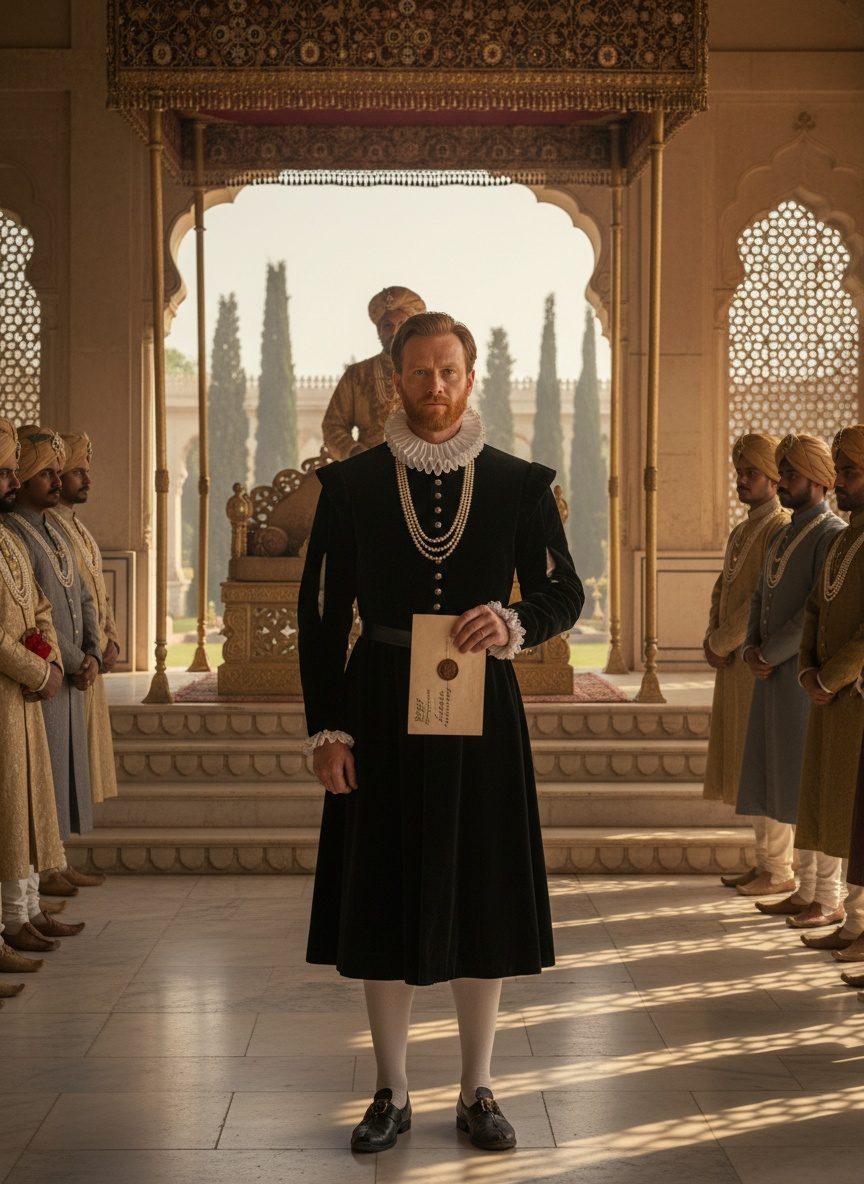
She was the daughter of a Cornish tin miner. She had never stepped foot in India before 1857.
A Singular Journey Begins
The steamer that carried Mary Carpenter to the bustling heart of the British Empire in India glided through the Hooghly River and docked at Calcutta’s port in 1857, marking the beginning of an unexpected chapter in educational reform. The heat and chaos of the city greeted her—a city teeming with rickshaw pullers, vendors, and the cries of street children. Despite holding no formal position or title, Mary had a purpose that was as clear as the monsoon skies after a downpour; she was there to spark a revolution in education.
Mary Carpenter had gained a reputation across Britain for her radical work with street children, drawing on her modest beginnings in Bristol where her father, a Unitarian minister, and her mother instilled in her a deep sense of social justice. The daughter of a Cornish tin miner, Mary had transcended her familial roots, advocating for children who had been neglected by the very society meant to protect them. In India, her compassion and determination faced a different challenge: a land of contrasts with stark social hierarchies and cultural divides, exacerbated by colonial rule.
With only a leather trunk in possession, Mary settled into a modest dwelling, acutely aware of the daunting task ahead. She pressed on, driven by a belief that every child, especially girls who were often marginalized, deserved access to education. Moving through the alleys and bylanes of Calcutta, she networked as best she could, speaking with anyone who might support her cause. Though she spoke no Hindi and had few resources, her fiery speeches and unwavering conviction in her mission won her unexpected allies—sharp critiques, yes, but supporters too.
An Edifice of Learning Emerges
Mary’s initial days saw little more than hurried conversations and handwritten notes as she pieced together her plan for a school. Observing the societal norms, she recognized that cultural perceptions about female education were a formidable opponent. The British, who should have led by example, largely ignored educating Indian girls, viewing it as not their responsibility. Mary, however, saw an opportunity where others saw obstacles.
Within months, and through sheer resilience, Mary turned the idea of a school into reality. With no institutional support, her vision attracted local benefactors—wealthy Indian merchants and empathetic civil servants who saw the potential in her determined vision. This coalition of the willing helped sponsor the modest beginnings of what would become classrooms filled with young girls who had never held a book, let alone attended a formal lesson.
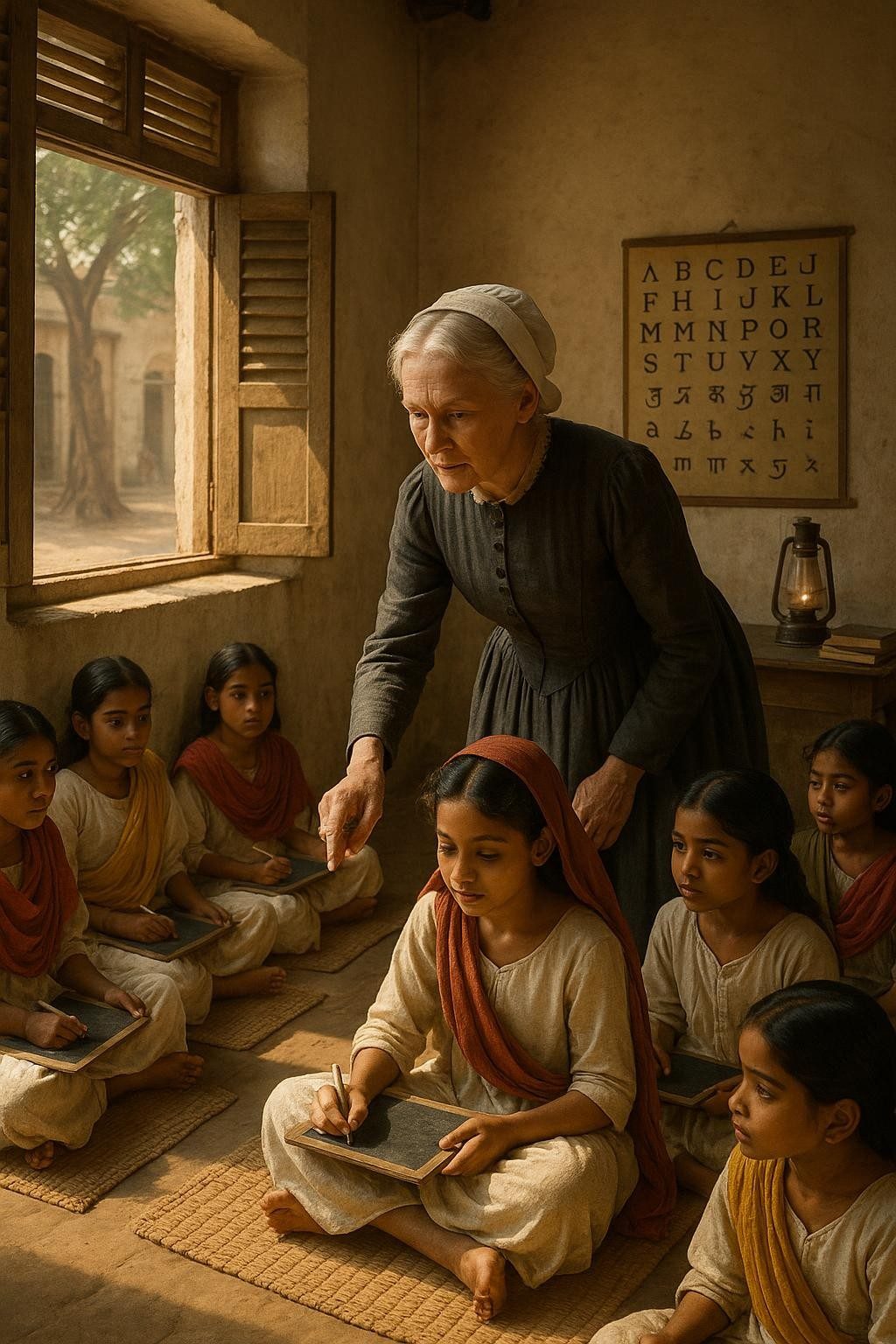
Mary led by example, leveraging her scholarly instinct and teaching abilities that had rescued countless street children back home. She tailored her curriculum to the students’ needs, respecting local customs while weaving in a foundation of literacy and arithmetic essential for progress. The children embraced the opportunity with enthusiasm, their laughter and eager responses echoing through the halls. Soon, the school swelled with 200 girls—a testament to the magnetic pull of promises fulfilled.
Her school stood as a beacon of change. Despite the small budget, and narrow corridors that often crowded with students, it became an oasis of learning. Mary knew that equipping girls with education was more than just imparting knowledge; it was a way to challenge the normative. This daring approach made ripples that would extend far beyond the school’s walls.
A Legacy Rooted in Change
The ripples Mary Carpenter set in motion soon cascaded into waves that caught the attention of broader society. Her success inspired other reformers to adopt similar initiatives, compelling the British administration to rethink its stance on education in India. The school’s impact was evident in the graduates who left as well-rounded individuals, equipped to influence their communities positively. They were empowered voices who began to question their roles and who sought greater opportunities in the rapidly changing world around them.
This transformation was monumental, for it started a conversation around women's roles and the power of education within a colonized nation beleaguered by rigid structures. Mary Carpenter’s modest beginnings, marked by a lack of resources or even language familiarity, spoke volumes about how conviction and the courage to dream could create unforeseen changes. Her work challenged societal norms both in Britain and India, forever altering the colonial landscape of education.
Though many might not recall Mary today, her legacy is quietly woven into the fabric of educational reform. Those prepared to dismiss education for girls were met with the undeniable truth that Mary had demonstrated: the potential within every child was immense and world-changing when given the chance to flourish. Her story matters, not only because she taught Calcutta to read, but because she taught it to hope.