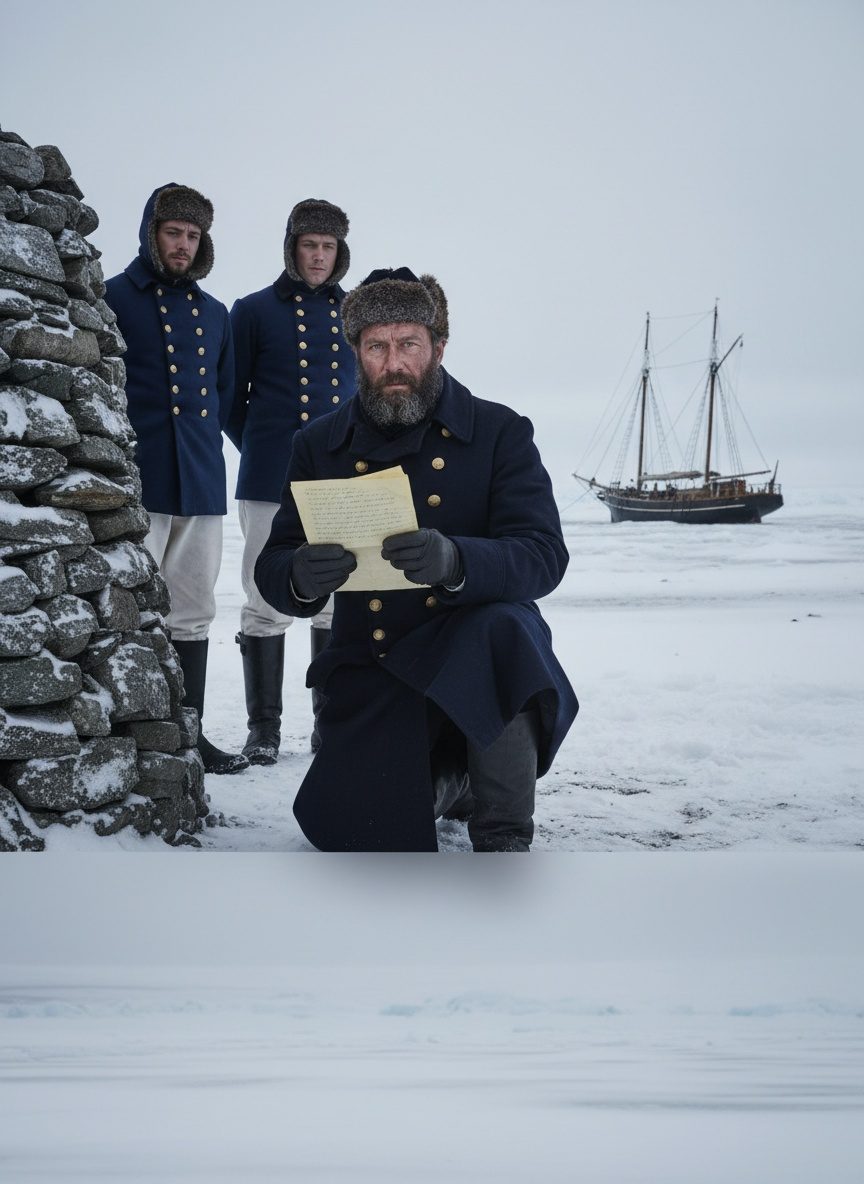
Sir John Franklin's Arctic expedition disappeared without a trace. Yet it took just one slip of paper to unravel the mystery.
Into the Heart of Arctic Silence
In 1845, the disappearance of Sir John Franklin and his 129 men transformed from adventure to enigma. The British Empire, confident in its maritime prowess, had its eyes set northward, not just for new routes but for prestige and dominance. Setting sail with the finest of Victorian technology and high hopes, Franklin's HMS Erebus and HMS Terror ventured into the Arctic's icy grasp, never to return.
Those left behind battled the haunting void of uncertainty. For fourteen agonizing years, over forty expeditions scoured the frozen labyrinth of the Arctic Sea. Like a mythic beast, the ice north of the American continent swallowed its pursuers, leaving the Empire entangled in endless hypotheses. Each expedition returned with only echoes of icy winds and haunting silence, fanning the flames of mystery as the fate of Franklin and his men slipped further into folklore.
The Victorian public fixated on the mystery, spurred by tales of cannibalism, desperation, and abandoned ships swallowed by the abyss. Reports from native Inuit hinted at the heart-wrenching struggles of starving men, creating ephemeral threads of hope that the lost explorers had left breadcrumbs leading to their fate. Yet, the evidence eluded the endeavor like snowflakes in a blizzard.
As years passed, the infamy of the expedition grew, capturing the imaginations and fears of many, while also engraving itself into the legacy of exploration. But it was Francis Leopold McClintock's modestly equipped yacht, the Fox, that finally whispered answers across the glacial expanse.
The Cairn and the Cairn Note
In the spring of 1859, McClintock's Fox, outfitted with dog sledges and with spirits buoyed by persistent resolve, made its way through the unyielding frozen maze to King William Island. It was here, amidst stretches of barren land where the crisp Arctic air mingled with the sea’s salty breath, that the silence would break.
McClintock, guided by Inuit testimony and his indomitable spirit, unearthed a stone cairn that guarded the secrets of that ill-fated expedition. As gloved hands dug through the stones, a simple yet revelatory piece of history emerged—a handwritten note, penned by a parched hand on behalf of the dying crew.
This note, obscured by frost and time, elucidated the tragedy that had entombed Franklin's expedition. Dated April 25, it confirmed Franklin's death and the fate of the men who’d struggled onward, sinews of desperation clinging to futile hope. It revealed desperate decisions made, ships locked in a grip colder than death, and a march southward in search of salvation that never came.
It was but a slip of paper, but it held the weight of an empire's questions, revealing the humanity and vulnerability that lay beneath the veneer of imperial ambition. A simple thirty-word note carried the voices of those 129 men—voices silenced in the roar of Arctic winds yet never truly forgotten.
The Threads of Discovery
The discovery of the cairn note by McClintock and his crew heralded a turning point not just in understanding the Franklin expedition but in exploration's persistent drive against odds. It showcased the unyielding human spirit navigating vast uncertainties with faith and determination as its compass.
The modest yacht Fox and its skeletal crew achieved what grander ventures could not: the ability to listen to the land's whispers when the roar of larger ships could not. It was a dance with fate backed by perseverance, a moment when the grit of a few managed to illuminate history's dark chapter where a grand fleet had failed.
In its aftermath, the revelations beckoned nations to consider not just the prowess of expansion but the human cost of ambition. The Empire, mighty though it was, had been reminded by the Arctic's unyielding chill that nature remains the ultimate arbiter in our quests—and that even the mightiest can be humbled by its silence.
The narrative of Franklin’s expedition, enriched by the cairn's discovery, stands as a poignant reminder of the tragedies inherent in human exploration. As we continue to chart unknown territories today, each journey can be traced back to stories such as these, where the quest for knowledge walks hand in hand with the spectre of mystery and loss.