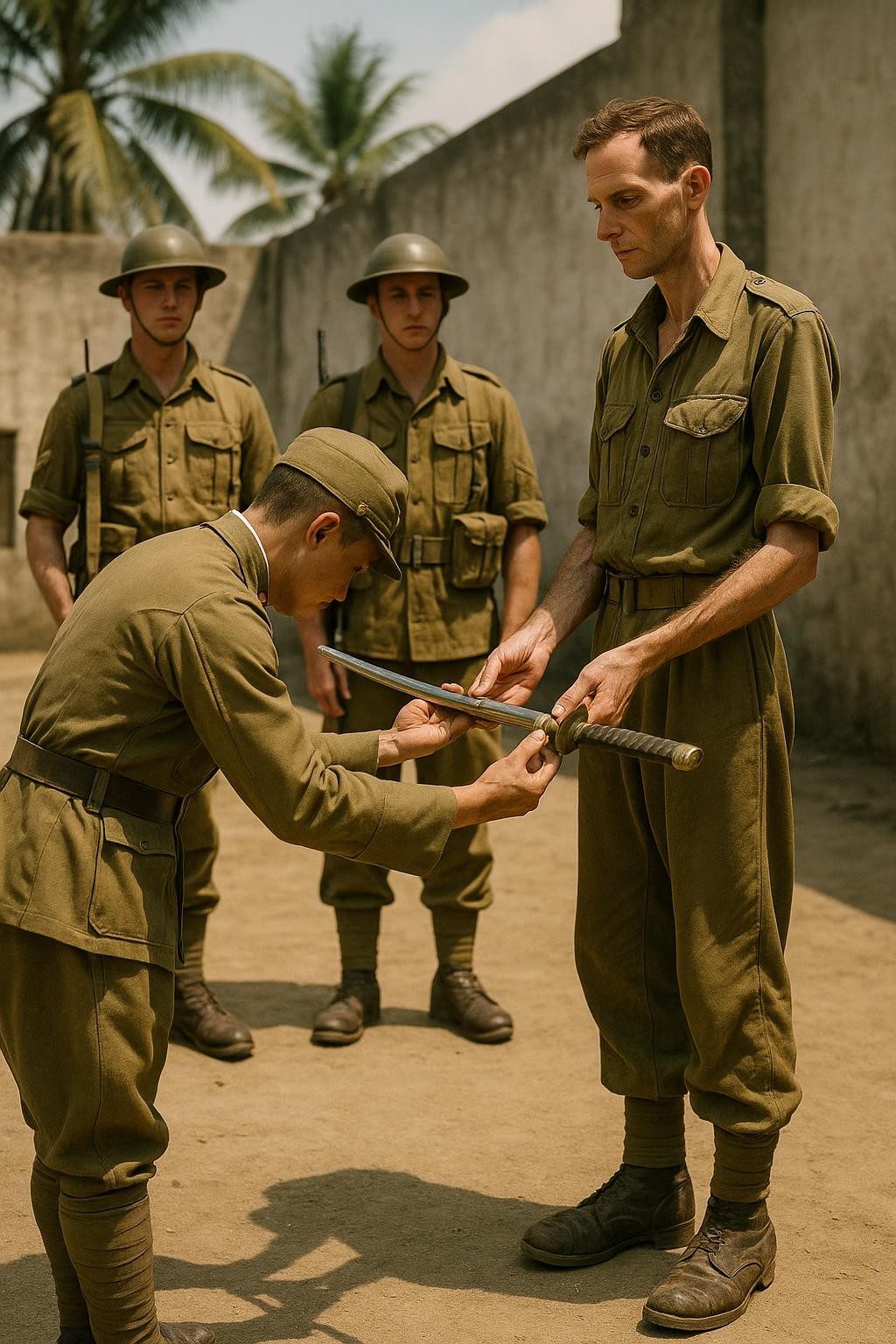
On a balmy September day in 1945, the air around Singapore's Changi Prison bristled with an electrifying tension. This place, infamous for the pain it had hosted, was about to bear witness to a moment of quiet, profound justice. Private Reg Sparks, a man aged beyond his years by the brutalities of war, faced a Japanese guard. In a gesture that culminated years of suffering, the guard surrendered his sword to the very man he once watched over with unyielding vigilance. The historical significance of this moment was monumental, capturing a narrative of resilience and dignity reclaimed.
The Fall of Singapore: A Humiliation Frozen in Time
The strategic fall of Singapore on February 15, 1942, had been a crushing blow to British and Allied forces. It marked the largest surrender of British-led military personnel in history, with more than 80,000 troops from Britain, India, and Australia becoming prisoners of war. Among them was Private Reg Sparks of the 8th Australian Division, a 24-year-old soldier caught in the chaos. Captured amidst the ruins of the once-indomitable fortress, he was thrust into a life of uncertainty and endurance within Changi Prison, where approximately 50,000 Allied soldiers were held during its peak.
Life Behind Barbed Wire: The Unseen Struggle
Life in Changi was a daily grind against despair. Prisoners were forced into grueling labor, surviving on starvation rations, with rice often infested with maggots. Yet, even in these bleak conditions, sparks of humanity flickered. Prisoners organized clandestine universities, theatrical productions, and even an orchestra, defying their captors by nurturing the spirit of camaraderie and resistance. Reg Sparks, amidst the squalid despair, clung to these activities, finding solace in the fellowship of fellow captives and the faint but persistent hope that their ordeal would one day end.
The Sword Ceremony: A Gesture of Redemption
On September 5, 1945, the tide turned. World War II had officially concluded days earlier, with Japan's unconditional surrender on August 15. Allied forces quickly moved to reoccupy Singapore and orchestrate the transition of power. This was not only the reclamation of a city but the liberation of a spirit. At Changi Prison, Private Sparks found himself part of a poignant tableau. The Japanese guards, once symbols of harsh domination, stood in a somber line. One by one, they relinquished their weapons to the former prisoners.
The sight of a Japanese Non-Commissioned Officer (NCO) solemnly placing his sword into Reg Sparks' hands was more than a reversal of fortunes. It was a symbolic undoing of three years of humiliation. The blade, traditionally a samurai's emblem of honor, now signified the ultimate submission—an admission of defeat not just by a soldier but by the empire he served. This singular act of handing over the sword crystallized a moment of poetic justice that resonated far beyond the gates of Changi.
The Echoes of Surrender: Repercussions Beyond the Moment
This gesture of surrender was not only a personal triumph for Sparks and his comrades. It embodied the broader arc of World War II's resolution in Asia. The Japanese occupation of Singapore had been characterized by its brutality and harsh imposition of order, but the city's liberation and the ritualistic surrender ushered in a period of reflection and rebuilding.
While Allied forces were tasked with the immediate restoration of order, there was a deeper, more enduring task at hand — the societal healing and redress of scars left by the occupation. The moment when Private Sparks held the Japanese sword was both an end and a beginning, symbolizing the resilience of those who survived and heralding the dawn of a new era for a war-torn region.
A Legacy of Dignity: Lessons for Future Generations
Why does this moment, one of countless in the aftermath of World War II, still pulse with such significance? At its core, it serves as a stark reminder of the human capacity for resilience and dignity. Private Reg Sparks' story transcends the confines of Changi Prison; it echoes through time, inspiring those who face seemingly insurmountable challenges.
In a world still grappling with conflict and strife, the exchange between Sparks and the Japanese guard speaks volumes. It emphasizes the power of symbolic gestures to acknowledge past wrongs and pave the way toward reconciliation. It underscores an essential truth: while the ravages of war can fracture nations and devastate lives, moments of humility and honor hold the potential to heal and renew.
Ultimately, the surrender of the sword at Changi stands not just as a footnote in the annals of history, but as a beacon for future generations — a call to uphold the values of peace, respect, and humanity amid the world's enduring complexity.