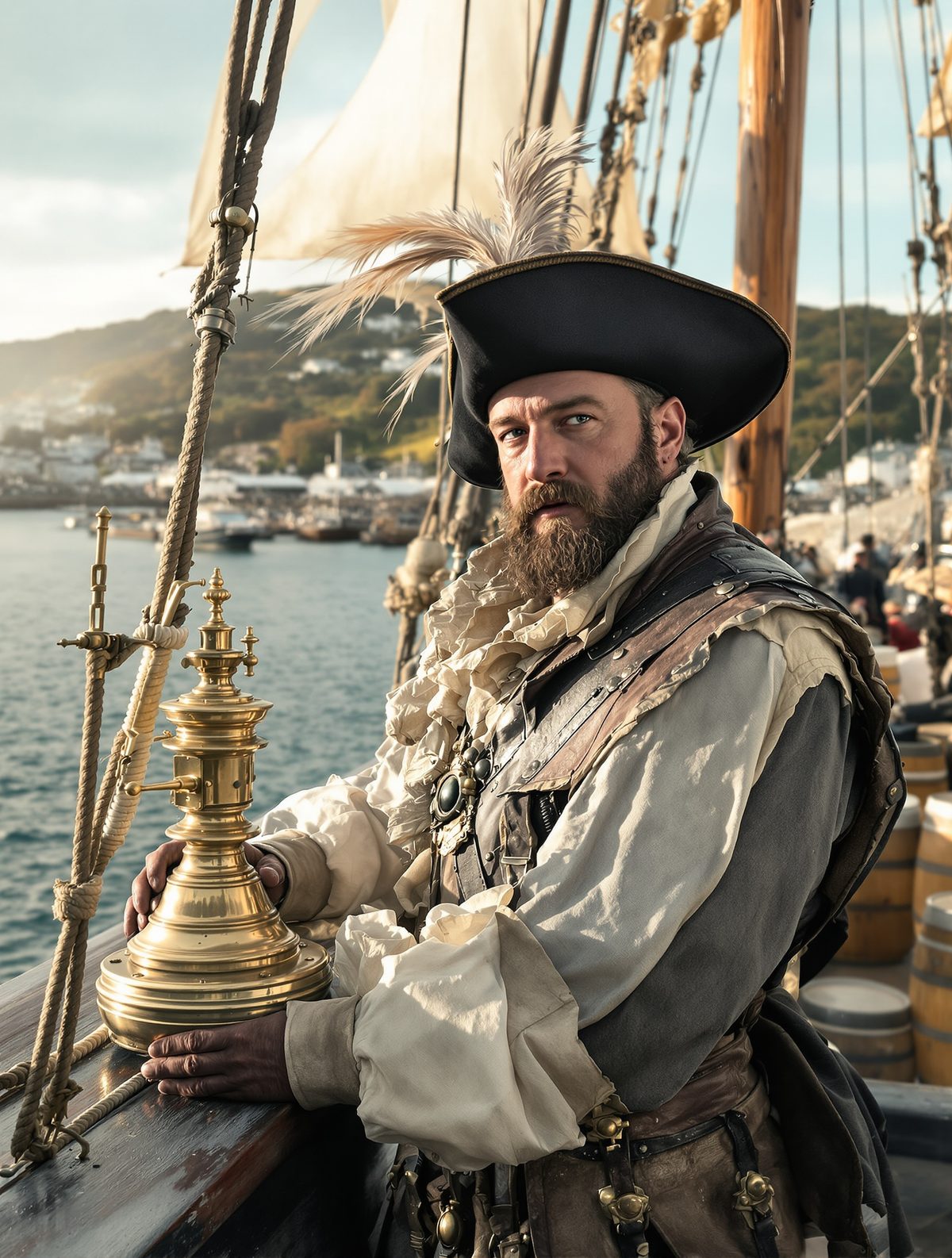
On a drizzling September day in 1580, a lone ship bobbed into Plymouth Harbour, weather-beaten and tired. The townspeople, used to the comings and goings of vessels, were used to ships returning from far-off lands, but this arrival was different. As the galleon, Golden Hind, anchored, a sense of awe enveloped the harbour. Captain Francis Drake had returned from his three-year circumnavigation of the globe, a feat so daring it seemed plucked from the imagination of a medieval romance. England, on that day, was not just welcoming home sailors but ushering in the dawn of a new era – the rise of empire.
The Journey Begins
The expedition was sanctioned by Queen Elizabeth I herself in 1577, who had motives draped in both glory and gold. With piracy sanctioned under the guise of patriotism, Drake set sail from Plymouth on December 13, 1577, with five ships and over 150 men. Among them, Drake's flagship was Pelican, later rechristened the poignant Golden Hind – a tribute to his patron, Sir Christopher Hatton, whose crest it bore.
Initially, they ventured down the coast of West Africa before sweeping across the Atlantic to South America. As the fleet maneuvered through the treacherous and icy waters of the Strait of Magellan in August 1578, it was battered by raging storms so fierce they shattered masts and scattered the flotilla. Only Golden Hind remained, alone in the vast Pacific, carrying England's hopes for discovery and plunder.
The High Seas' Wager
In the immense Pacific, Drake became the scourge of Spanish treasure galleons, commandeering their priceless cargos of silver, gold, and other riches. Among the most celebrated of these exploits was the capture of the Spanish galleon Nuestra Señora de la Concepción. Laden with treasure, this single victory was worth a mind-boggling fortune, a bounty unparalleled in the annals of piracy till then.
His navigation, based as much on fortune as skill, led them to the shores of modern-day California, a land he claimed for England under the name of "Nova Albion." There, on the rolling coastal hills, under stars strange and uncharted, Drake repaired his vessel and refitted for the passage home.
The Return of the Hero
By the time Golden Hind edged back into Plymouth on September 26, 1580, three years to the day since departure, only 56 of the original crew remained. Drake had accomplished a monumental circumnavigation through defiance, cunning, and a fair share of maritime brinksmanship. With bounties worth half a million pounds, equivalent to hundreds of millions today, his return heralded far more than triumph.
Queen Elizabeth, well aware of the precariousness of Drake’s feats in light of relations with Spain, chose a daring gambit. She knighted Drake aboard Golden Hind in April 1581, in a ceremony as audacious as the voyage itself, anchoring his place tenaciously in both legend and politics.
The Ripples of Empire
Drake's success rippled beyond treasure maps and maritime lore; it set the stage for England's global ascent. His circumnavigation broke the mythic monopoly that large empires, like Spain and Portugal, held over global routes, proving that the seas were accessible to the daring. It emboldened English explorers, adventurers, and merchants, laying the foundation for the British Empire's expansion.
This journey spun a web of empirical ambition, fueling subsequent ventures that turned the initially minor kingdom of England into a formidable global power. Through trade, colonization, and conquest, a string of pearls began to trace across the globe, knotting England's destiny to a once unimagined imperial tapestry.
The Echoes Today
Francis Drake's circumnavigation remains a testament to human curiosity and resilience. However, his voyages are also reflective of a complex historical tapestry – one of exploration intertwined with exploitation, heroism with hegemony. As with every historical saga, it invites contemporary reflection.
Today, as the apparatus of global communication has transformed the world into an interconnected web, Drake's legacy prompts contemplation. His voyages, propelled by imperial pursuits, offer dual lessons: the power of innovation and exploration to transcend boundaries, contrasted with colonial consequences that shaped future histories.
From the steadfast bowsprit of Golden Hind to the palatial halls of Hampton Court, Drake carried with him a harbinger of change. His triumph was not merely one of navigation but a seminal pivot, ushering England onto the stage of empire. An empire born of audacity, ambition, and uncharted seas.