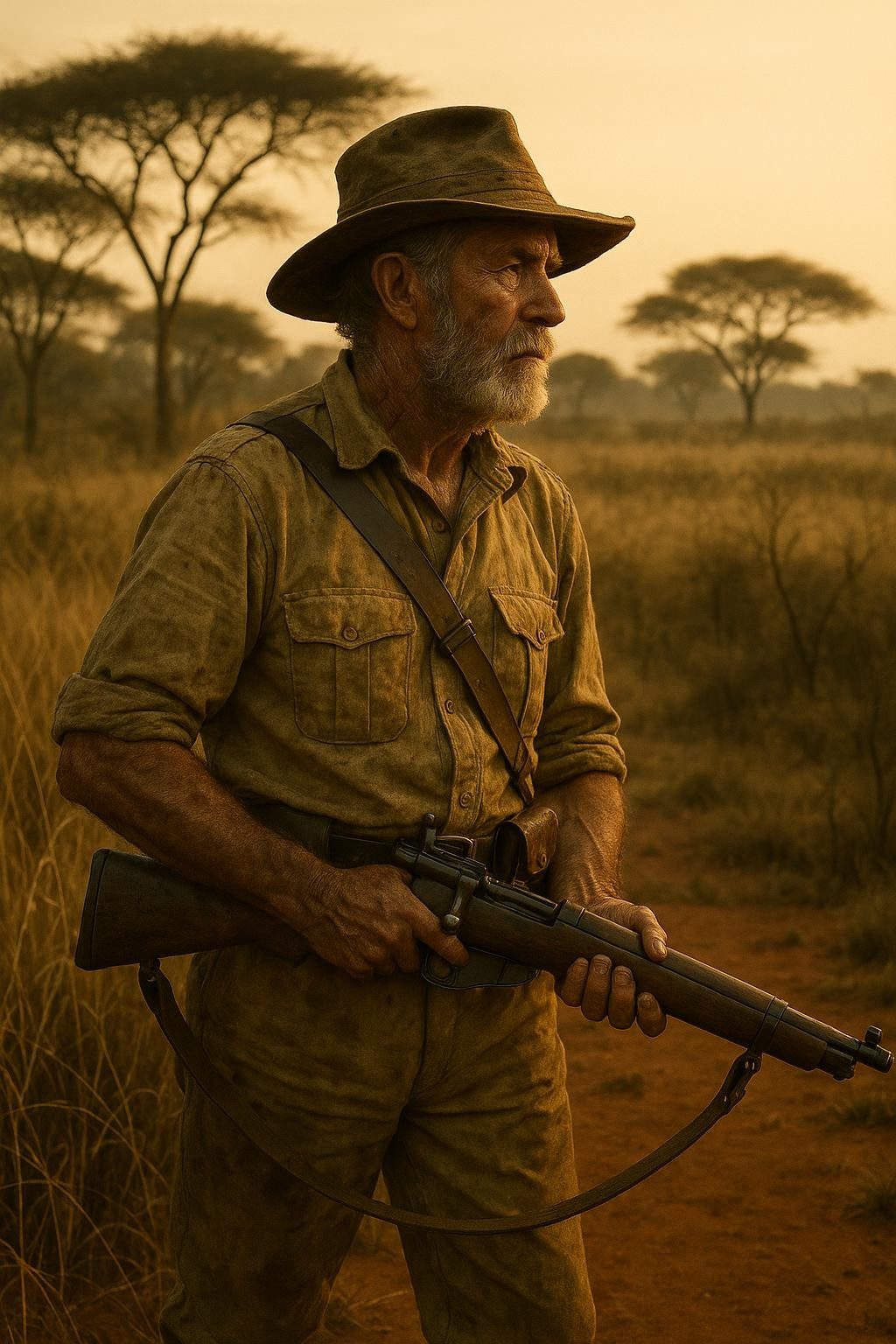
Amidst the shifting shadows of the African bush, a solitary gunshot rang out—a sound as ominous as a death knell. It was the 4th of January, 1917, in the heat of the Great War's East African Campaign. Dropping lifelessly to the earth was Frederick Courteney Selous, a man whose life was a testament to adventure, bravery, and indomitable spirit. He died as he had lived: fiercely facing the wild.
The Relentless Pursuit of Adventure
Frederick Courteney Selous was born on December 31, 1851, in London, but his spirit belonged to the wild uncharted lands of Africa. From the tender age of nine, he dreamt of the adventures that would await him in the vast, untamed expanse of the African continent. By the time he was 19, he had embarked on his first voyage to South Africa, setting the stage for a career that would etch his name into the annals of both hunting and exploration.
Dubbed Britain's greatest hunter, Selous wasn't merely a man of the gun. The tales of his encounters with Africa's majestic fauna—the charging elephant, the elusive buffalo—became legendary. For over forty years, Selous crisscrossed the continent, traversing lands from Cape to Cairo, and penning reports about flora, fauna, and the diverse cultures of Africa.
Yet, for all his hunting exploits, Selous was also a fierce conservationist. He held deep respect for the land and its inhabitants, often vehemently protesting against unnecessary slaughter. It is this paradox—a hunter with a conservationist's heart—that made Selous as fascinating as the beasts he pursued.
The Soldier’s Call: From Hunter to Hunter of Men
When the first shots of the Great War echoed across Europe, Frederick Courteney Selous was 63 years old. Most men, especially those with a long legacy already secured, would have opted for the comforts of home. Not Selous. By 1915, he was serving with the 25th Battalion, Royal Fusiliers—more famously known as the "Frontiersmen." The call to arms resonated deeply with him, as if chasing a new prey.
Engaged in the East African Campaign, Selous and his men faced not only human adversaries but the brutalities of nature itself—diseases, difficult terrain, and the relentless heat. The campaign was marked by its untraditional warfare, characterized by fast-paced skirmishes rather than entrenched battles seen in Europe.
At 64, rather than slowing him, age seemed to hone Selous's instincts for strategy and survival in this grueling campaign. Winston Churchill would later lionize the exploits of this mighty figure in his book "The World Crisis," noting the unmatched resolve of Selous and his Frontiersmen.
The Final Encounter: Beho Beho
The locality of Beho Beho, nestled in what was then known as German East Africa, became the stage for Selous's final act. On the morning of January 4, 1917, during an intense firefight with German forces, he fell. A bullet pierced the renowned hunter's head as he led his men from the front—a place from which he never strayed.
Still clutching his rifle, Selous' death was tragic yet fitting, reminiscent of the dramatic tales of the wilderness he so loved. His comrades, shocked and devastated, buried him where he had fallen, beneath a small spotted tree in the wilderness he had given his life to. It is said that when his body was taken from the field of battle, his face bore a peaceful expression—a gentle end to a life defined by the roar of life all around.
Beyond the Lore: The Legacy of Frederick Selous
Today, Frederick Courteney Selous continues to be remembered for his vast contributions to the understanding of Africa and for his name that graces countless books, museums, and even a UNESCO World Heritage Site—the Selous Game Reserve in Tanzania, one of the largest faunal reserves in the world. While the reserve serves as a living legacy to his conservation efforts, Selous's life is also immortalized in tales long beyond the textbooks.
Yet, one might ponder why Selous chose to return to the heat and the danger when he could have simply enjoyed the comforts of the civilized world that had long lauded him. Perhaps it was the irrepressible call of duty, that pervasive sense of adventure that drove him from London to Africa in the first place. Or perhaps it was simply in his nature—to never back down when there was one more river to cross or one more hunt to lead.
The Unending Song of Wild Places
As we reflect on Frederick Courteney Selous over a century after his death, one might wonder what lessons his life imparts to our modern world. His story is a testament to the spirit of exploration and the courage of convictions. In an age rampantly reshaping landscapes and compromising natural habitats, Selous’s dual legacy as a hunter and conservationist presents a narrative where respect for nature is never divorced from the human journey.
The life and legacy of Frederick Selous matter because they echo an eternal truth: that the world belongs to those who dare to stride with courage across its wild terrains, to those who respect its raw beauty, and to those whose stories inspire others to listen once more to the unending song of the wild places.