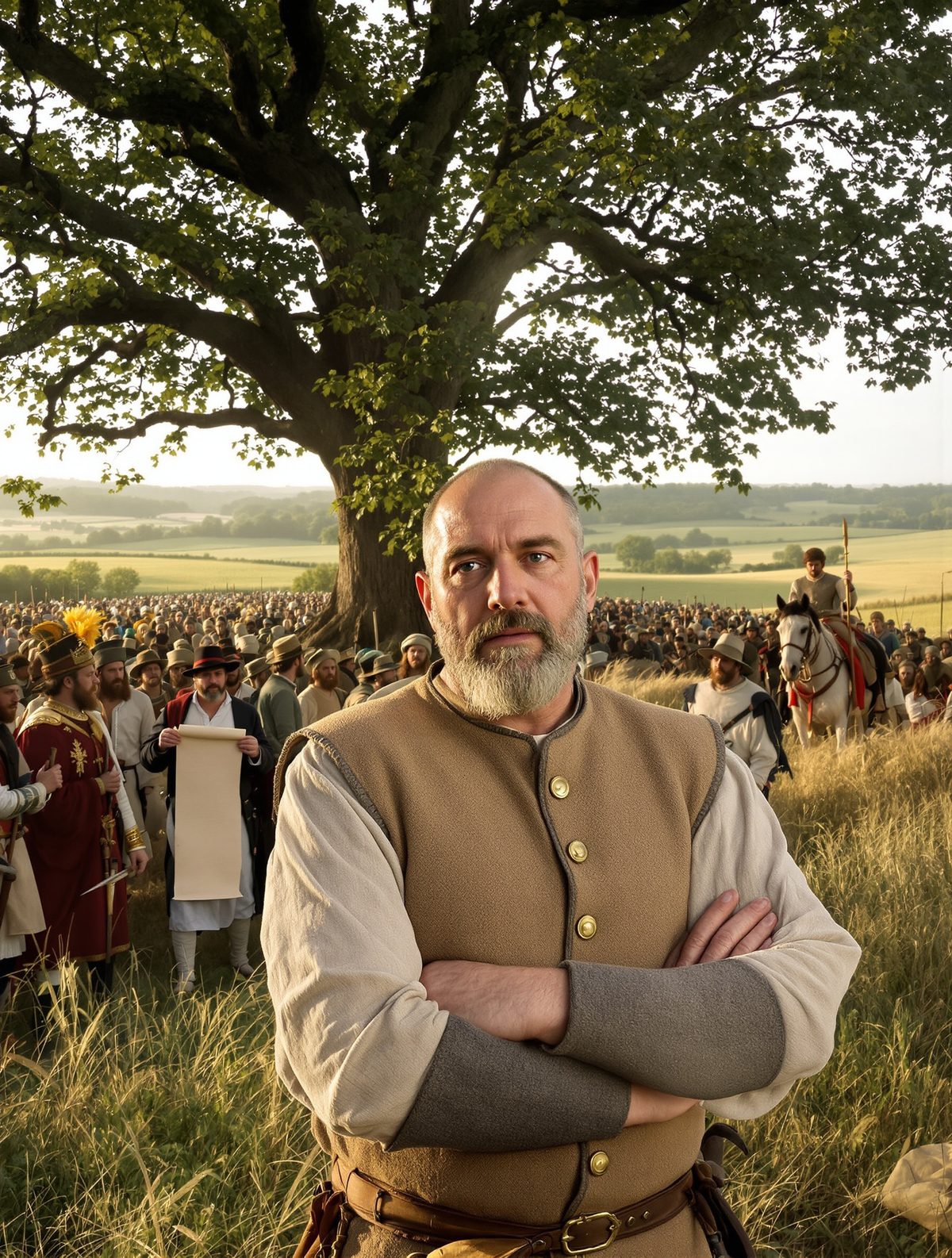
Picture this: it's the height of summer in 1549. Beneath the expansive skies of Norfolk, England, a throng of 16,000 arises like a wave. At their fore, a man stands with unyielding resolve, not a knight or noble, but a tanner. His name is Robert Kett, and today, he is the voice of those who were never meant to be heard, challenging the very notion of royal superiority. As the sun beats down on the dusty expanse of Mousehold Heath, a king’s messenger arrives bearing an olive branch in the form of a royal pardon. But Kett, his voice as firm as his conviction, declares defiantly: "Kings' pardons are for criminals. I have done no wrong." This is the backdrop to one of England's most extraordinary, yet often overlooked, uprisings.
The Seeds of Rebellion
It was a time of social upheaval in Tudor England. Land, once common, was being enclosed by wealthy landowners, driving a sharp divide between the haves and the have-nots. This policy turned fertile fields into private pastures, leaving commoners dispossessed and desperate. From these seeds of discontent sprouted Kett's Rebellion, an uprising that drew thousands to the picturesque Norfolk landscape.
Kett, a landowner himself, wasn’t initially against the enclosures. In fact, he had enclosed his own lands. But when he witnessed the suffering and heard the cries of his fellow townsmen in Wymondham, a change in conscience spurred him to action. On 8 July 1549, amidst the annual feast of St. Thomas at Wymondham, the unrest reached a fever pitch. Kett joined forces with the discontented villagers, and instead of suppressing the rebellion, he chose to lead it.
A New Order Under the Oak of Reformation
Under Kett’s command, the ever-swelling army marched 20 miles to Mousehold Heath, just outside the city of Norwich. It was here that he established a makeshift, yet surprisingly sophisticated, seat of government. Among the verdant surroundings, Kett set up camp and operated under what came to be known as the "Oak of Reformation." This iconic tree was not just a physical landmark but a symbol of justice and democratic ideals.
Kett created his own council, one that echoed the semblance of a royal court with a profound difference: it was of the people, for the people. They were not just rebels in outrage but were organized with a purpose. They addressed grievances and sought reforms, issuing a humble yet bold set of 29 articles that called for land reform, fair rents, and fishing rights. It was a utopian vision, and for six weeks it functioned with an efficiency that many might not expect from a "rebellion."
Kett Versus the King
The power of Kett’s governance on Mousehold Heath could not be ignored. Edward VI, then king of England, dispatched the Earl of Northampton with a force to suppress the uprising. The initial efforts were stymied; the rebels repelled the attacks, their ranks bolstered by their shared cause. But the arrival of the royal herald, bearing the king's pardon, was an attempt to turn the tide without further bloodshed.
Robert Kett’s famous refusal of the pardon is now a legendary act of defiance. His assertion that he had done no wrong resonated powerfully among his followers. It was an indictment of the system, a challenge to the king himself, and it spoke volumes about the self-perceived righteousness of Kett's rebellion. It was not just about land but about the very right to a just and honorable life.
The Fall of the Rebellion
Despite early successes and the establishment of justice under the Oak of Reformation, Kett’s cause faced challenges that human spirit alone could not surmount. The Earl of Warwick arrived with a larger, more formidable force, including the elite mercenary soldiers, the German Landsknechts. The rebels, armed with the weapons they could gather, were no match for Warwick’s seasoned troops.
The decisive confrontation happened on 27 August 1549 in Dussindale, a field just outside Norwich. The disciplined ranks of Warwick's men made short work of the insurgent forces. The battle was a bloodbath, leaving thousands of Kett’s followers dead on the field. Robert Kett was captured, tried, and hanged in November of that same year. His dream was crushed, but his legacy remained.
Why Kett's Stand Matters Today
Robert Kett’s defiance is a powerful story of resistance against inequality and the fight for justice. His tale might not be the cornerstone of every academic textbook, but it echoes through history as a testament to the enduring human spirit against oppression. It reminds us that the forces of change often start with ordinary people demanding a voice.
Today, his story resonates with any movement where the marginalized push back against systemic injustice. Kett may not have succeeded in changing the world, but he dared to confront it. In our modern era, where inequalities still persist and voices strive to be heard, Kett’s rebellion stands as a beacon, highlighting the vital need for empathy and equity in governance.
So, the next time you hear the rustling winds over the fields of Norfolk, remember the thousands who stood with Kett and imagine the mighty oak beneath which a humble tanner dared to dream of a better world. In refusal to kneel, Robert Kett gave all of us a lesson on when to stand firm.