The Boer War saw its share of bloodshed and disasters, but the fall of Johannesburg happened without a shot. On the last day of May 1900, a city of glittering gold surrendered with a whimper, not a bang, under the shadow of a menacing Maxim gun.
As Lord Roberts marched his army into Johannesburg, it was the culmination of strategic genius set against a backdrop of calculated determination. The city, heart of the Transvaal Republic, had become a jewel both coveted and contested. With its sprawling mines and bustling streets, it was more than just a military conquest; it was a symbol of wealth and power, glittering with the promise of gold beneath its dusty roads.
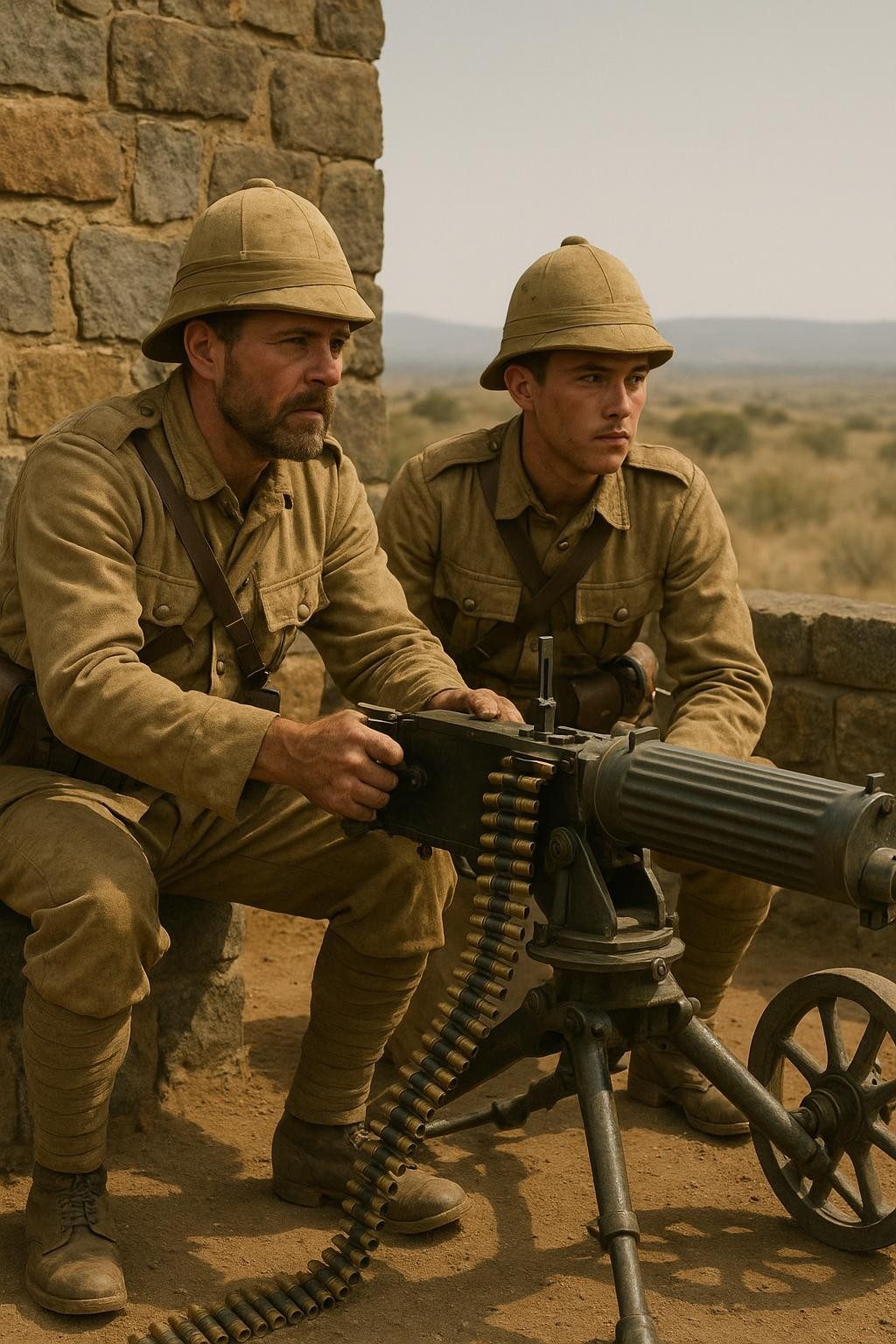
Stationed at the fort with a clear, commanding view over the city, the crew of the Maxim gun stood vigilant. The weapon, a masterpiece of engineering, was revered as the first automatic machine gun. Its distinctive whirring roar had already changed the face of warfare, striking fear into those who had heard it thunder. The sheer force of its presence was a silent negotiator that morning, speaking volumes without the need for fire.
But the story of Johannesburg’s submission is not solely about tactical advantage or the superiority of British arms. It is about a city caught between the clash of ideals—between the Boer determination to defend their independence and the British ambition to expand their Empire. The Maxim gun that held, rather than threatened, stood as a poignant sentinel, watching over an uneasy handover of power.
Beyond the photographs and war dispatches, the true essence of this event lies in the lives it touched and the shifts it precipitated. Johannesburg, despite its surrender, was not merely a city that capitulated. It was a stage where diplomacy and dread coalesced, where the silent Maxim gun bore witness to a turning point in Southern Africa’s turbulent saga.
Boer diplomacy, suffused with pragmatism, understood the futility of wasting lives when the outcome seemed pre-determined. The decision to surrender was not born solely from fear of the Maxim but from the recognition of the human and material cost that a siege would extract. Johannesburg's residents, a mosaic of miners, entrepreneurs, and families, were spared the ravages of urban warfare, a lesser-known blessing carved from a broader narrative of conquest.
The images taken that day remain seared into history—Lord Roberts, a figure steely and composed, epitomized British resolve. Against this, the looming silhouette of the Maxim gun was an omnipresent reminder of both imperial might and industrial progress. It wasn't just military prowess that swayed the day; it was the very embodiment of Victorian innovation, harnessed for domination.
The Boers’ defiant resistance had stemmed the British tide before, in the face of staunch battles like those at Magersfontein and Colenso. Yet in Johannesburg, the choice was stark: ensure survival or face devastation. This dilemma encapsulated the harsh reality faced by those standing against an empire at the peak of its powers, the Maxim gun its silent enforcer, a tangible assertion of modernity meeting the determination of a people fighting for sovereignty.
As the crowds gathered to witness the British troops enter the city, the spectacle fused dread with awe. Amongst the throngs, whispers spread of the unseen power that could unleash devastation at a moment’s notice. The appearance of the Maxim gun in its elevated position seemed to set the stage for a grim tableau of imperial theatre, one that mercifully remained unperformed.
In the immediate aftermath, the city adapted to its new political landscape, shifting beneath the weight of imperial expectations. British strategy focused on consolidating control and restoring Johannesburg’s industrial momentum, intent on mining both gold and compliance from its reluctant new subjects. For those witnessing it, the Maxim gun was not just an instrument of war—it represented the advance of modernity and the often painful progress it demanded.
The fall of Johannesburg without conflict became a footnote in the broader Boer War—asterisks of peace briefly snagged in the margins of a long and bitter conflict. This event resonates in the annals of history, though rarely given due prominence. It raises questions about power—how it's wielded and resisted, how sometimes the mere threat ushers in change as effectively as any action.
Reflecting on that moment from today’s distance, the limited role of the Maxim gun becomes a compelling metaphor. It underscores the complex interplay between might and restraint, conquest and mercy. It reminds us that history’s pivotal points often revolve around what doesn’t occur—silent negotiations where the power of presence can alter the course of events without a single shot fired.